
Review · KYOTO
Kyoto: Fushimi Inari Taisha Night Tour with Guide
Fushimi Inari Taisha changes character after dark. The famous tunnel of red torii gates becomes quieter, the forest grows shadowy, and Kyoto’s usual stream of visitors gives way to a more reflective walk. A guide helps you understand what you’re seeing instead of treating the shrine as a string of photo stops.
I like the private-group format, which gives your guide room to adjust the pace and answer questions. I also like the chance to see the shrine without daytime crowds, especially in hot weather. The main catch is that the paths are uneven, the tour includes uphill walking, and night conditions make it unsuitable for people with mobility impairments.
Key points to know before you book
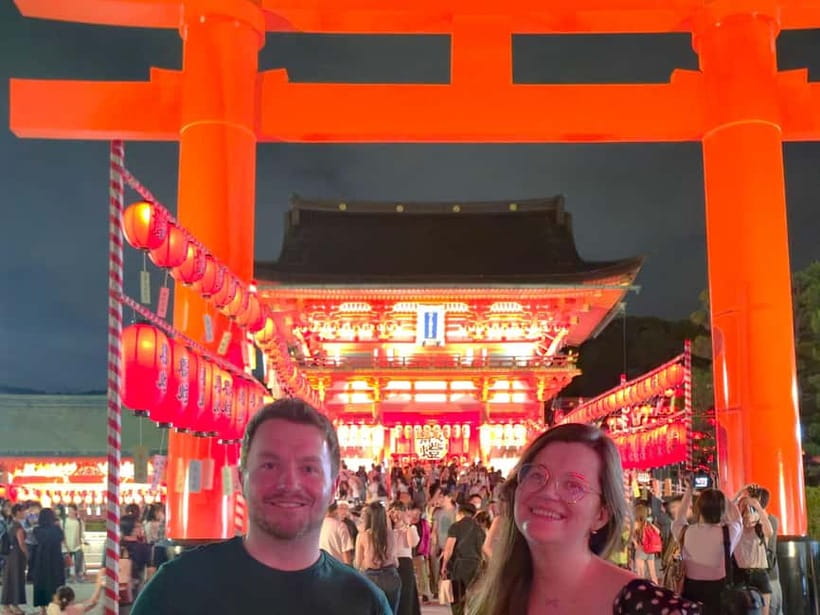
- Night changes the mood: The torii gates, cedar forest, stone fox guardians, and distant city lights feel more hushed after sunset.
- Two hours is a focused visit: You get a guided walk through Fushimi Inari, not a full mountain expedition.
- Private groups offer flexibility: Guides have adjusted the pace for tired walkers and responded well to personal requests.
- Meet by Daily Yamazaki: Look for the guide holding a yellow DeepExperience sign panel in front of the Fushimi Inari Taisha-mae store.
- Pack for darkness and uneven ground: Wear sturdy shoes, dress for the weather, and bring a flashlight. Flash photography is not allowed.
- The $49 price buys context and convenience: It is most useful if you want explanation, company, and a quieter route rather than simply access to the shrine.
Meeting at Fushimi Inari Taisha-mae
Your tour begins in front of Daily Yamazaki Fushimi Inari Taisha-mae Store. This is a practical meeting point near the shrine, but you should allow enough time to locate the exact storefront and your guide. Look for a yellow sign panel marked DeepExperience.
The tour ends at Inari Station, so you do not return to the starting point. That finish is handy if you plan to continue elsewhere in Kyoto, but it also means you should keep track of your belongings and make sure you know where you are going next.
Your guide may speak English or Japanese. The guide names mentioned in the available feedback include Judah and Juraj, though you should not assume one of them will lead your departure. Both were praised for being accommodating, patient, and willing to adjust the outing to the group.
That flexibility matters here. Fushimi Inari can be easy to reach but less simple to read. The shrine spreads from its main buildings into a long mountain path, and a guide gives you a clearer sense of how the gates, fox figures, and worship spaces fit together.
More guided evenings out around Kyoto:
- Kyoto Gion Night Walk & Geisha District Guided Tour
★ 5.0 · 786 reviews - Kyoto: Gion Sunset Walking Tour with Local Guide
★ 4.7 · 351 reviews - Kyoto: Fushimi Inari Night Walking Tour with Guide
★ 4.8 · 5 reviews
Entering the vermilion torii after sunset
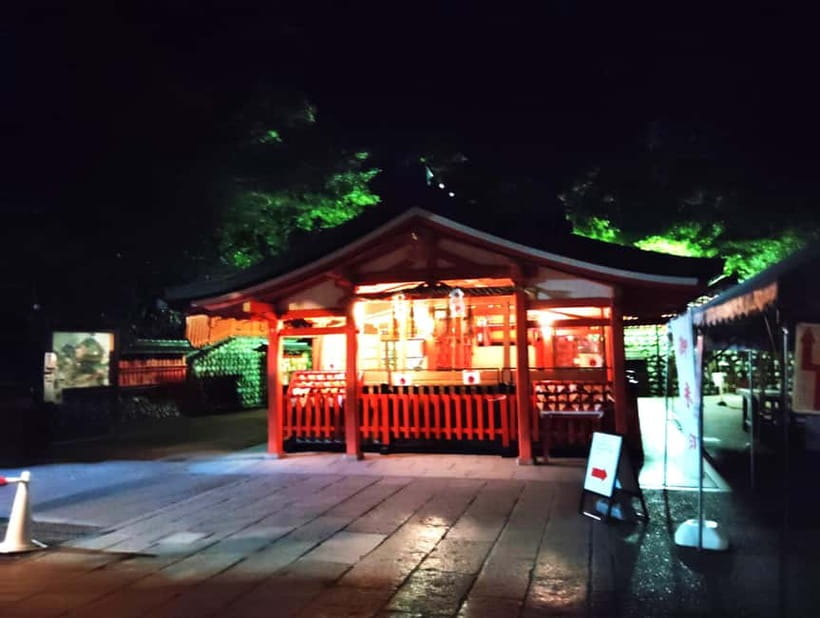
Fushimi Inari Taisha is dedicated to Inari, a Shinto deity associated with rice, prosperity, and business success. Fox statues appear throughout the shrine because foxes are regarded as Inari’s messengers. You will see these guardians near the pathways and shrine buildings, often with symbolic objects in their mouths.
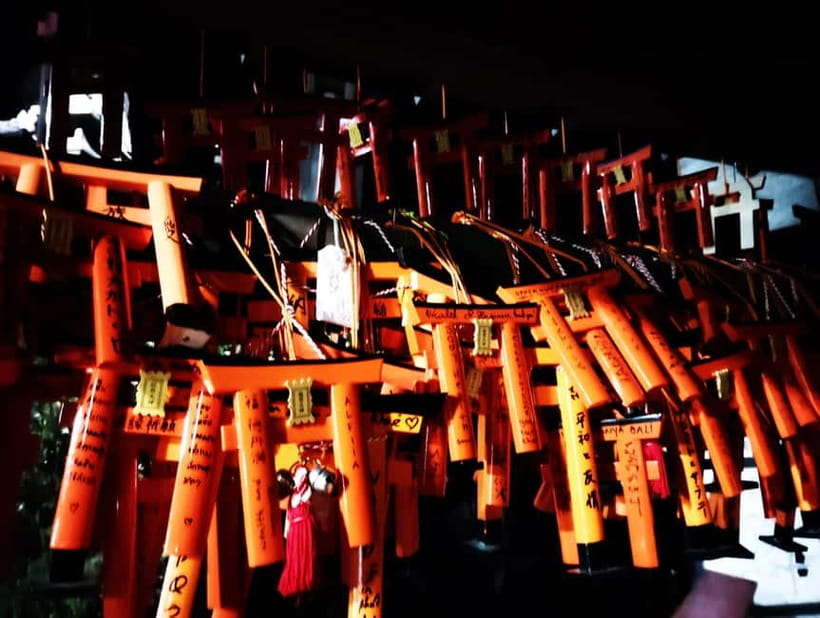
The defining sight is the long run of vermilion torii gates. Individuals and businesses donate these gates, creating a covered path that has become one of Kyoto’s most recognizable images. In daylight, the gates are bright and often crowded. At night, the same passage feels narrower and more private as lights create pockets of color and shadow.
I like this setting for people who have already seen the shrine in photographs and want a different side of it. You are not just checking off a famous view. The dark forest, cedar scent, and quieter paths make it easier to notice the sounds and textures around you.
Still, night changes what you can see. Some details are less clear than they are in daylight, and photography becomes harder. The point is mood and interpretation, not perfect documentation of every shrine feature.
A two-hour walk through the shrine grounds
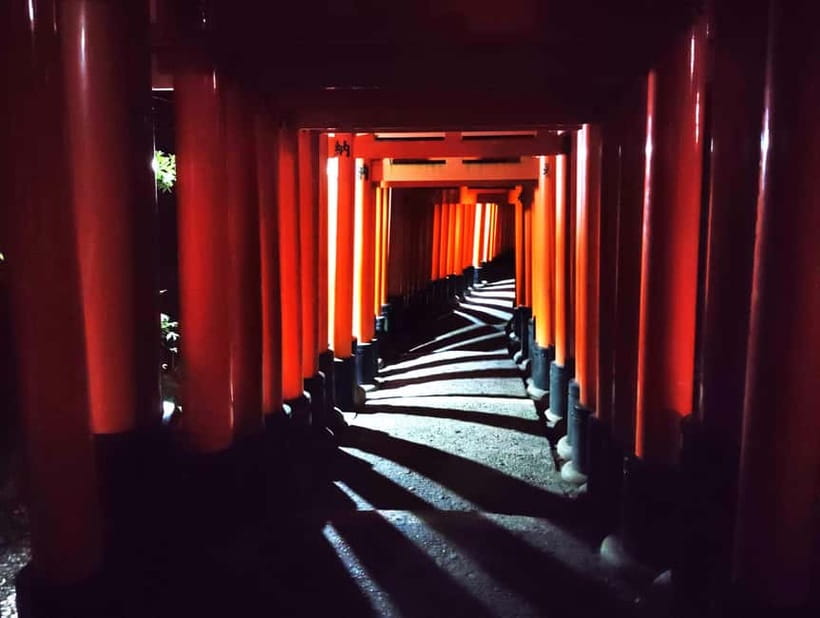
The full visit lasts two hours, including the guided sightseeing walk. Your route begins at Fushimi Inari and follows the shrine paths through the torii gates and forested sections.
The walk is not described as a rapid stop-and-go tour. It is presented as a calm route through the shrine, with time for your guide to explain its history and religious importance. That can make a big difference if you are not familiar with Shinto customs or the role of a shrine in Japanese life.
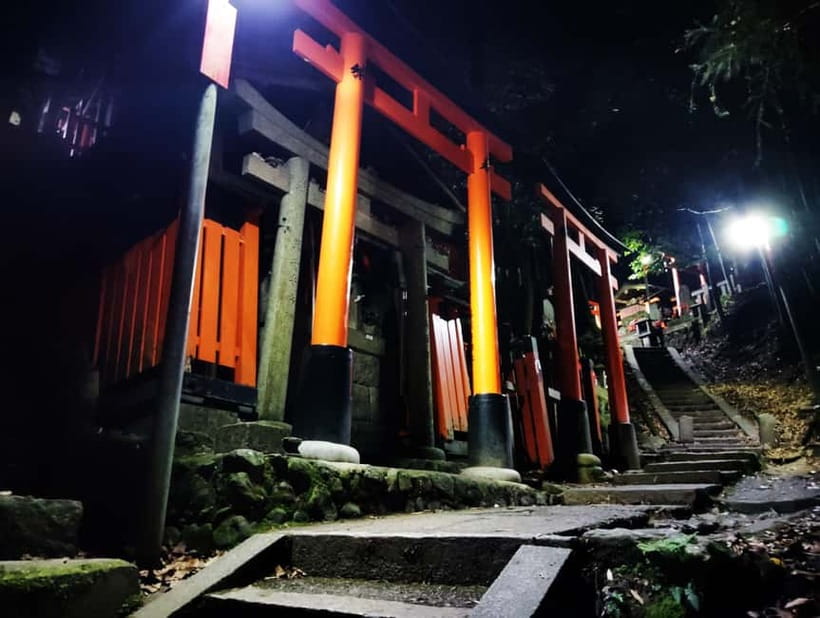
The torii tunnel is the natural centerpiece. You will pass beneath repeated gates while the path rises and bends through the woods. The effect is especially strong at night, when the lights do not reveal every stretch ahead and the red gates seem to continue beyond the next turn.
You may also encounter stone fox guardians along the way. These figures are not just decorative ornaments. Their connection with Inari gives the shrine a visual language that your guide can explain as you walk.
The route includes uneven paths and some walking on the sacred mountain. The tour is not suitable for people with mobility impairments, and comfortable shoes are essential. If you are tired, be honest with your guide early. One guide, Juraj, was specifically praised for patiently adapting the outing when the group was exhausted and unable to walk as much.
Why the private-group setup matters
A private group is one of the strongest reasons to consider this tour. You are not tied to a large crowd moving at one fixed speed, and your guide can respond to your interests. You can ask about the gates, fox imagery, Shinto practice, or the history of the shrine as questions come up.
The feedback also points to a friendly, energetic style. Judah was described as informative and easy to talk with, while other comments praised the guide’s enthusiasm and willingness to accommodate requests. That suggests the tone can be conversational rather than formal.
Of course, a private tour does not guarantee that your guide will match your personality or preferred pace. Guide quality can vary from one departure to another. The available rating is 4.2, with strong comments about the guides, but the sample is small, so I would treat it as useful evidence rather than a promise.
For a couple, family, or small group that wants help making sense of the shrine, the format is appealing. If you prefer wandering alone and reading signs at your own speed, paying $49 may feel less necessary.
More night tours around Kyoto:
- Kyoto: Gion Magical Night Walking Tour with Geisha Trivia
★ 4.9 · 2,393 reviews - Night Walk in Gion: Kyoto’s Geisha District
★ 4.5 · 2,003 reviews - Kyoto Night Foodie Tour in Gion (9+ dishes + 6 Sake tastings)
★ 5.0 · 1,762 reviews - Kyoto Bar Hopping Night Tour
★ 5.0 · 613 reviews
The view from higher on the mountain
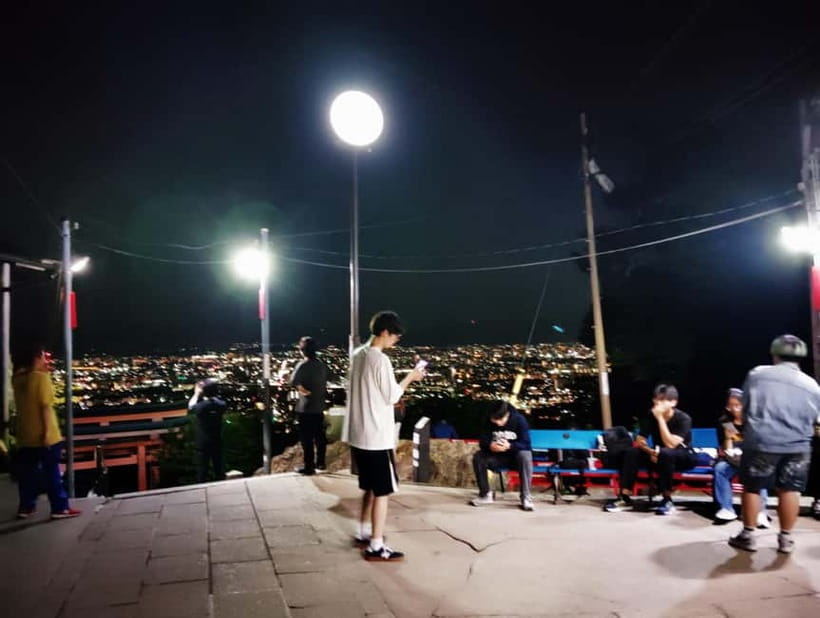
The tour description includes a view from the mountaintop, with Kyoto’s distant lights spread below. The exact height reached during your two-hour walk is not specified, so you should not book this expecting a full climb to every upper shrine on Mount Inari.
That view is still a worthwhile goal. At night, city lights can appear scattered beneath the dark forest, giving you a clear sense of how the shrine sits above Kyoto. It also provides a natural pause after the tighter passage beneath the gates.
The walk to a higher point is part of the physical challenge. You will want shoes with a good grip and clothing suited to the night temperature. Warm layers can be important in cooler weather, while summer evenings may be more comfortable than the hot daytime hours.
One of the available comments came from someone who chose a night walk partly because the weather was hot. That makes sense, but night does not remove every comfort issue. Bring water for yourself, since food and drinks are not included, and dress for the conditions rather than assuming the forest will feel warm.
What $49 gets you
At $49 per person, this is not a ticket for a major attraction. Fushimi Inari is a shrine, and the value of this outing comes from the guided access, the private format, and the chance to walk at a quieter time.
I would consider the price reasonable if you want cultural explanation and do not feel confident navigating the mountain paths alone after dark. It can also be good value for a small group that wants a guide focused on its own questions.
The price is harder to justify if your priority is a quick photo beneath the first gates. You can visit the shrine without this tour, and the experience does not include transportation, meals, or drinks. You are paying for interpretation and company, not a package of extras.
The two-hour length helps keep the cost and commitment manageable. You can fit the walk into an evening in Kyoto without giving up an entire day. On the other hand, two hours may feel short if you want to explore every section of the mountain.
What to bring for a safe night walk
Prepare for this as a walking tour, not a casual stroll from one nearby photo point to another. The paths can be uneven, and the tour takes place in darkness.
Bring:
- Comfortable walking shoes
- A flashlight
- Weather-appropriate clothing
- A camera, if you want to photograph the gates
- Water, since drinks are not included
A flashlight is useful even though parts of the shrine may be lit. It gives you more confidence on darker or irregular sections of the path. Use it with care so you do not disturb the quiet atmosphere or shine it into other people’s eyes.
Flash photography is not allowed. That rule helps preserve the calm of the shrine and keeps bright bursts from interrupting worship or other people’s walks. You can still take photographs, but expect night images to require patience and a steady hand.
Dress warmly if the forecast calls for it. The forest can feel cooler than the streets of Kyoto, especially later in the evening. In warmer months, the night timing may be more comfortable than a daytime climb, but you should still bring what you need for a two-hour walk.
Who will enjoy this Fushimi Inari tour
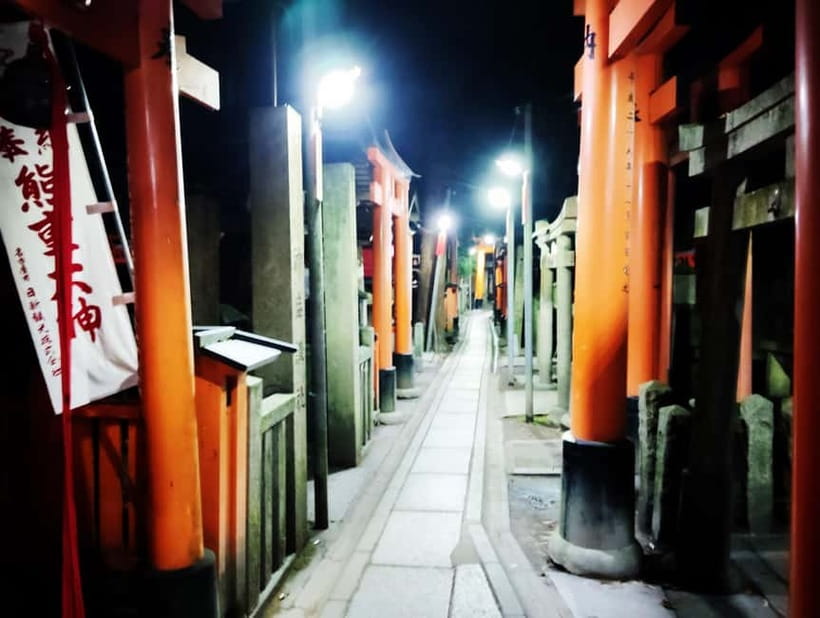
I would recommend this outing to you if you want to see Fushimi Inari in a quieter mood and learn why its features matter. It suits couples, friends, and families who value a flexible guide and do not mind walking uphill.
It is also a good choice if you have already visited Kyoto’s major temples and want a more unusual evening activity. The combination of red gates, forest darkness, fox guardians, and city lights creates a setting that feels very different from a daytime sightseeing circuit.
You may want to skip it if you have mobility limits, dislike uneven ground, or want a completely independent visit. It is also not ideal if you need a meal or transportation included, since you will arrange both yourself.
The tour can work well for tired visitors, provided you tell the guide how you are feeling. The available feedback describes a guide adjusting patiently when the group could not manage too much walking. That is encouraging, but the route still requires physical effort.
Should you book this night tour?
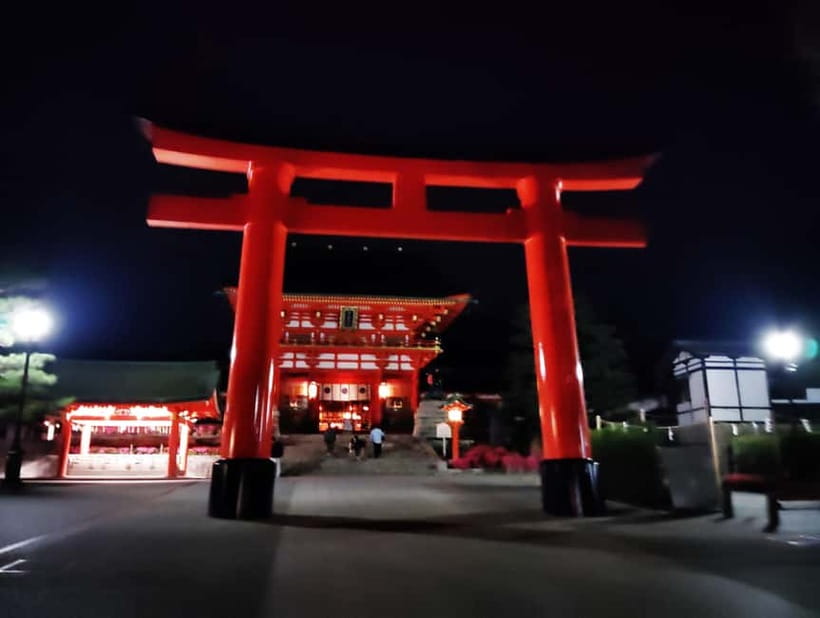
Book it if the idea of walking through Fushimi Inari’s torii gates after dark appeals to you more than seeing the shrine in bright daylight. The best reasons are the quiet setting, private-group attention, and the chance to hear useful explanations while you walk.
At $49, I see the tour as a sensible choice for visitors who want cultural context and do not want to handle a mountain shrine alone at night. I would pass if you only need access to the gates, have trouble walking on uneven paths, or prefer a daytime visit with clearer views and easier photography.
Bring good shoes, a flashlight, and realistic expectations about the two-hour route. If you do, this can be one of Kyoto’s more memorable evening walks.
FAQ
How long is the Fushimi Inari night tour?
The guided tour lasts two hours. The visit includes walking and sightseeing at Fushimi Inari Taisha.
Where is the meeting point?
Meet in front of Daily Yamazaki Fushimi Inari Taisha-mae Store. Your guide will hold a yellow sign panel marked DeepExperience.
Where does the tour end?
The tour finishes at Inari Station rather than at the original meeting point.
What languages does the guide speak?
Live guides are available in English and Japanese.
Is this a private tour?
Yes. The activity is organized for a private group.
What should I bring?
Bring comfortable shoes, a camera if desired, weather-appropriate clothing, and a flashlight. Food and drinks are not included.
Is the tour suitable for people with mobility impairments?
No. The paths can be uneven, and the activity is not suitable for people with mobility impairments. Flash photography is also not allowed.
Just added for nights around Kyoto
- Kyoto: Station and Tower Night Tour with Light Show★ 4.8 · 5 reviews
- Kyoto: Nighttime Zen Meditation and Matcha Tea Experience★ 5.0 · 7 reviews
- Kyoto: Foodie Night Tour in Gion with 9 dishes + 6 Sake★ 4.4 · 26 reviews
- Kyoto: Night Walking Tour with Geisha Traditions★ 5.0 · 21 reviews
- Kyoto: Gion Evening Walk with Hidden Gems, Geisha & Sake★ 5.0 · 41 reviews
- Kyoto: Gion Morning/Night Walking Tour★ 4.3 · 4 reviews
- Kyoto Magic Night Walk: Gion & Fushimi Inari(Private Option)★ 5.0 · 5 reviews
- Kyoto: Gion & Geisha district evening tour★ 4.1 · 4 reviews
Kyoto Night Tours, compared.
Kyoto: Gion Magical Night Walking Tour with Geisha Trivia
Read our review →

Kyoto Night Foodie Tour in Gion (9+ dishes + 6 Sake tastings)
Read our review →
Kyoto Nighttime All-Inclusive Eats and Streets, Gion and Beyond
Read our review →

Kyoto: Gion Sunset Walking Tour with Local Guide
Read our review →Browse the lists this tour appears in