
Review · KYOTO
Kyoto Nighttime All-Inclusive Eats and Streets, Gion and Beyond
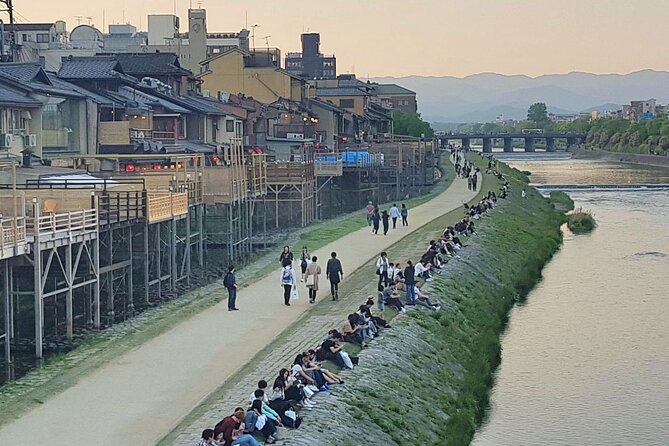
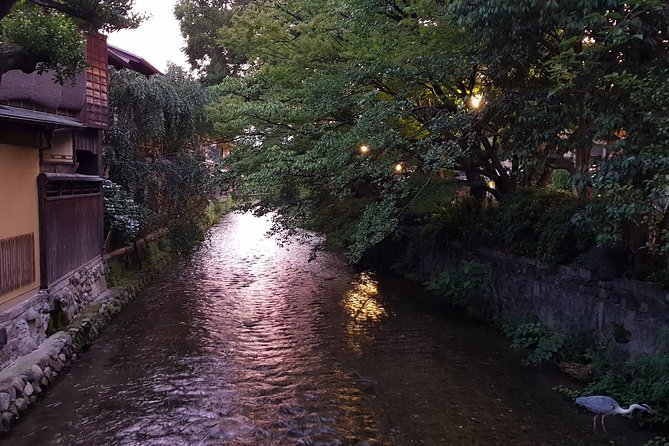
Kyoto after dark is not just temples lit from below. This three-hour walk looks at Gion’s geiko world, modern hostess clubs, shrine traditions, narrow lanes, and the small restaurants that keep the evening moving. You begin near Minamiza Theater, cross the Kamogawa River, eat at two local spots, and finish near Kyoto-Kawaramachi Station.
I like two things here. First, the food is tied to the walk, so you get context before sitting down to eat. Second, the small group size, normally six people, gives guides such as Laura, Hugo, Jamie, Joshua, Maya, and Bryan room to adjust the evening to dietary needs and questions. The main drawback is that restaurant quality and atmosphere can vary, and one stop may allow smoking.
Key points at a glance
- Gion after dark: Learn why Kyoto uses the term geiko and how the district connects to maiko, Kabuki, and evening entertainment.
- Two local food stops: Eat regional dishes at small bars or restaurants, with one alcoholic or non-alcoholic drink at each.
- A walk across Kyoto’s nightlife districts: See Gion, Pontocho, Kiyamachi, and the Kawaramachi area in one evening.
- Small groups: Tours normally hold up to six people, with groups of up to eight accepted when everyone shares one reservation.
- Dietary flexibility: Vegetarian, pescetarian, and gluten-free needs have been handled successfully when noted in advance.
- A useful first-night tour: The route helps you get your bearings before exploring Kyoto’s evening streets on your own.
Gion at 6:30pm: geiko, maiko, and evening customs
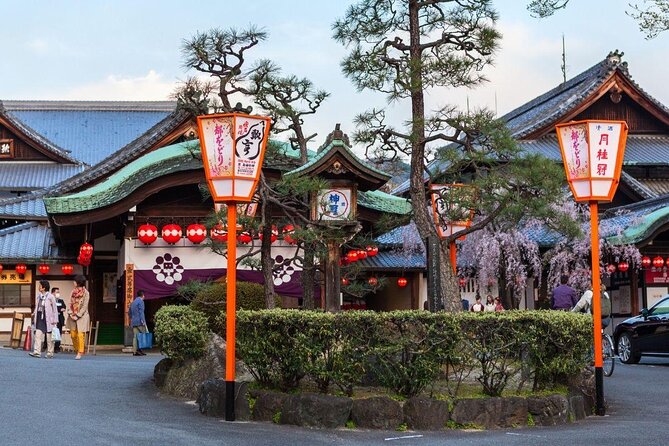
Meet at the Minamiza Theater, at the east end of Shijo Bridge. The exact meeting place is the theater’s second-floor west lobby, a useful detail because several tours may gather around the theater and bridge area. Arrive with enough time to identify the correct group.
The first hour is mostly on foot. Your guide explains Gion’s traditional entertainment districts and the difference between geiko and maiko. In Kyoto, geiko is the local term commonly used for a professional entertainer often called a geisha elsewhere in Japan. Maiko are apprentices, recognized by their more youthful dress and styling.
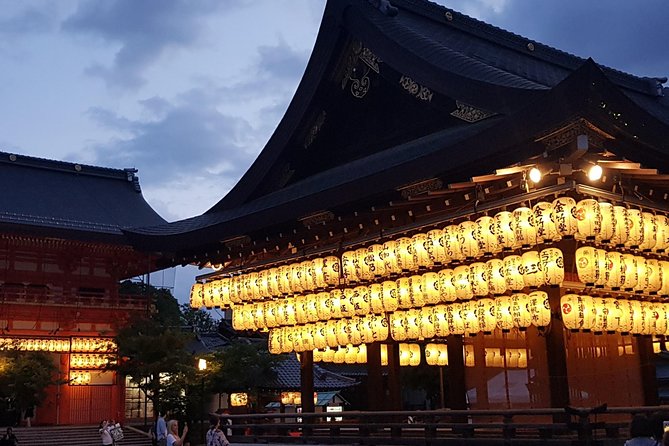
This section is not designed as a performance or a geiko-spotting hunt. It is an explanation of how the district works, why its narrow streets are treated with care, and how evening entertainment changed over time. You may pass places connected with traditional arts, shrines, temples, and Kabuki culture. Some groups have seen a geiko walking through the neighborhood, but that is luck, not a promised feature.
The tour also discusses modern hostess clubs. That subject can sound sensational in a tour description, but the approach here is more social than salacious. You learn how Kyoto’s nightlife includes both old forms of hospitality and newer businesses built around conversation, drinks, and paid companionship. The tour is suitable for participants aged 13 and older, so the discussion remains appropriate for teenagers.
I find this cultural framing useful because Gion can look mysterious if you only stroll through it taking photographs. At night, dim light and closed doors reveal less than daytime signage. A good guide fills in the missing pieces without pretending every doorway is open to the public.
More Night Food Tours in Japan
- Kyoto Night Foodie Tour in Gion (9+ dishes + 6 Sake tastings)
★ 5.0 · 1,762 reviews - Tokyo Night Foodie Tour in Shinjuku – Seasonal Sushi, Wagyu Beef
★ 5.0 · 1,161 reviews - Osaka Backstreet Nightlife & Street Food Walking Tour
★ 5.0 · 1,011 reviews
The first restaurant: small dishes and one included drink
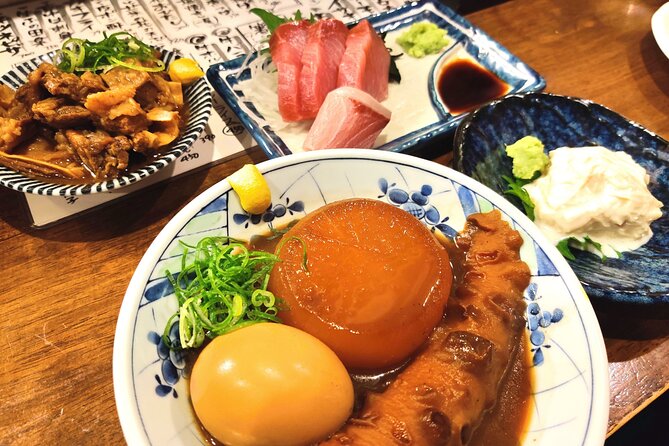
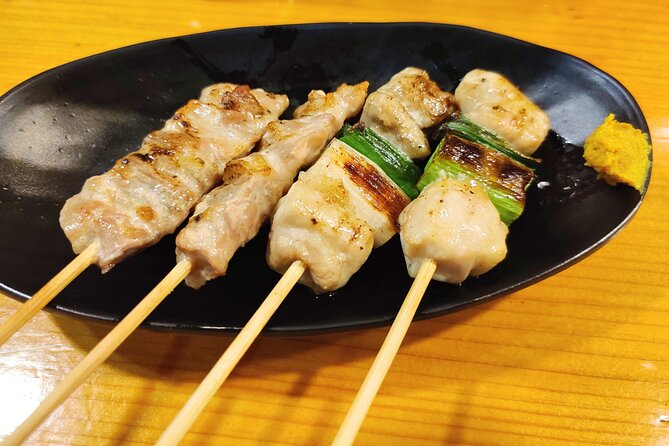
Around 7:30pm, the walking portion gives way to dinner. The group visits a small bar or restaurant chosen for regional food and a local atmosphere. The meal may include several small dishes rather than one large plate, which suits the purpose of trying a range of flavors.
One alcoholic or non-alcoholic beverage is included at this stop. Depending on your preference, that can be beer, sake, shochu, or a soft drink. The second included drink comes at the next restaurant. Any drinks beyond those two are purchased directly from the restaurants.
The food is intended to be filling without leaving you uncomfortably full. That matters because the evening includes a second stop and more walking. You are not simply paying for a single set menu. You are paying for a guided introduction to small Japanese drinking and dining places, where ordering can be hard if you do not read Japanese or know the local customs.
Some experiences have included izakaya-style dishes and, when requested, wagyu beef. Do not treat wagyu as a guaranteed menu item, since the food changes and the details depend on the restaurant and reservation. If you want a particular ingredient, state that when booking rather than assuming it will appear.
Dietary needs are one of the stronger practical points. Vegetarian and pescetarian meals have been arranged without cutting the food portion down to an afterthought, and gluten-free requests have also been accommodated. Tell the operator in advance. The guide can then work with the restaurants instead of improvising at the table.
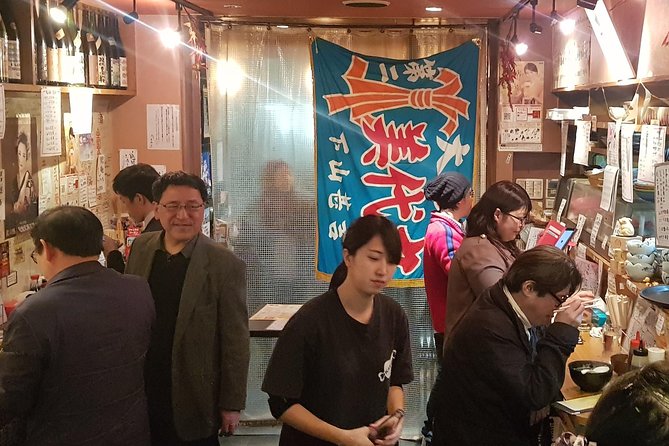
The main caution is that these are small local places, not polished hotel dining rooms. A venue may be lively, cramped, or smoky. Smoking is still permitted in some Japanese bars and restaurants, and one stop may not suit people who are highly sensitive to smoke. The exact stops can also change from night to night, so the food should be approached as a local dining outing, not a fixed tasting menu.
Pontocho and Kiyamachi: Kyoto changes across the river
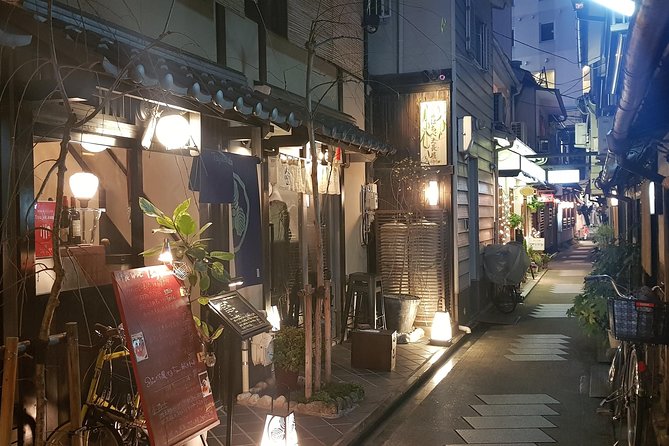
After the first meal, the route crosses back toward the west side of the Kamogawa River. This is where the evening gains variety. Pontocho is a narrow lane lined with restaurants and traditional buildings. It is one of Kyoto’s best-known nightlife streets, but the appeal is not just the photographs.
The lane shows how Kyoto protects an old urban pattern while continuing to use it. Behind modest facades are restaurants, bars, and entertainment spaces. Some are open to casual diners, while others cater to regular customers or require reservations. Your guide helps explain that difference and points out how the district functions after sunset.
A few streets away, Kiyamachi and the Kawaramachi area feel younger and more current. The route makes a useful contrast between classic Kyoto and the city’s present-day social life. You may pass modern restaurants, bars, and entertainment venues beside older buildings. The point is not to label one side better than the other. Kyoto is both a historic city and a place where people live, work, eat, and go out tonight.
This walk is also valuable for orientation. Kawaramachi is one of the city’s main evening areas, and the tour ends near Kyoto-Kawaramachi Station. After three hours with a guide, you should have a clearer idea of where to return for dinner, drinks, or a late stroll.
Bring comfortable shoes. The route includes a lot of walking, and the evening is not a quick transfer between restaurants. One person may find the pace easy, while another may feel the distance after a full day of temples and gardens. The start time also means you may see part of Gion in fading daylight and the rest under nighttime lighting. Some people would prefer an earlier departure to photograph the district before dark, but the later timing is what gives the tour its nightlife focus.
The second restaurant: more food and a second drink
Around 9pm, you stop at a second restaurant. This is usually the more substantial part of the meal, though the exact dishes and seating depend on the venue. The food can include several kinds of local fare, and the second included alcoholic or non-alcoholic drink arrives here.
The two-stop plan works well for people who want variety. One venue may be a standing bar or compact izakaya, while the next may offer a different setting and a fuller selection of dishes. You get a better sense of how Kyoto’s evening dining culture operates than you would from a single restaurant.
There are tradeoffs. Seating may be at a bar rather than around one large table, which can make conversation harder for a group. If you want a quiet, formal dinner with predictable courses, this is not the best match. The experience favors small portions, local atmosphere, and the pleasure of trying places you might not find without help.
Food quality can also be uneven. Several guides have taken groups to places they would not have found alone, and the dining is often a highlight. Still, isolated poor experiences have included an unsatisfactory first restaurant or a venue where the service did not meet expectations. That variation is worth accepting only if the local setting matters to you as much as menu precision.
The guides seem to be a major part of the value. Laura has been praised for clear explanations and an upbeat manner. Hugo has combined local knowledge with humor, while Joshua has been especially useful for area background and later recommendations. Jamie has handled vegetarian and pescetarian needs well and made changes during the evening when needed. Maya has helped with gluten-free choices, and Bryan has led especially personal walks for very small groups.
Guide assignment is not guaranteed, of course. The useful point is that this is a guide-led experience, not a printed route with restaurant vouchers. Ask questions. If you want advice for the rest of your Kyoto stay, the walk is a good time to request it.
Same night, a different way out:
- Tokyo Bar Hopping Tour in Shinjuku (All-You-Can-Drink + Dinner)
★ 5.0 · 3,587 reviews - Kyoto: Gion Magical Night Walking Tour with Geisha Trivia
★ 4.9 · 2,393 reviews - Night Walk in Gion: Kyoto’s Geisha District
★ 4.5 · 2,003 reviews - Osaka Bar Hopping Night Walking Tour in Namba (3 bars, 6 tastes)
★ 5.0 · 958 reviews
What $119 buys you in Kyoto
At $119 per person, this is not a bargain dinner. The price includes about three hours with a guide, dinner at two stops, and two drinks. You are also paying for the confidence to enter small local restaurants without having to work out the menu, ordering process, or route yourself.
I would judge the value in three parts. The first is the food. If you want a guaranteed premium meal or a long list of specific dishes, the price may feel high. If you prefer several local stops and are comfortable with changing menus, the arrangement is more appealing.
The second part is access through explanation. Gion, Pontocho, Kiyamachi, and Kawaramachi are easy to walk through, but their social rules and history are not always obvious. A strong guide turns a pleasant stroll into a clearer picture of how Kyoto’s nighttime economy works.
The third part is convenience. You do not need to choose two restaurants, explain dietary requirements repeatedly, or worry about ordering drinks in an unfamiliar place. For a first or second night in Kyoto, that can be worth a great deal.
Group size helps protect that value. The normal maximum is six people. Groups of up to eight can be accepted when the entire party is on one reservation. A small group gives you more chances to ask questions, but it does not guarantee that every restaurant will provide private seating.
Who will enjoy this evening most
I would choose this tour if you want your Kyoto food experience connected to streets, culture, and nightlife. It suits first-time visitors who have already spent the day at temples and want a different view of the city.
It is also a good fit if you feel uncertain about small Japanese restaurants. Your guide handles the introductions and helps the group order. You still get the local setting without having to decode every custom alone.
Food-focused visitors should keep expectations realistic. This is a guided night out with dinner, not a specialist culinary seminar. You may try regional dishes and several small plates, but the menu is not fully fixed in the information provided.
The tour is less suited to people who dislike walking, smoke, crowded bars, or changing restaurant plans. It may also frustrate photographers hoping for bright, clear views of Gion. Nighttime lighting is part of the atmosphere, but it is not always ideal for pictures.
Participants must be at least 13 years old. Japan’s minimum drinking age is 20, and non-alcoholic drinks are available. You do not need to drink to take part.
The tour runs in most conditions but requires good weather. If poor weather cancels the outing, you are offered another date or a full refund. Normal cancellation allows a full refund when you cancel at least 24 hours before the 6:30pm start.
Should you book the Gion nighttime food tour?
Book it if you want a guided introduction to Kyoto after dark, with food, drinks, and social history in the same evening. The best reason to choose it is the combination of places: Gion for traditional entertainment, Pontocho and Kiyamachi for nightlife, and two small restaurants that would be easy to miss on your own.
I would be more cautious if your priority is a flawless, fixed dinner menu or a quiet dining room. Restaurant selection can change, a stop may be smoky, and bar seating can limit conversation. At $119, the tour earns its price through guidance and access rather than luxury.
For many visitors, the smartest timing is early in a Kyoto stay. You get a basic map of the evening districts, learn useful terms such as geiko and maiko, and collect restaurant ideas for later. If that sounds more valuable than simply booking one excellent dinner, this compact night walk is a sensible choice.
FAQ
Where does the tour begin?
It begins at Minamiza Theater, at the theater’s second-floor west lobby near the east end of Shijo Bridge in Gion.
What time does the tour start and finish?
The start time is 6:30pm. The experience lasts about three hours and is scheduled to finish around 9:30pm near Kyoto-Kawaramachi Station.
How many restaurants does the tour visit?
The tour visits two bars or restaurants. Dinner includes regional dishes and one alcoholic or non-alcoholic beverage at each stop.
Are non-alcoholic drinks available?
Yes. You can choose alcoholic or non-alcoholic beverages. Japan’s minimum drinking age is 20.
Can vegetarians join?
Yes. Vegetarians are accommodated, and dietary needs such as pescetarian and gluten-free requests should be provided when booking.
How large is the group?
The tour normally has a maximum of six participants. Groups of up to eight may be accepted when everyone is part of the same reservation.
Just added for nights around Japan
- [1 Group Only ] Osaka: Private Night Food Tour for Family★ 5.0 · 2 reviews
- Private Tokyo Night Tour★ 5.0 · 115 reviews
- Kyoto Private Night Tour with a Local – Bars, Bites & Culture★ 5.0 · 48 reviews
- Osaka After Dark: Small-Group Night Food Tour (Max 6)★ 4.5 · 245 reviews
- Osaka Nighttime tour★ 5.0 · 270 reviews
- Osaka: Bar-Hopping Night Tour in Namba★ 4.7 · 117 reviews
- Osaka: Private Vibrant Nighttime Photoshoot (Dotonbori)★ 4.9 · 80 reviews
- Tokyo by Night Photography Tour (Private Option Available)★ 5.0 · 151 reviews
Kyoto Night Tours, compared.
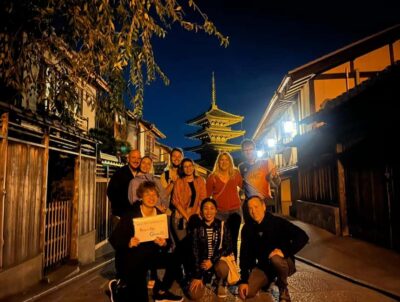
Kyoto: Gion Magical Night Walking Tour with Geisha Trivia
Read our review →
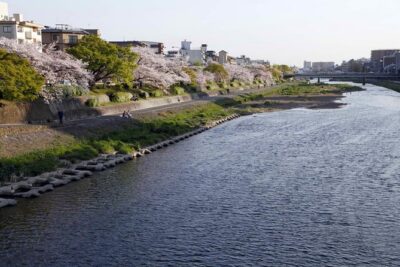
Kyoto Night Foodie Tour in Gion (9+ dishes + 6 Sake tastings)
Read our review →
Kyoto: Gion Sunset Walking Tour with Local Guide
Read our review →
Kyoto Private Night Tour with a Local – Bars, Bites & Culture
Read our review →Browse the lists this tour appears in