
Review · KYOTO
Kyoto: Gion Evening Walk with Hidden Gems, Geisha & Sake
Gion feels entirely different after sunset. Lanterns glow along wooden townhouses, the day’s crowds thin out, and a short walk begins to feel like a trip through old Kyoto. This 90-minute evening tour connects Gion’s best-known streets and shrines with plain-English stories about geiko, maiko, Shinto, and Buddhist customs.
I like two things in particular: the small groups of no more than 10 and the sake served during the walk. Guides such as Shumpei and Nick have been praised for being funny, friendly, and easy to talk with, which makes it simple to ask about food, local customs, or what to see next.
The main drawback is the tight schedule. You cover several sights in about an hour and a half, so this is an introduction rather than a slow, detailed temple visit. You also need to arrive on time, since the group may leave promptly.
Key points to know before you book
- Gion after dark feels quieter and more atmospheric, especially around Hanamikoji Street and Ninenzaka.
- The group size is capped at 10, allowing time for questions and personal photo help.
- Local sake is included, adding a social touch to the walk without turning it into a formal tasting.
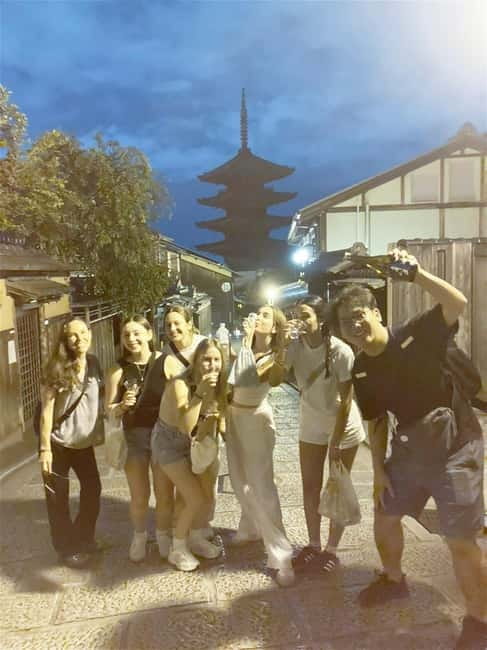
- The route links five major stops, including Yasaka Pagoda, Yasui Kompira-gū, and Yasaka Shrine.
- English-speaking guides explain geiko and maiko culture in simple terms, rather than giving a long academic talk.
- Comfortable shoes matter, and the tour is not a good choice if you have back problems.
Why Gion works best after sunset
Gion is one of Kyoto’s most famous districts, but daytime can bring a steady stream of visitors, buses, and camera stops. At night, the mood changes. The stone lanes and dark wooden facades are still visible, yet the softer light gives the district a calmer character.
This tour is built around that change in mood. You are not simply being led from one famous building to another. You are walking through the streets at the time when Gion’s traditional setting makes the most sense, with lanterns, narrow lanes, and low voices adding to the atmosphere.
I like that the route does not depend on a single major attraction. Instead, it shows how the district fits together. Tea-house streets, shrines, a pagoda, and a sloping lane each offer a different piece of Kyoto.
Keep your expectations realistic. Gion is not guaranteed to be empty, and the tour does not promise a meeting with geiko or maiko. One person did see two actual geisha during a walk, but that is a fortunate possibility, not a feature you should count on.
More Night Walking Tours in Japan
- Kyoto: Gion Magical Night Walking Tour with Geisha Trivia
★ 4.9 · 2,393 reviews - Night Walk in Gion: Kyoto’s Geisha District
★ 4.5 · 2,003 reviews - Kyoto Gion Night Walk & Geisha District Guided Tour
★ 5.0 · 786 reviews
Meeting near Shijo Kiyamachi
The meeting point is on Kiyamachi Street, near Shijo Kiyamachi. Look for a guide holding an Otatrip Guide sign between McDonald’s and the Japanese restaurant Kikunoi Roan, a little south along Kiyamachi Street.
This is a busy part of central Kyoto, so give yourself time to find the exact spot. The tour starts promptly, and a late arrival can be awkward if the rest of the group has already set off. That matters more here than on a private tour, since the guide is responsible for keeping a small group together.
The walk finishes at Yasaka Shrine rather than returning to the starting point. That is useful if you plan to continue exploring Gion, find dinner, or walk toward another part of central Kyoto. It also means you should think about what comes next, especially if you are tired or carrying shopping bags.
Hanamikoji Street and the world of geiko
The first major part of the walk takes you through Gion, including Hanamikoji Street. This is the district’s best-known geisha street, lined with traditional tea houses and wooden buildings.
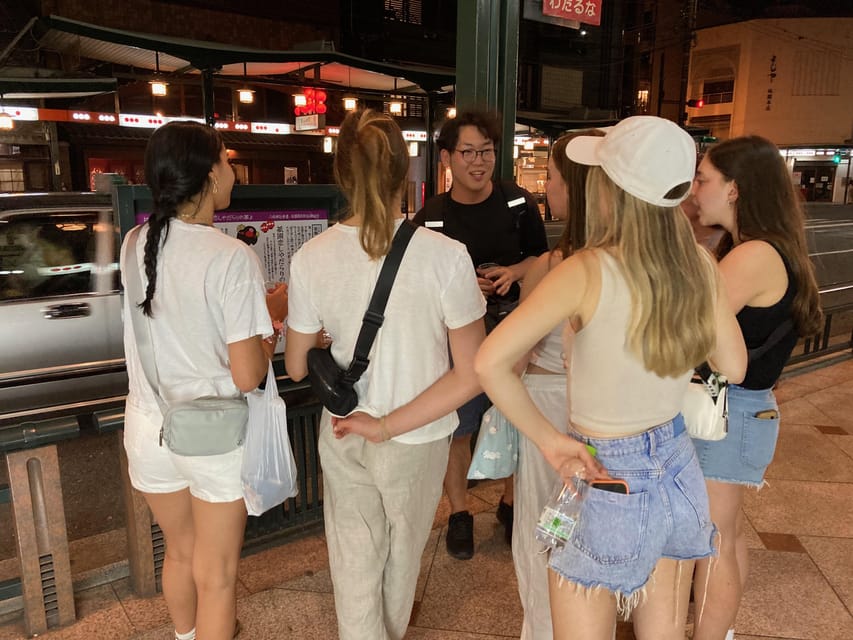
The value of having a guide here is context. A first visit can leave you admiring the architecture without understanding the role of the district or the difference between geiko and maiko. Your guide explains those traditions in accessible English and can answer questions that do not fit neatly on a museum sign.
The tone is meant to be conversational. Jack from the United States enjoyed being able to stroll and talk about whatever interested him, while other people valued the guide’s humor and patience. That tells you what kind of tour this is: less like a formal lecture, more like an informed walk with someone who knows the neighborhood.
You should also behave carefully here. Gion is a living district, not a stage set. Keep voices low, do not block narrow lanes, and avoid treating people in traditional dress as photo props. The tour’s own advice about quiet behavior is important, especially near homes, tea houses, and sacred sites.
Yasui Kompira-gū and its unusual power stone
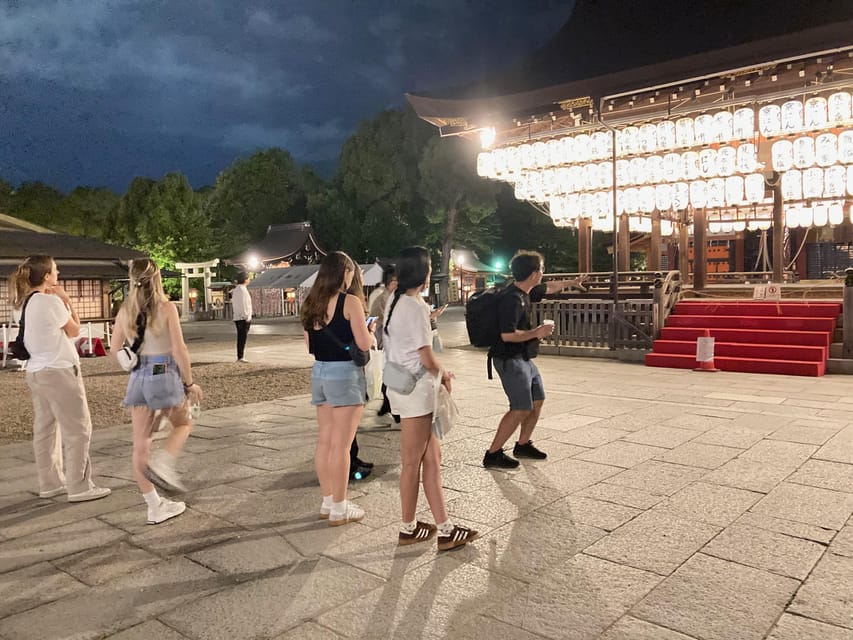
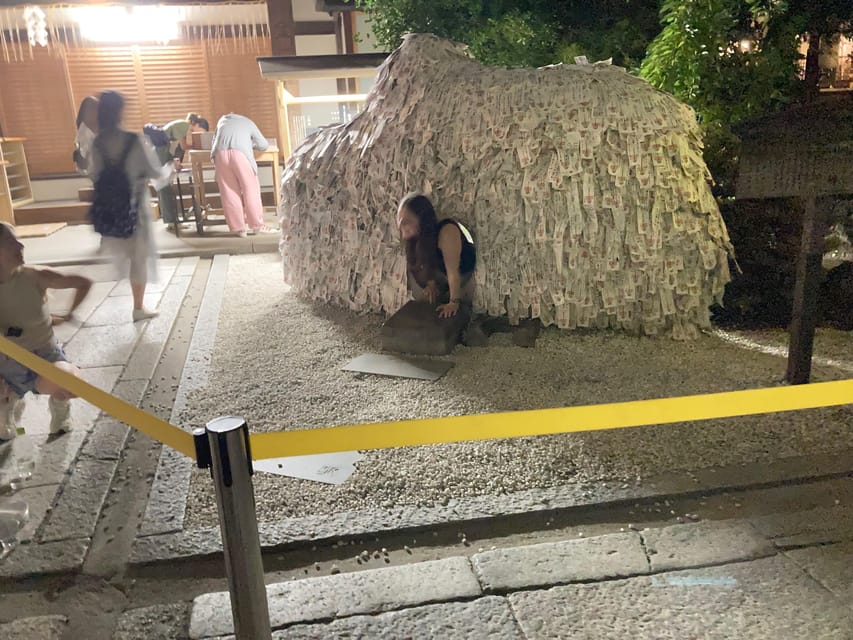
Yasui Kompira-gū Shrine is a short but memorable stop. It is known for a large power stone connected with cutting bad ties and forming good ones.
The custom gives the shrine a different feel from a simple photo stop. You are introduced to a local practice that links religion with everyday concerns, such as relationships, habits, or difficult circumstances. The guide can explain the custom and help you understand what people are doing rather than leaving you to guess.
Ten minutes is enough for an introduction, but not for a long visit. If this shrine especially interests you, you may want to return on your own during daylight and spend more time looking around. On the tour, the emphasis is on understanding the site as part of Gion’s wider spiritual life.
More Night Walking Tours in Kyoto
- Gion Walking Tour by Night
★ 4.5 · 429 reviews - Kyoto: Gion Sunset Walking Tour with Local Guide
★ 4.7 · 351 reviews - Kyoto Fushimi-Inari Night Walking Tour
★ 4.8 · 171 reviews - Kyoto: Night Walking Tour with Geisha Traditions
★ 5.0 · 21 reviews
Yasaka Pagoda at Hōkan-ji Temple
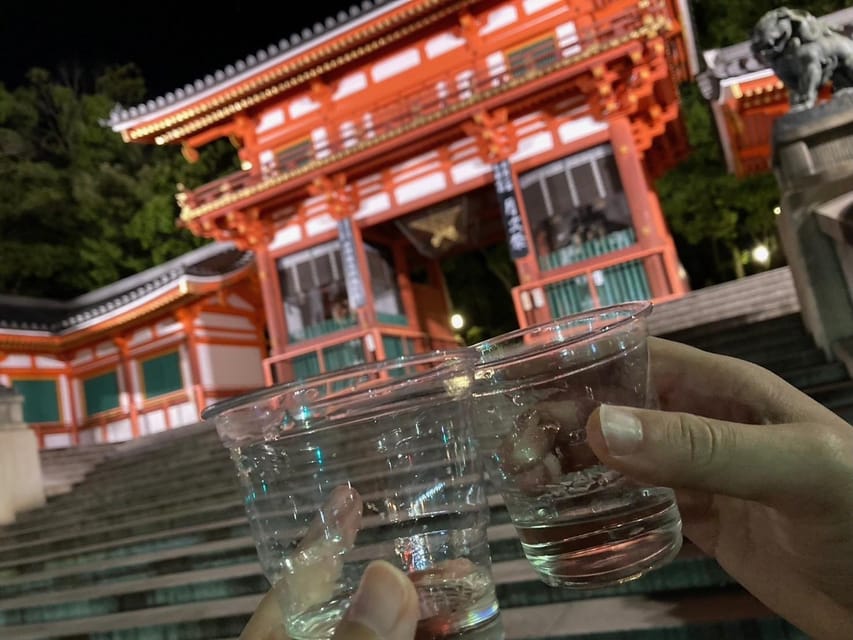
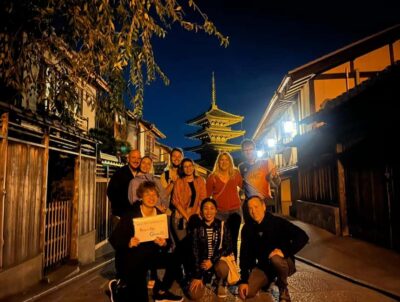
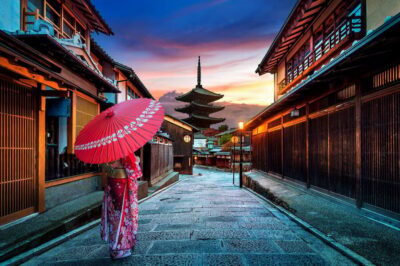
Hōkan-ji Temple, better known for its Yasaka Pagoda, is one of Kyoto’s most recognizable sights. The five-story pagoda rises above the surrounding streets and is especially striking when lit at night.
This is one of the strongest photo opportunities on the route. The guide offers photo assistance, so you can ask for help framing the pagoda or arranging a group picture instead of trying to manage everything yourself.
The night setting also solves one common problem: the pagoda is often much harder to appreciate when daytime crowds fill the nearby lanes. The evening visit does not guarantee complete quiet, but it generally offers a more relaxed chance to look and take pictures.
Do not expect an interior temple tour. The stop is described as a visit and photo opportunity, with about 10 minutes devoted to it. You see the landmark from the surrounding area and hear about its place in Kyoto, but this is not an extended architectural study.
Ninenzaka, wooden houses, and sloping streets

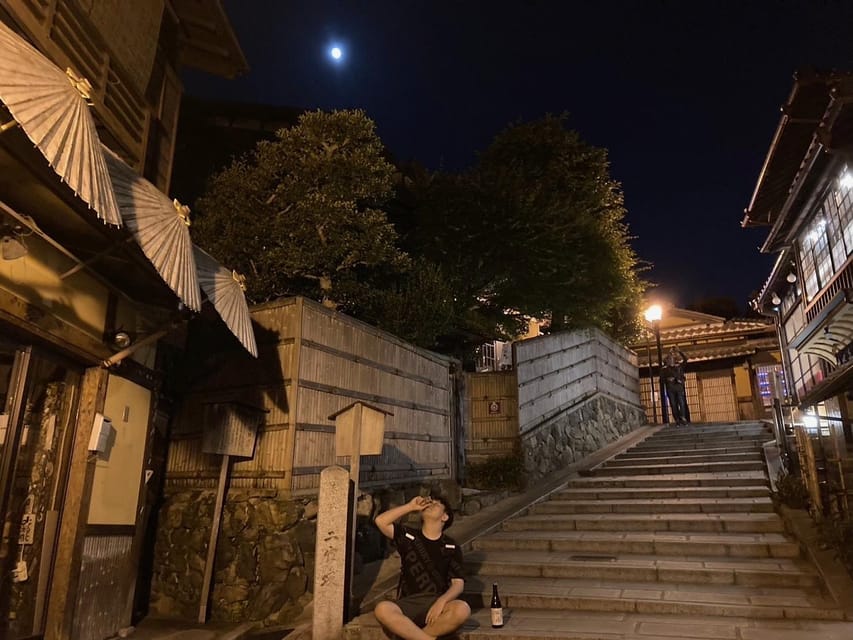
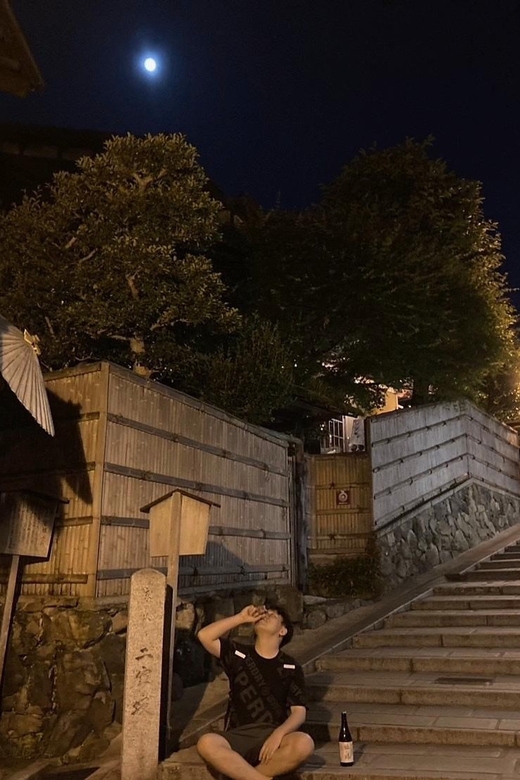
Ninenzaka is a traditional cobbled slope lined with wooden townhouses and old-style shops. In the evening, its closed storefronts and reduced foot traffic can make the lane feel more timeless than it does during the day.
The slope is also where practical footwear becomes important. Comfortable shoes are specifically recommended, and the route includes several uneven or inclined sections. Anyone with back problems should think carefully before booking, since this is a walking experience rather than a vehicle-based sightseeing tour.
The 10-minute stop gives you a taste of the area, not a full shopping visit. If you want to browse shops or return for daytime photography, plan another visit. The benefit here is seeing how Ninenzaka fits into a night walk through eastern Gion.
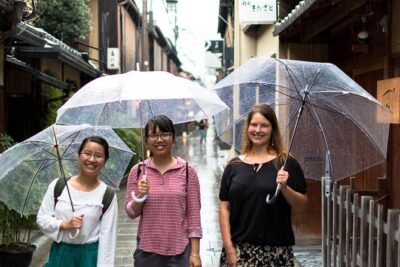
Rain does not necessarily ruin the mood. One walk took place in wet weather, when the streets became especially quiet and atmospheric. Still, you should be prepared for changing conditions, since the tour continues outdoors and no indoor alternative is described.
Local sake makes the walk more social
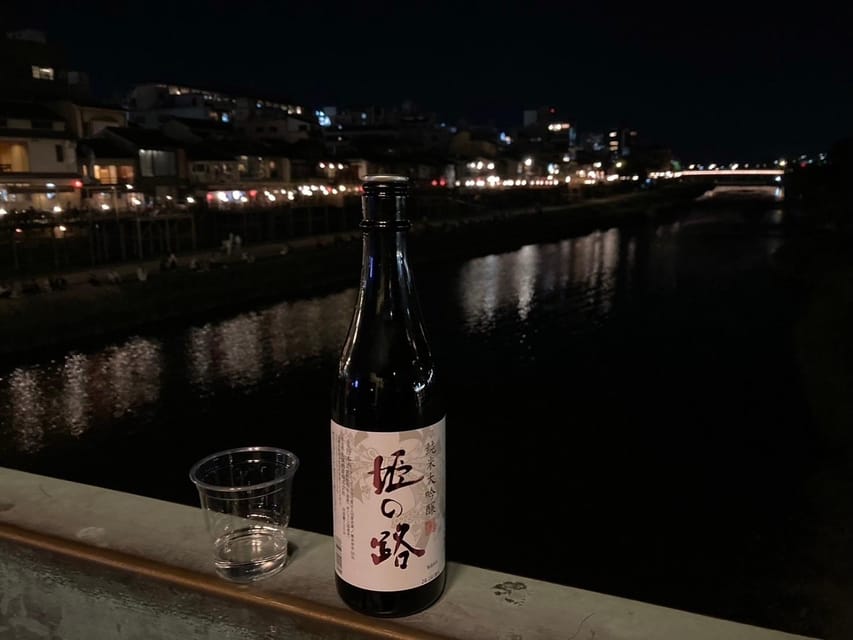
A cup of local sake is included as you stroll. This is not presented as a formal tasting with a long explanation of brewing methods. It is a small drink that helps the group relax and gives the walk a friendly, informal rhythm.
I see this as a nice bonus rather than the main reason to book. At $32 per person, the sake adds value, but the real purchase is the guide’s time, the compact route, and the chance to ask questions while moving through Gion.
Some participants found the guide generous with the sake, so drink responsibly and remember that you still have uneven streets and a group walk ahead. The experience is better when the drink remains a pleasant part of the evening rather than becoming its focus.
The sake also gives the tour a social edge. One group continued for food and drinks afterward, and the small format makes it easier to meet fellow participants. That may appeal to solo visitors and couples who want some company without joining a large bus group.
How the small group changes the experience
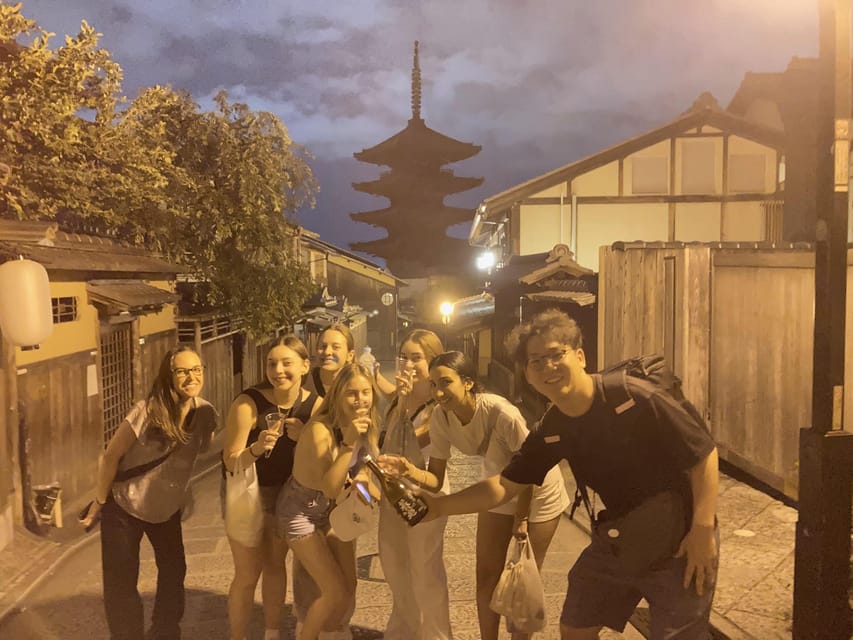
A maximum of 10 people is a meaningful limit in narrow streets. You are less likely to feel lost in a crowd, and the guide has a better chance to hear your questions and help with photos.
The group may be smaller than the maximum. Some departures have had only one participant, while others included a more typical small group. A smaller departure can feel almost private, but you should not book expecting that every time.
The strongest praise has focused on the guides’ manner. Shumpei has been singled out for making people comfortable, answering questions from Kyoto history to anime, and keeping the conversation fun. Nick has been described as friendly, organized, and willing to help people feel at ease entering places they might find intimidating on their own.
That style suits you if you prefer a human guide to a scripted commentary. It may suit you less if you want a detailed academic presentation, a long stop at every temple, or a tour conducted in several languages. The listed language is English.
What the $32 price really buys you
At $32, this tour is reasonably priced for a 90-minute guided walk with a small group, an English-speaking guide, sake, and photo help. You are paying for a well-planned evening route through some of Kyoto’s most sought-after streets without having to work out the order yourself.
The value is strongest for a first visit to Kyoto. You get orientation in Gion, a basic understanding of local customs, and a finished route that leaves you near Yasaka Shrine. The guide can also suggest places to eat or continue sightseeing, which can save time during a short stay.
The value is weaker if you already know Gion well or want long visits inside religious buildings. The tour covers several locations quickly, and the main reward is the overall evening atmosphere rather than extensive time at one site.
A perfect rating from 41 reviews suggests strong satisfaction, but you should still match the format to your own habits. This is a compact walking tour with a social drink, not a private photography session or a specialist course on geisha culture.
Yasaka Shrine provides a fitting finish
The route ends at Yasaka Shrine, one of Kyoto’s major spiritual landmarks. The shrine has watched over Gion for more than 1,300 years and gives the walk a strong final stop.
Ending here is practical as well as symbolic. You can continue through Gion, make dinner plans, or simply pause at the shrine before heading back to your accommodation. Since the tour does not return to Shijo Kiyamachi, check your route afterward before setting out.
The shrine is also a useful place to connect the different parts of the evening. You have seen streets associated with geiko and maiko, a shrine known for cutting bad ties, a Buddhist temple pagoda, and a traditional slope. Yasaka Shrine brings those cultural threads together in one final location.
Who will enjoy this walk most
I would recommend this tour to you if you want:
- A gentle introduction to Gion after dark
- A short activity that fits around a busy Kyoto schedule
- A small group rather than a large guided crowd
- A guide who can answer casual questions
- Photo help at major viewpoints
- A taste of local sake during the walk
- An easy way to see several famous sights in one evening
It is especially useful early in your Kyoto stay, when you still need to get your bearings and want advice about what to see next.
I would think twice if you have back problems, dislike walking on slopes or cobblestones, or want to spend a long time at each shrine. It may also disappoint you if your main goal is to see geiko or maiko in person, since sightings are possible but not promised.
Arrive early, wear comfortable shoes, and keep your voice down in residential and sacred areas. Smoking is not allowed. Free cancellation is available up to 24 hours before the tour, and you can reserve now and pay later if you want to keep your plans flexible.
Should you book this Gion evening walk?
Book it if you want a friendly, good-value introduction to Kyoto’s most atmospheric district. The combination of lantern-lit streets, a compact route, local sake, and guides such as Shumpei and Nick gives the evening more personality than a self-guided walk.
Skip it if you need a slow, specialist tour or have difficulty with uneven walking. For most first-time visitors who want to see Gion at night without spending a large sum, this is a sensible choice. Just treat the geiko sightings as a lucky extra, not a guarantee, and arrive before the sign-holding guide leaves.
FAQ
How long does the Gion evening walk last?
The experience lasts 90 minutes, with the walking portion listed as about 70 to 90 minutes.
What language is the tour conducted in?
The live tour guide speaks English.
How large is the group?
The tour is limited to a maximum of 10 participants.
Where is the meeting point?
Meet at Shijo Kiyamachi on Kiyamachi Street. The guide will hold an Otatrip Guide sign between McDonald’s and Kikunoi Roan, a little south along the street.
Where does the tour finish?
The walk finishes at Yasaka Shrine.
Is sake included?
Yes. A cup of local sake is included during the walk.
Which sights are visited?
The route includes Gion and Hanamikoji Street, Yasui Kompira-gū Shrine, Hōkan-ji Temple and Yasaka Pagoda, Ninenzaka, and Yasaka Shrine.
Will I definitely see a geiko or maiko?
No. The tour explains geiko and maiko traditions, but an actual sighting is not guaranteed.
What should I bring?
Bring comfortable shoes, since this is an outdoor walking tour with cobbled and sloping streets.
Can I cancel the booking?
You can cancel up to 24 hours in advance for a full refund. You can also reserve now and pay later.
More sake after dark around Kyoto
- Kyoto Night Foodie Tour in Gion (9+ dishes + 6 Sake tastings)
★ 5.0 · 1,762 reviews - Kyoto: Foodie Night Tour in Gion with 9 dishes + 6 Sake
★ 4.4 · 26 reviews
Just added for nights around Kyoto
- Kyoto: Station and Tower Night Tour with Light Show★ 4.8 · 5 reviews
- Kyoto: Nighttime Zen Meditation and Matcha Tea Experience★ 5.0 · 7 reviews
- Kyoto: Foodie Night Tour in Gion with 9 dishes + 6 Sake★ 4.4 · 26 reviews
- Kyoto: Night Walking Tour with Geisha Traditions★ 5.0 · 21 reviews
- Kyoto: Gion Morning/Night Walking Tour★ 4.3 · 4 reviews
- Kyoto Magic Night Walk: Gion & Fushimi Inari(Private Option)★ 5.0 · 5 reviews
- Kyoto: Fushimi Inari Taisha Night Tour with Guide★ 4.2 · 4 reviews
- Kyoto: Gion & Geisha district evening tour★ 4.1 · 4 reviews
Kyoto Night Tours, compared.
Kyoto: Gion Magical Night Walking Tour with Geisha Trivia
Read our review →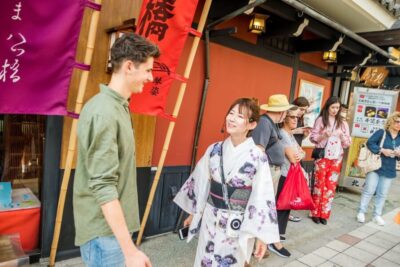
Kyoto Night Foodie Tour in Gion (9+ dishes + 6 Sake tastings)
Read our review →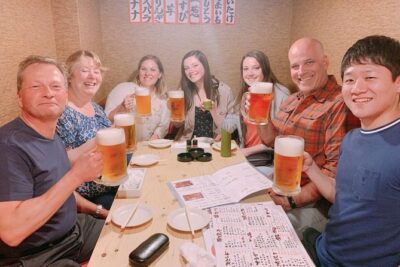
Kyoto Nighttime All-Inclusive Eats and Streets, Gion and Beyond
Read our review →
Kyoto: Gion Sunset Walking Tour with Local Guide
Read our review →Browse the lists this tour appears in