
Review · KYOTO
Kyoto: Foodie Night Tour in Gion with 9 dishes + 6 Sake
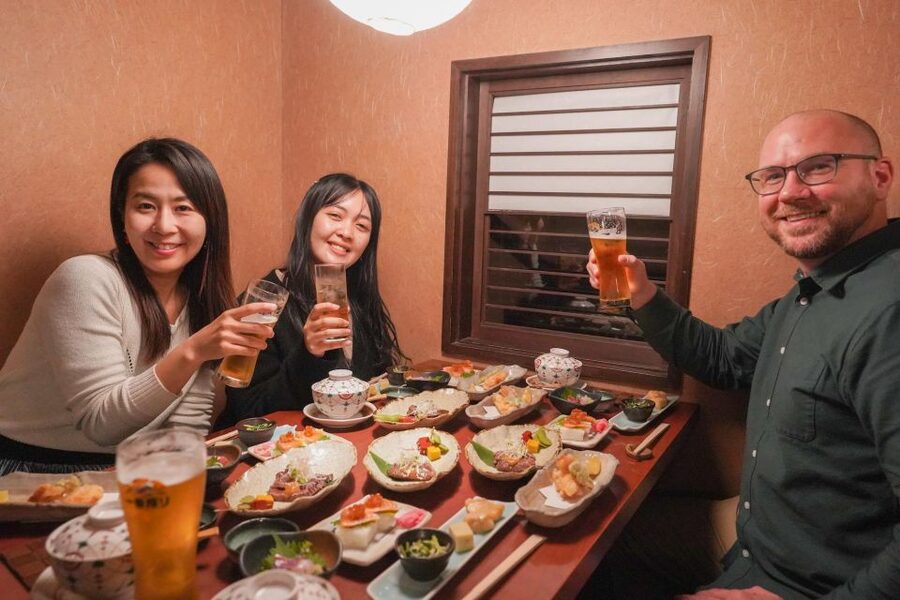
Gion after dark is best enjoyed at walking speed, with a local showing you past old Kyoto buildings and into restaurants you would probably never find on your own. This 210-minute evening combines nine dishes, dessert, and six Kyoto sake tastings with a stroll through Gion and Pontocho.
I like the tucked-away first restaurant and the chance to eat obanzai, oden, or yuba in a traditional setting. I also like the social side, especially when the guide helps a mixed group talk and share the table. Guide Rika has been singled out for doing just that. The main caution is value: at $361 per person, the food needs to be consistently good, and one stop has received uneven feedback.
Key points at a glance
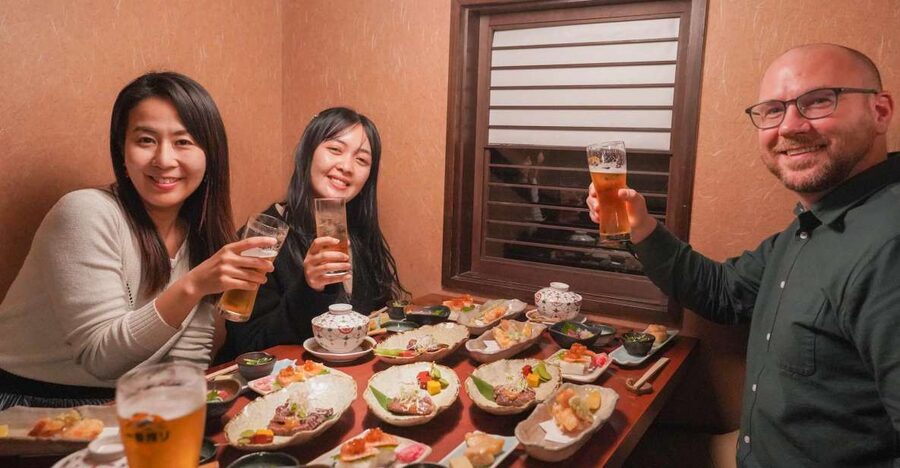
- Nine dishes and dessert: Expect a full evening of small Kyoto dishes rather than one large meal.
- Six sake tastings: Three Kyoto sake varieties are part of the tasting course, with the guide explaining what you are drinking.
- Gion and Pontocho on foot: The route links two of Kyoto’s best-known night districts, with old buildings and narrow lanes along the way.
- A tucked-away traditional restaurant: The first food stop is intentionally hard to find without local help.
- Guide-led conversation: Rika has been praised for making it easy for people at the table to talk.
- A costly, uneven proposition: The $361 price is easier to justify for food-focused visitors who value access and guiding, not just the amount of food.
Starting beneath the Izumo-no-Okuni statue
The tour begins outside Exit 5 of Gion Shijo Station, in front of the statue of Izumo-no-Okuni. This is a practical meeting point because the station sits close to both Gion and Pontocho, the two areas that shape the evening.
You will meet a MagicalTrip English-speaking guide before setting off on foot. The group format is described as a private group, but this is not a private tour, so you should not expect a guide exclusively for your own party. The exact group size is not provided.
From the station, the guide leads you through Gion. This is not just a transfer to dinner. The old Kyoto-style buildings and quiet side streets are part of the experience, and the guide explains how people in Kyoto spend an evening out.
You might spot a geisha passing through Gion, but that is luck, not a promised feature. Keep your expectations sensible. The pleasure here is seeing the district at night without needing to guess which lane or doorway leads to a worthwhile place.
More Night Food Tours in Japan
- Kyoto Night Foodie Tour in Gion (9+ dishes + 6 Sake tastings)
★ 5.0 · 1,762 reviews - Kyoto Nighttime All-Inclusive Eats and Streets, Gion and Beyond
★ 4.5 · 464 reviews - Kyoto Foodie Night Tour
★ 5.0 · 376 reviews
The first restaurant: seasoned Kyoto food in a tucked-away setting
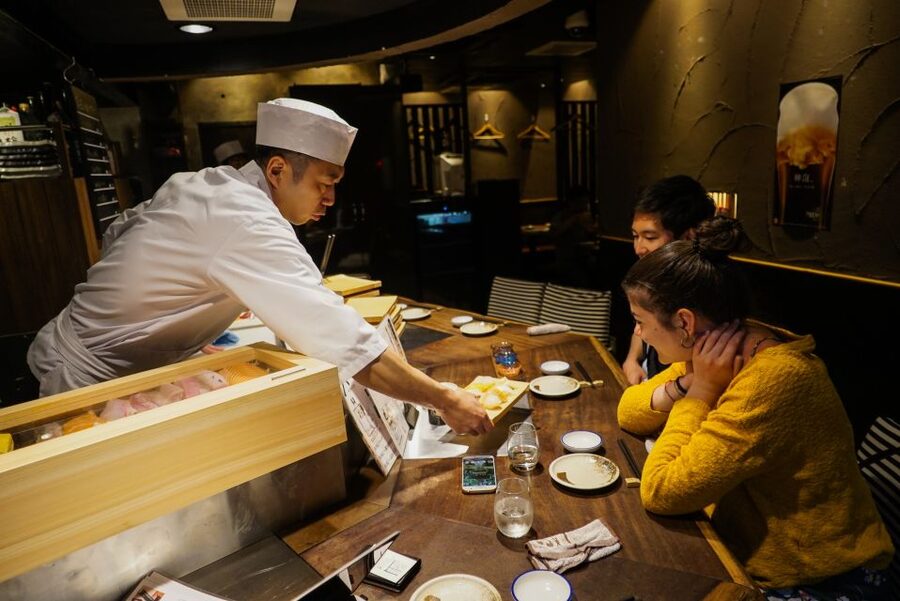
The first substantial stop is a traditional Japanese restaurant that is easy to miss if you do not know it is there. That matters. Gion has plenty of attractive streets, but finding a place with a local feel can be harder than simply walking into the prettiest doorway.
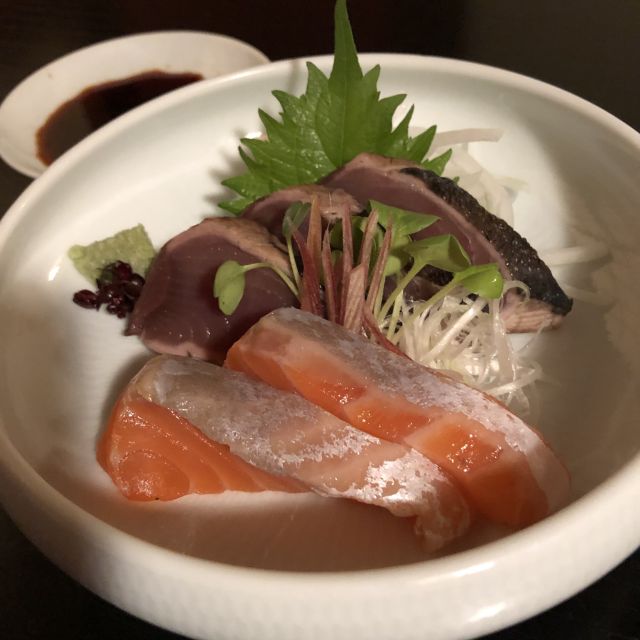
The meal focuses on simple, seasoned Kyoto cooking. Depending on the menu and availability, you may receive obanzai, oden, or yuba. Obanzai is home-style Kyoto cuisine built around modest dishes and careful seasoning. Oden is a Japanese stew, usually served warm, while yuba is the delicate skin that forms on heated soy milk.
These foods are not designed to overwhelm you with heavy sauces or flashy presentation. Their appeal is in texture, restraint, and local character. If you want a better sense of how Kyoto food differs from a generic Japanese dinner, this is the part of the tour that does the most work.
You also receive sake with the meal. The guide explains the drinks as you taste them, which helps if you rarely drink sake or find the labels difficult to understand. Six kinds of sake tastings are included overall, with three different Kyoto-produced sakes specifically described as part of the tasting course.
The food is not guaranteed to follow one fixed menu in every detail. That can be a plus, since local dishes and seasonal availability may shape what appears. It also means you should not book this expecting a precise nine-item menu that is known well in advance.
Six sake tastings and two included drinks
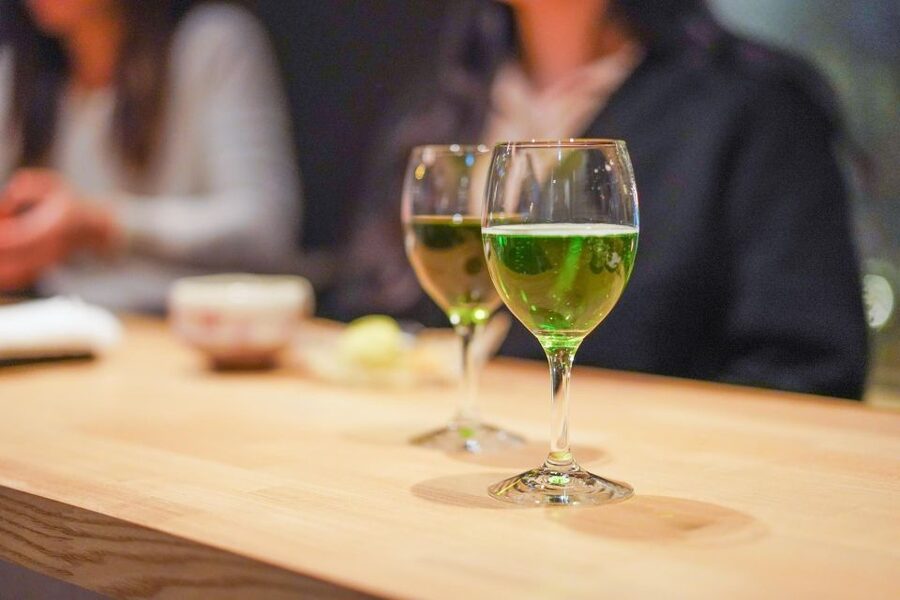
The sake portion gives the evening its strongest food-and-drink identity. You are not simply handed one cup and left to guess what it is. The guide provides context while you taste several styles.
The supplied details describe six kinds of sake tastings, as well as two drinks, with alcohol and non-alcohol options available. Since the wording separates the sake tastings from the two drinks, confirm the exact serving format when booking if the difference matters to you.
Only people aged 20 and over may drink alcohol under Japanese law. If you are under 20, you can still join the food tour, but you must choose non-alcoholic drinks.
Do not treat the sake as an afterthought. The tasting gives you a reason to slow down and compare drinks rather than ordering at random. It also gives your guide an easy way to explain local drinking customs and how sake fits into a Kyoto evening.
Bring cash for drinks, food, and extras. The tour information specifically warns that many bars do not accept credit cards. Even with included tastings, you will be better prepared with yen in your pocket.
Walking through Pontocho between food stops
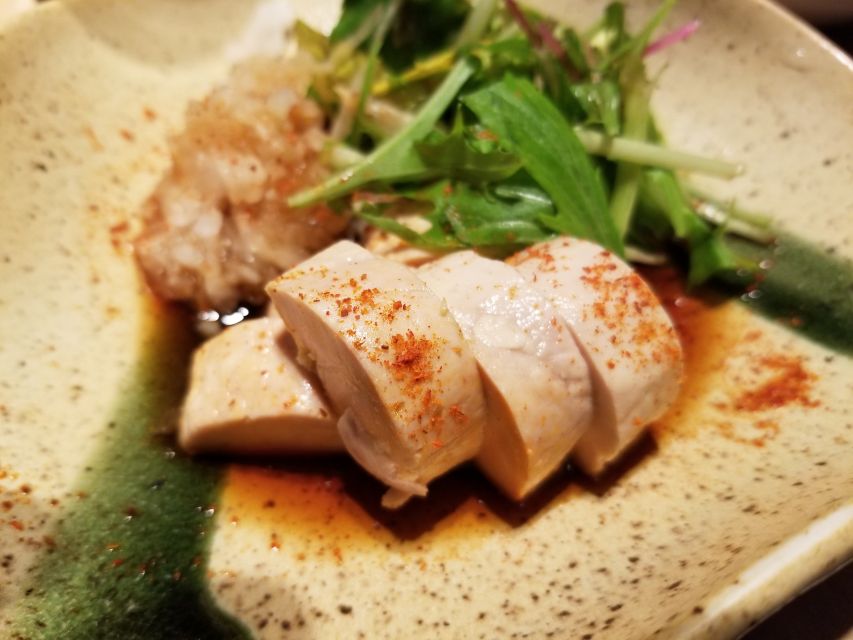
After the first meal, you walk toward Pontocho. This narrow dining lane is one of Kyoto’s most atmospheric evening streets, with restaurants and bars packed into traditional buildings.
The walk helps break up the meal. You are not sitting in one restaurant for three hours, and the change of scene gives the guide room to explain more about Gion and Pontocho. One useful improvement would be more detailed background during this part. The food and access are the focus, but the tour is also a chance to understand why these districts matter.
Pontocho can be busy and cramped, and the old buildings are not all easy to enter. The route includes places that are not accessible to wheelchairs or strollers. It is also not recommended for people with mobility issues. Wear shoes that are comfortable for several hours of walking and standing.
The timing is divided into roughly one hour for the first dinner stop and another hour for the second food stop, followed by about an hour around Gion for dessert and the return walk. The exact pace can vary, but you should plan for a full evening rather than a quick tasting.
More Night Food Tours in Kyoto:
- Kyoto Private Night Tour with a Local – Bars, Bites & Culture
★ 5.0 · 48 reviews - Kyoto: Casual Pontocho Evening Food Tour
★ 4.8 · 31 reviews - Saigon By Night and Street Food By Motorbike | Opt: Ao Dai Riders
★ 5.0 · 4,066 reviews - Bangkok by Night: Temples, Markets and Food Tuk-Tuk Tour
★ 5.0 · 3,752 reviews
The second food stop and the value question
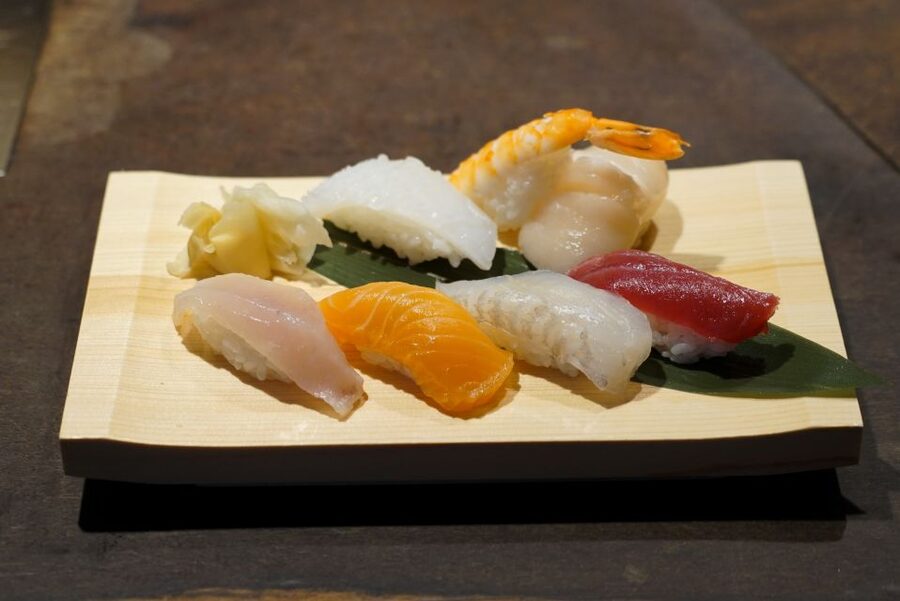
The second stop is another dinner setting in the Pontocho area. Together, the two dinner portions make up the nine-dish course, with dessert later at a Kyoto cafe.
This is where the experience becomes less predictable. One strong account described the first dinner as excellent but found the second stop disappointing. Another sharply negative assessment said the food was below average and that a wagyu serving felt more like a tough topside cut.
That contrast is important. The tour gives you access to multiple places, but a multi-stop format does not guarantee that every dish will match the best one. If one meal is outstanding and the next is ordinary, the fixed price can feel high.
I would book this for the guide, local access, sake explanation, and convenience of having the evening arranged. I would be more hesitant if your only goal is the best possible meal for your money. Kyoto has many restaurants, and you may spend less by choosing carefully on your own, though you would give up the guide and the tucked-away addresses.
Dietary needs require advance planning. You must request them by the day before, and the company cannot guarantee an allergy-free meal because the food is prepared in kitchens it does not control. Substitutions may not be possible at every stop, although the guide will try to make adjustments elsewhere.
Dessert in a traditional Kyoto cafe
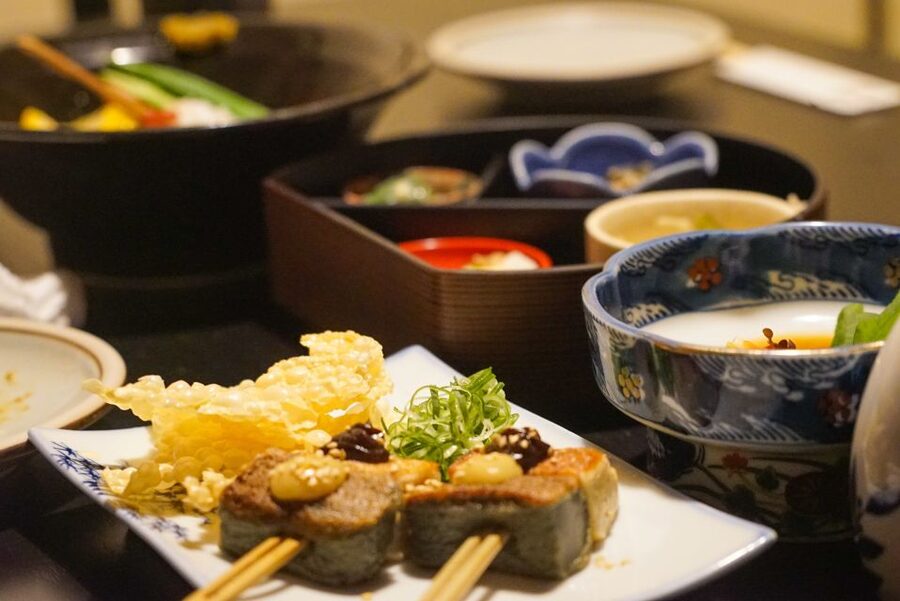
The final food stop is a cafe around Pontocho, in a traditional building. Here you finish with a Kyoto-style dessert, or possibly additional food depending on the arrangement.
Dessert is a sensible ending after several savory dishes and sake. It gives the evening a quieter last chapter and lets you sit down before walking back to the statue. The cafe setting also shows another side of Kyoto dining: not just formal restaurants, but older buildings used for relaxed conversation and sweets.
The information does not specify the exact dessert. That is worth noting if you have a particular sweet in mind. You should expect a local dessert rather than one named item.
Afterward, the route returns to the Izumo-no-Okuni statue at Gion Shijo Station. The full experience lasts 210 minutes, so allow enough time for the walk back and do not schedule another activity immediately afterward.
How the guides shape the evening
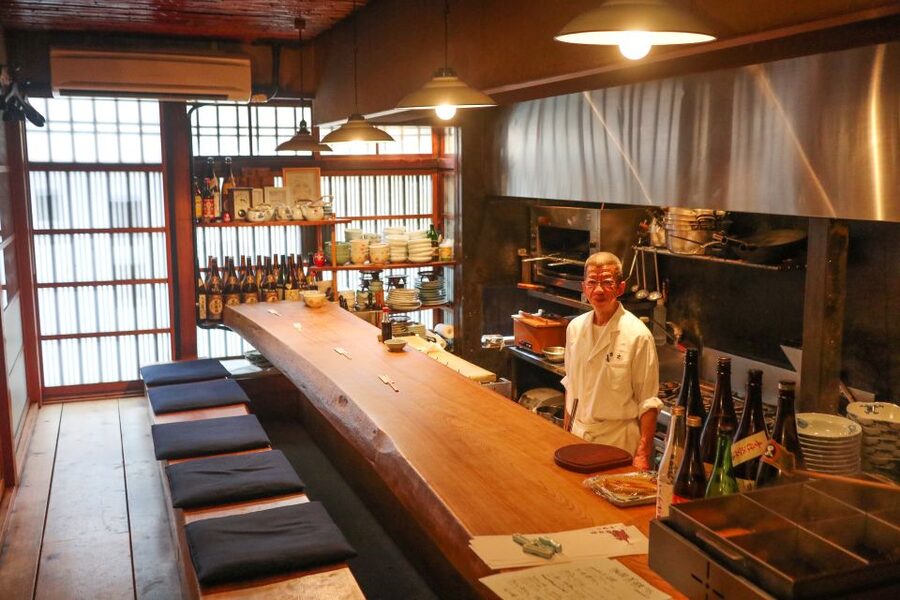
A food tour succeeds or fails partly on the person leading it. The most useful guide is not simply someone who points out restaurants. You want someone who explains what is on the table, keeps the group moving, and makes conversation feel natural.
Rika has received especially strong praise for encouraging conversation among everyone at the table. That is a real advantage if you are traveling alone or joining with people you have not met. A shared meal can otherwise become a quiet sequence of courses.
The guide is also there to explain Kyoto customs and the sake selections. You should make use of that access. Ask about the dishes, how people order in small restaurants, and what makes Kyoto cooking different from food you have tried elsewhere in Japan.
The experience is conducted in English. The guide’s exact name is not guaranteed, so Rika should be regarded as one praised guide rather than the person assigned to every departure.
Weather, clothing, and practical comfort
Summer in Japan can be extremely hot and humid. Bring water and wear a hat, especially if you are joining during the hottest months. You will be outdoors between stops, and the evening walk may feel longer in heavy humidity.
The route is not suitable for everyone with limited mobility. Some locations cannot accommodate wheelchairs or strollers, and the tour is not recommended for people with mobility issues. Ask before booking if you have concerns about stairs, narrow entrances, or standing time.
Wear comfortable shoes and avoid arriving overly hungry. Nine dishes sound substantial, and the evening is spread across several stops rather than served all at once. Pace yourself with both food and sake, especially if you plan to sample all six varieties.
The free cancellation window is 24 hours before the start time, and you can reserve now and pay later. Those terms are helpful if your Kyoto schedule is still shifting, but they do not change the need to plan ahead for dietary requests.
Is $361 a fair price?
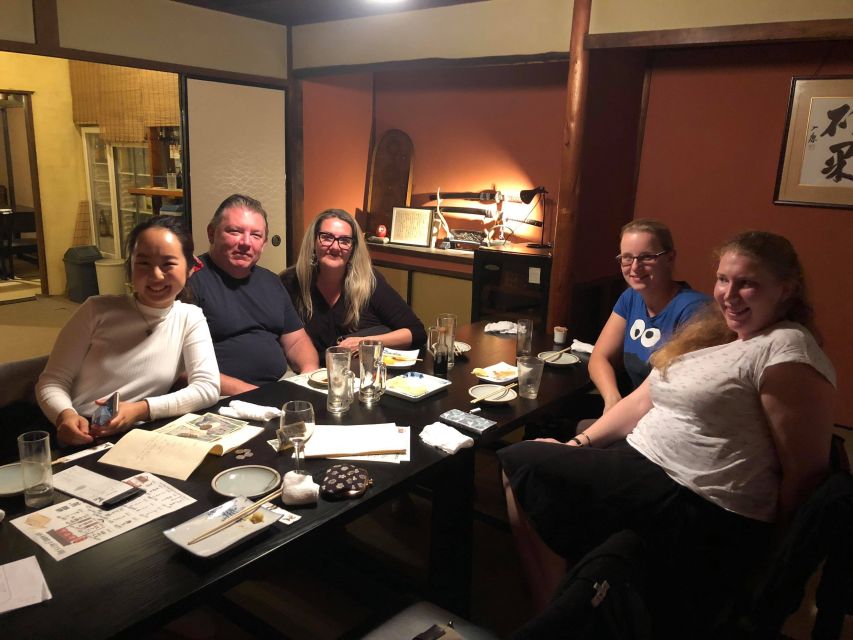
At $361 per person, this is an expensive evening. The price covers nine dishes, dessert, two drinks, six sake tastings, a guide, and tour photos. It also pays for the work of arranging several stops and getting you into places that may be difficult to identify from the street.
Still, food quantity alone does not make the price good. The value depends on four things: the quality of both dinner stops, how much you care about sake, how useful the guide is, and how much you value a planned evening in Gion and Pontocho.
The price is easier to defend if you want an introduction to Kyoto dining and do not want to research restaurants yourself. It is harder to defend if you are a serious food hunter who prefers spending the same money on one excellent meal.
The mixed food experience means I would not sell this as a guaranteed high-end dining tour. Think of it as a guided night out with substantial food, local drinks, and access to traditional places. That is a different product, and it suits some people much better than others.
Who should book this Kyoto food tour?
You should consider it if you want:
- A structured evening in Gion and Pontocho
- Several traditional foods in one sitting
- A guided introduction to Kyoto sake
- Local restaurant access without doing the research yourself
- A social meal where the guide helps people connect
- A full evening rather than a short tasting
You may want to skip it if you need strict allergy control, have limited mobility, dislike walking between stops, or judge a food tour mainly by its price per dish. You should also think twice if a disappointing second meal would overshadow an excellent first one.
Final verdict
This is a well-planned way to see Gion and Pontocho through food, especially if you value the guide and the chance to visit places that are easy to miss. The first traditional restaurant, the sake tastings, and Rika’s friendly group leadership are the strongest reasons to book.
The high price and uneven food reports keep it from being an automatic recommendation. Book it for the complete evening and local guidance, not as a guaranteed gourmet feast. If that balance suits you, this can be a memorable Kyoto night. If you want maximum food value, spend more time comparing restaurants before you commit.
FAQ
Where does the Kyoto food tour begin?
Meet your English-speaking guide in front of the Izumo-no-Okuni statue outside Exit 5 of Gion Shijo Station.
How long does the tour last?
The tour lasts 210 minutes, or three and a half hours.
How many dishes and drinks are included?
The experience includes a nine-dish dinner course with dessert, two drinks with alcohol and non-alcohol options, and six kinds of sake tastings.
Does the tour include alcohol?
Yes. Alcohol is included, but only people aged 20 and over may drink under Japanese law. Non-alcoholic drinks are available.
Can dietary requests or allergies be accommodated?
Dietary requests must be made by the day before the tour. Allergy-free meals cannot be guaranteed, and substitutions may not be possible at every stop.
Is the route suitable for wheelchairs or strollers?
No. Some locations are not accessible to wheelchairs or strollers, and the tour is not recommended for people with mobility issues.
More sake after dark around Kyoto
- Kyoto: Gion Evening Walk with Hidden Gems, Geisha & Sake
★ 5.0 · 41 reviews
Just added for nights around Kyoto
- Kyoto: Station and Tower Night Tour with Light Show★ 4.8 · 5 reviews
- Kyoto: Nighttime Zen Meditation and Matcha Tea Experience★ 5.0 · 7 reviews
- Kyoto: Night Walking Tour with Geisha Traditions★ 5.0 · 21 reviews
- Kyoto: Gion Evening Walk with Hidden Gems, Geisha & Sake★ 5.0 · 41 reviews
- Kyoto Magic Night Walk: Gion & Fushimi Inari(Private Option)★ 5.0 · 5 reviews
- Kyoto: Gion Morning/Night Walking Tour★ 4.3 · 4 reviews
- Kyoto: Fushimi Inari Taisha Night Tour with Guide★ 4.2 · 4 reviews
- Kyoto: Gion & Geisha district evening tour★ 4.1 · 4 reviews
Kyoto Night Tours, compared.
Kyoto: Gion Magical Night Walking Tour with Geisha Trivia
Read our review →
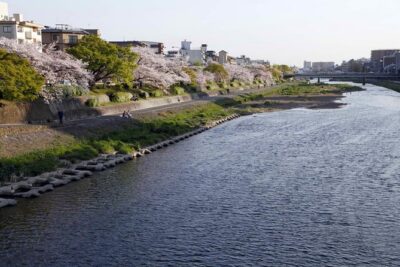
Kyoto Night Foodie Tour in Gion (9+ dishes + 6 Sake tastings)
Read our review →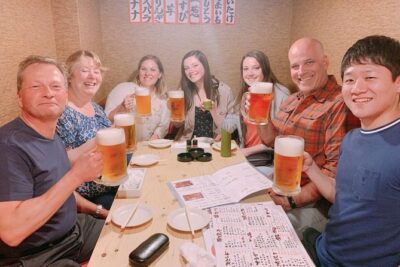
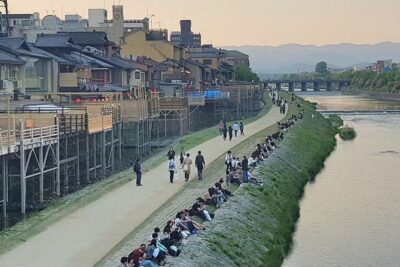
Kyoto Nighttime All-Inclusive Eats and Streets, Gion and Beyond
Read our review →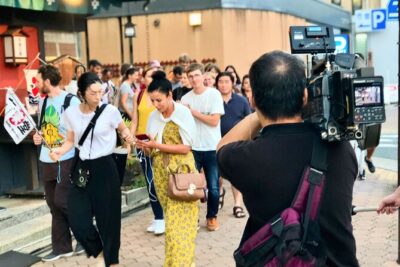
Kyoto: Gion Sunset Walking Tour with Local Guide
Read our review →Browse the lists this tour appears in