
Review · KYOTO
Kyoto: Gion Magical Night Walking Tour with Geisha Trivia
Gion changes after sunset. The lanterns glow, the narrow lanes grow quieter, and the wooden streets around Hanamikoji feel far removed from Kyoto’s busy daytime crowds. This 100-minute walk adds context to the scenery, explaining geisha and maiko customs while taking you to shrines, a pagoda, and less obvious corners of the district.
I like the small group, limited to 10 people, because you can ask questions without shouting across a crowd. I also like the mix of subjects: geisha culture is only one part of the evening, with shrine rituals, local legends, Buddhist architecture, and practical restaurant tips filling out the experience.
The main drawback is the route’s stairs, which make it unsuitable for wheelchair users, baby carriages, and people with limited mobility. You should also arrive early: the advertised time is when the group leaves, not when everyone gathers.
Key points to know before you book

- Gion after dark: See Hanamikoji, lantern-lit streets, shrines, and a Buddhist pagoda when the area is generally quieter.
- Small groups: The tour normally has no more than 10 participants, allowing time for questions and individual attention.
- Geisha culture with proper context: Learn about geiko and maiko customs without treating the tour as a guaranteed sighting opportunity.
- Several kinds of Kyoto sights: The route includes a matchmaking shrine, an illuminated pagoda, narrow side paths, and a shrine more than 1,000 years old.
- Useful local guidance: Guides such as Hina, Shino, Masami, Sho, Pam, and Kevin have shared food suggestions, festival information, and advice for further sightseeing.
- Good value at $24: For 100 minutes of guiding in a small group, the price is modest, especially if this is your first evening in Gion.
Why Gion works better after sunset
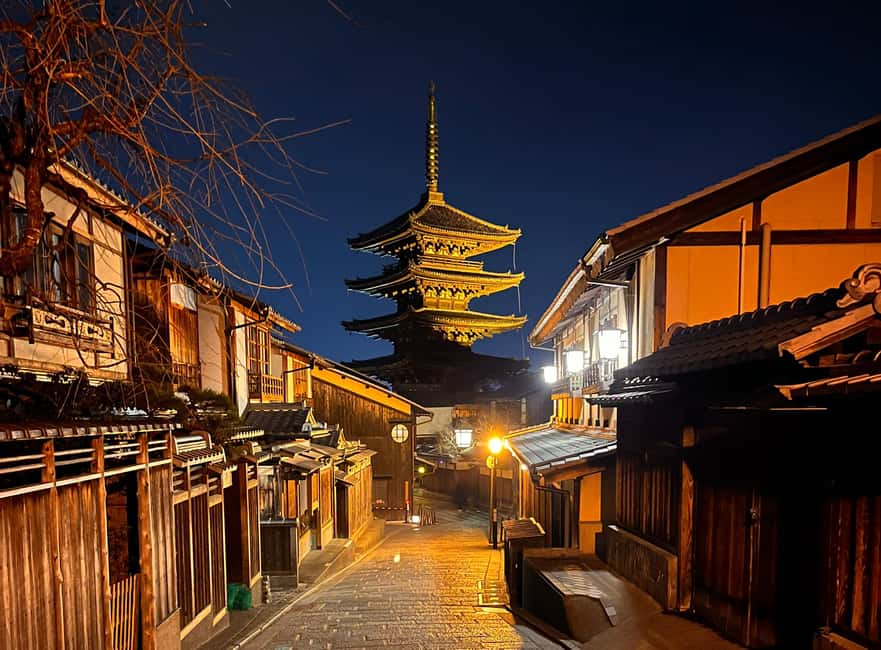
Gion is easy to admire in daylight, but night gives the district a different character. The wooden facades, paper lanterns, and narrow lanes take on a softer look, while the illuminated religious buildings add a calm finish to the walk.
The timing also helps with orientation. Gion has several streets that look similar at first, and it is easy to walk past a small shrine or turn down the wrong lane. A guide can point out what matters and explain why a seemingly plain doorway or lantern is part of the district’s traditional setting.
I would not book this expecting a theatrical geisha show. The tour is a walking introduction to Gion and its culture. You might see a geisha or maiko entering a car or moving through the streets, but no sighting is promised. That distinction matters, both for your expectations and for respectful behavior in a residential and working district.
The evening also tends to feel less crowded than daytime sightseeing. Several participants found the quieter streets to be one of the strongest reasons to choose a night departure. If you have already wandered around Gion during the day, the lighting and calmer pace can still make this feel like a different visit.
More Night Walking Tours in Japan
- Night Walk in Gion: Kyoto’s Geisha District
★ 4.5 · 2,003 reviews - Osaka Backstreet Nightlife & Street Food Walking Tour
★ 5.0 · 1,011 reviews - Osaka Bar Hopping Night Walking Tour in Namba (3 bars, 6 tastes)
★ 5.0 · 958 reviews
Meeting at Minamiza Theatre
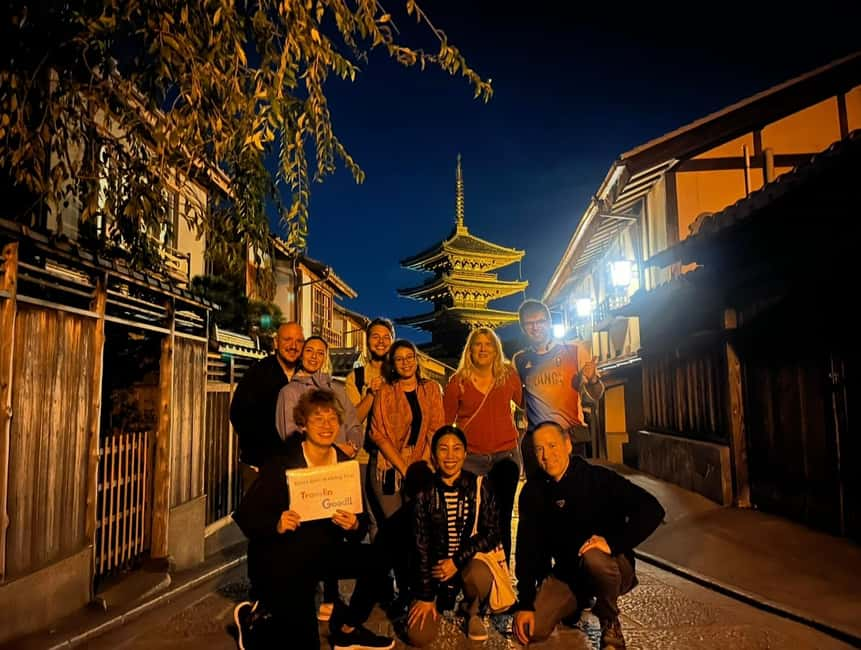
The tour begins in front of Minamiza Theatre, a well-known landmark in Gion. You need to meet on the front side of the theatre and look for a guide holding a TravelinGood sign.
The stated time is the departure time. It is not a suggested arrival time, so arrive at least five minutes early. This is especially important if you are coming by bus or taxi, since traffic can delay you near central Kyoto.
I like this meeting point because it is easy to identify, but the surrounding area can be busy. Give yourself enough time to locate the correct side of the theatre rather than arriving at the last moment. A late arrival may mean missing the group as it moves into the district.
There is also a limited February option beginning at 3pm. That departure is useful if you have evening plans or prefer walking while there is still daylight. The regular night timing is the better choice if your priority is glowing streets and illuminated buildings.
Hanamikoji and the working world of geiko
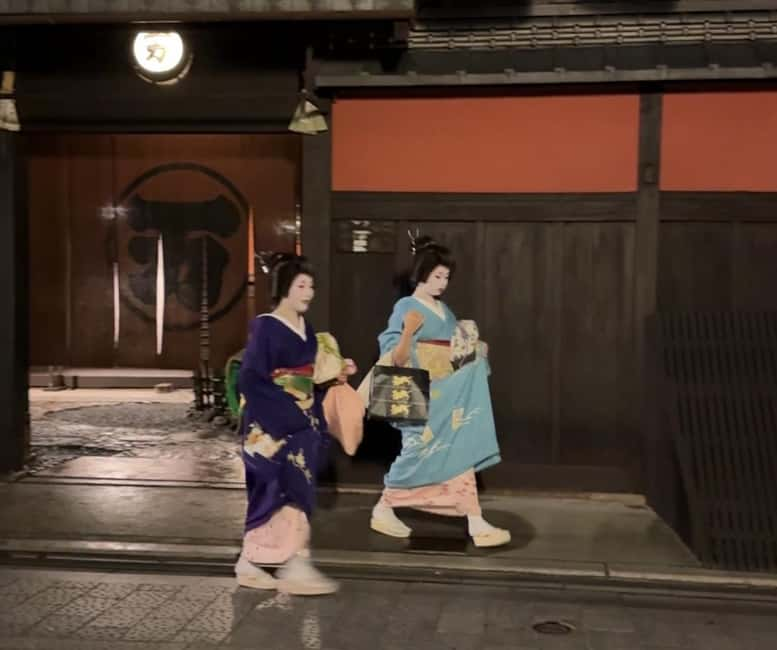
From Minamiza, the route heads toward Hanamikoji, one of Gion’s best-known streets and a central part of the geisha district. The traditional buildings are attractive, but the guide’s explanation is what gives the area meaning.
You learn about the difference between geiko and maiko, the stages of training, clothing, hairstyles, and the customs connected with the profession. Guides have used pictures and videos to explain these differences, which can be helpful because the details are easy to miss when you are simply looking at a passing figure.
The information is presented as local culture rather than as a hunt for photographs. That is important in Gion, where people working in the district need to move about without being followed or stopped. If you happen to see a geisha or maiko, watch from a respectful distance and let the guide set the tone.
Several guides have different strengths. Hina has been praised for combining clear explanations with a friendly manner. Shino has helped visitors understand shrine rituals and offered food suggestions. Masami has spent time answering detailed questions, while Sho has used photographs and stories to make the subject easier to follow. You may receive a different guide, but the repeated pattern is an English-speaking host who can explain the customs in accessible terms.
This section suits first-time visitors best. If you have already spent hours studying geisha culture or taken a dedicated cultural class, some of the material may be familiar. Even then, the street setting and local examples add something that a book cannot.
Shrines, prayers, and the spiritual side of Gion
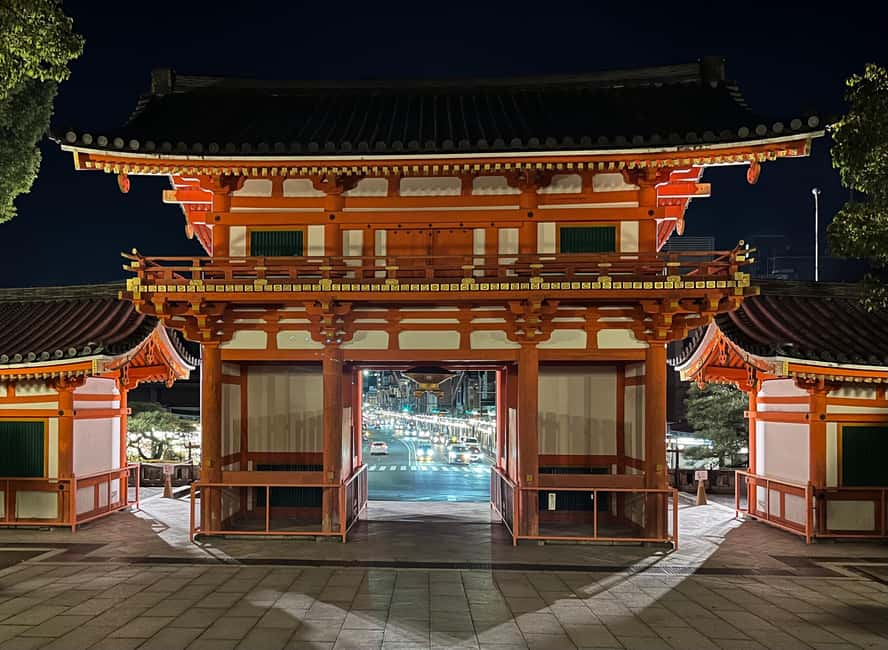
The route does not stay focused on geisha culture. You also visit a shrine associated with matchmaking and learn about the meaning of the site. This gives the walk a personal connection for many people, since the shrine is tied to hopes for relationships and good fortune.
A guide may also show you how to pray at a Shinto shrine. The instruction is practical, not just historical. Shino, for example, has helped people practise the ritual so they could take part with more confidence. If you have never visited a Japanese shrine before, this small lesson can prevent the usual uncertainty about what to do.
The walk also touches on the difference between Shinto and Buddhism. Kyoto places both traditions close together, and a short explanation helps you understand why the buildings, symbols, and rituals differ. This is one of the tour’s strengths: you are not only looking at pretty places, but learning how they fit into daily life and local belief.
The final shrine is more than 1,000 years old. The exact route can vary with conditions and group needs, but the evening generally ends with this older religious site after passing through quieter paths. It gives the walk a thoughtful finish rather than ending immediately after the main geisha streets.
More Night Walking Tours in Kyoto
- Kyoto Gion Night Walk & Geisha District Guided Tour
★ 5.0 · 786 reviews - Gion Walking Tour by Night
★ 4.5 · 429 reviews - Kyoto: Gion Sunset Walking Tour with Local Guide
★ 4.7 · 351 reviews
The illuminated Buddhist pagoda
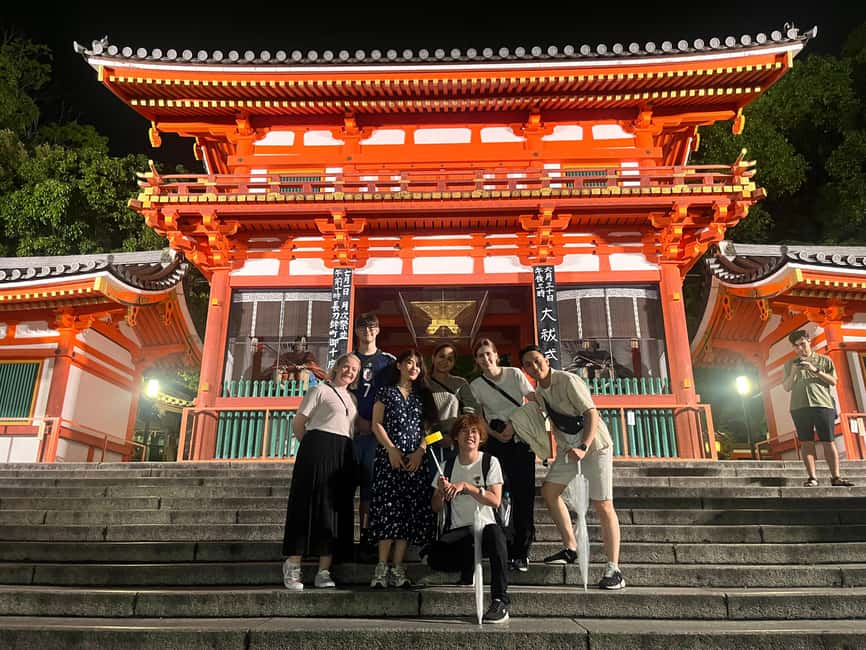
One of the most memorable stops is a Buddhist pagoda outside the main geisha district. At night, its lighting gives the structure a striking presence, and several participants have singled it out as a highlight.
The pagoda broadens the experience beyond the familiar image of Gion. You see another side of Kyoto’s religious architecture, then hear how it relates to the wider area. The stop is also a good reminder that Gion is not just a preserved entertainment district. It is part of a larger urban setting filled with places of worship and long-standing local customs.
Photography is included, which is useful when the light is low and you want a group photo or a better record of the evening. Do not expect a formal photo session at every stop. The service is best understood as a helpful extra while you walk.
The route includes stairs and some uneven sections. One participant described the walk as manageable for older people, while the official information clearly rules out wheelchairs, baby carriages, and people with limited mobility. Both points can be true: the distance is not especially demanding, but the route is not fully accessible.
Quiet lanes and a slower walking pace
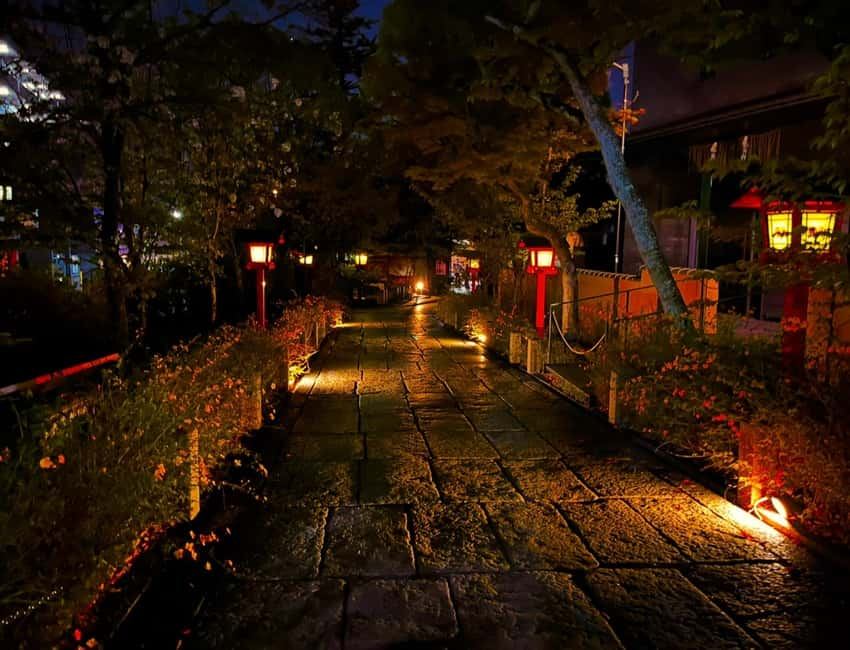
Between the main stops, the guide takes you through side streets and less obvious pathways. These sections are not about checking off famous landmarks. They let you notice lanterns, private clubs, building details, and the way Gion’s streets connect.
The pace is generally relaxed. One guide, Masami, was noted for walking slowly and checking that everyone had time to follow. That matters in a small group, since people may want to stop for a photograph or ask about a detail along the way.
I would call this a light walking tour rather than a strenuous hike. Still, you should wear comfortable shoes and be ready for stairs. In winter, Kyoto evenings can be cold, and one guide even provided a hand warmer to a participant. Bring your own warm layer rather than relying on that kind of extra.
The smaller group size is a practical advantage here. With up to 10 people, the guide can keep the group together without making every stop feel like a traffic jam. Groups may be smaller, too. One outing had only four participants, which made questions and conversation especially easy.
What the guides add to the evening
The guide can make or break a culture walk, and this experience depends heavily on the person leading it. The strongest examples include Hina, Shino, Masami, Sho, Pam, Kevin, Yuri, Sora, and Wasabi, all praised for clear English, warmth, or useful local detail.
Wasabi, who is from Kyoto, explained geisha customs as well as the nearby temples and shrine rituals. Yuri combined facts with humour and a relaxed manner. Kevin was noted for clear English and easy-to-follow stories, while Pam brought extra information about local festivals and restaurant choices.
You may also receive a younger guide or someone from outside Japan. That is not automatically a weakness. One guide from Honduras was described as helpful and well informed, and several guides have made the walk feel personal without losing focus.
The best guides do more than recite dates. They answer questions, explain small customs, and suggest what to see or eat after the tour. If you want a purely academic lecture, this may feel informal. If you want a friendly introduction that helps you understand what you are seeing, the style should suit you.
Is $24 good value for 100 minutes?
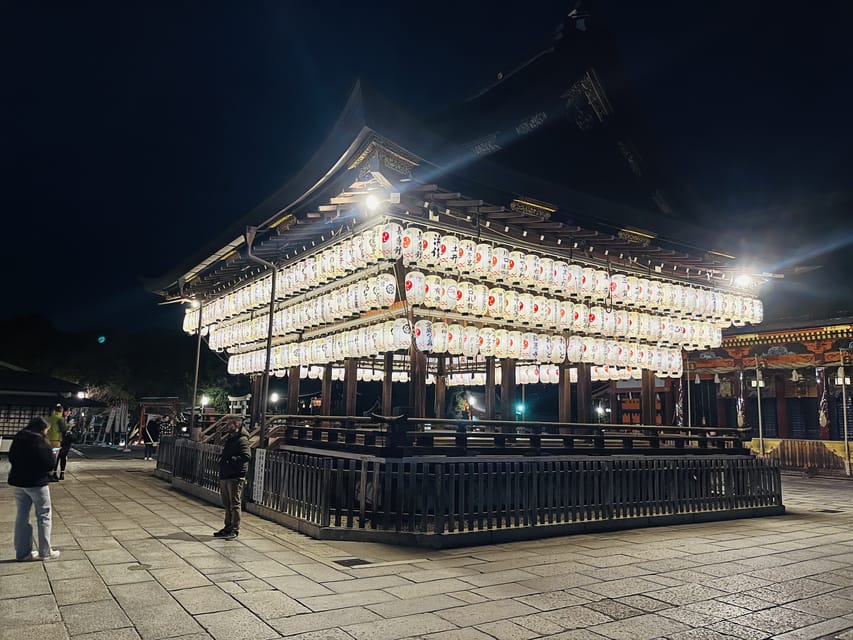
At $24 per person, the price is reasonable for a 100-minute small-group tour in central Kyoto. You are paying for an English-speaking guide, a planned route, cultural explanations, photography help, and access to local context that is hard to gather while walking alone.
The value is strongest if this is your first or second day in Kyoto. The tour helps you get your bearings in Gion, introduces shrine etiquette, and points out places you may want to revisit in daylight. It can also save time by connecting several sights in one evening.
The value is less clear if you have already explored every major lane in Gion and spent time studying geisha culture. One participant felt the walk offered little new information for someone already familiar with the area. In that case, you are mainly paying for company, nighttime atmosphere, and a guided route.
There are no admission fees listed for the walk, and the included photography service is a useful touch. You will still need to pay for your own food and transport to the meeting point. The booking terms allow free cancellation up to 24 hours before the start, and you can reserve now and pay later, which helps if your Kyoto plans are still shifting.
Who should book this Gion night walk?
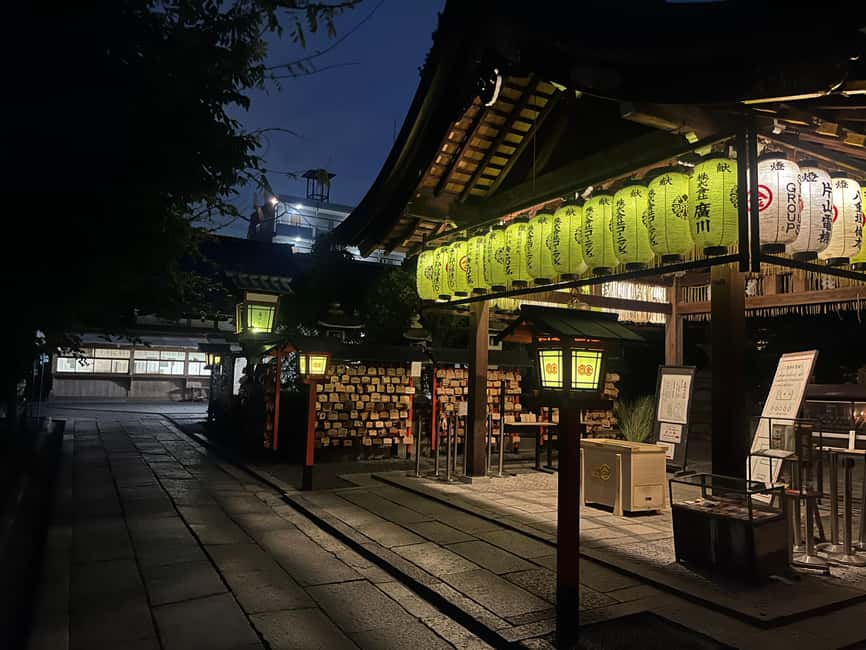
I would recommend it to first-time Kyoto visitors, couples wanting a calm evening walk, families with older children, and anyone interested in Japanese religious customs as well as geisha culture. Children under six do not need a ticket, and children aged nine and eleven have enjoyed the mix of stories, sights, and activity.
It also suits you if you want a gentle introduction before exploring Gion on your own. The guide can explain what you are seeing, show you how to pray, and offer suggestions for restaurants or later sightseeing.
I would be more cautious if you have limited mobility, use a wheelchair, or need a baby carriage. The stairs rule out those needs. I would also skip it if your only goal is a guaranteed meeting with a geisha, since the tour is not designed for that.
The language is English only. You should also know that a ticket is valid only for its booked date and time. Do not join a different departure without confirmation, since the small group limit depends on everyone attending the correct session.
Final decision: a strong first evening in Kyoto
Book this tour if you want Gion explained rather than simply photographed. The strongest parts are the night setting, the small group, the clear introduction to geiko and maiko customs, and the mix of shrines, lanes, and illuminated architecture.
At $24, it offers solid value for a well-paced 100-minute orientation. Choose the night departure for the full lantern-lit atmosphere, or look for the February 3pm option if you prefer daylight or have evening plans. Just arrive early, wear comfortable shoes, and treat any geisha sighting as luck rather than the main event.
FAQ
Where does the tour meet?
Meet in front of Minamiza Theatre, on the front side of the building. The guide holds a TravelinGood sign.
How long does the tour last?
The walking tour lasts 100 minutes.
What time should I arrive?
Arrive at least five minutes before the stated start time. The listed time is when the group leaves the meeting point, not the time to begin arriving.
Is the tour conducted in English?
Yes. The tour has a live English-speaking guide.
How large is the group?
The tour is limited to 10 participants. Some departures may have fewer people.
Will I definitely see a geisha or maiko?
No. You might see a geisha or maiko, but the tour is not intended as a guaranteed meeting with one.
Is the route accessible for wheelchairs or baby carriages?
No. Stairs along the route make it unsuitable for wheelchair users, baby carriages, and people with limited mobility.
Do children need tickets?
Children under six years old do not need to purchase tickets.
Can I cancel the booking?
Yes. You can cancel up to 24 hours before the tour for a full refund. You can also reserve now and pay later.
Just added for nights around Japan
- Kyoto Private Night Tour with a Local – Bars, Bites & Culture★ 5.0 · 48 reviews
- Private Tokyo Night Tour★ 5.0 · 115 reviews
- Osaka After Dark: Small-Group Night Food Tour (Max 6)★ 4.5 · 245 reviews
- Osaka Nighttime tour★ 5.0 · 270 reviews
- Osaka: Bar-Hopping Night Tour in Namba★ 4.7 · 117 reviews
- Osaka: Private Vibrant Nighttime Photoshoot (Dotonbori)★ 4.9 · 80 reviews
- Tokyo by Night Photography Tour (Private Option Available)★ 5.0 · 151 reviews
- Kyoto: Gion Sunset Walking Tour with Local Guide★ 4.7 · 351 reviews
Kyoto Night Tours, compared.
Kyoto Night Foodie Tour in Gion (9+ dishes + 6 Sake tastings)
Read our review →
Kyoto Nighttime All-Inclusive Eats and Streets, Gion and Beyond
Read our review →
Kyoto: Gion Sunset Walking Tour with Local Guide
Read our review →
Kyoto Private Night Tour with a Local – Bars, Bites & Culture
Read our review →Browse the lists this tour appears in