
Review · SEOUL
Seoul: Palace, Temple and Market Guided Foodie Tour at Night
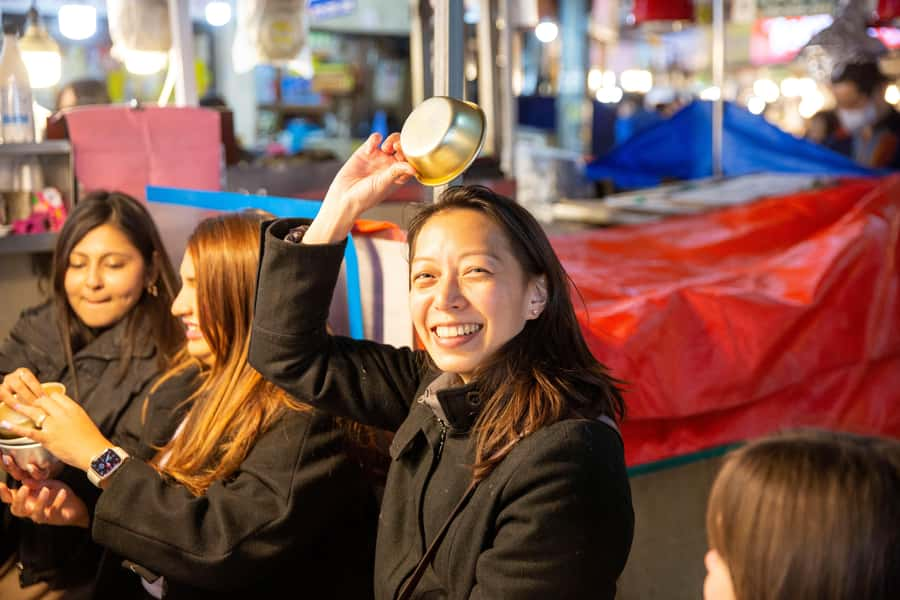
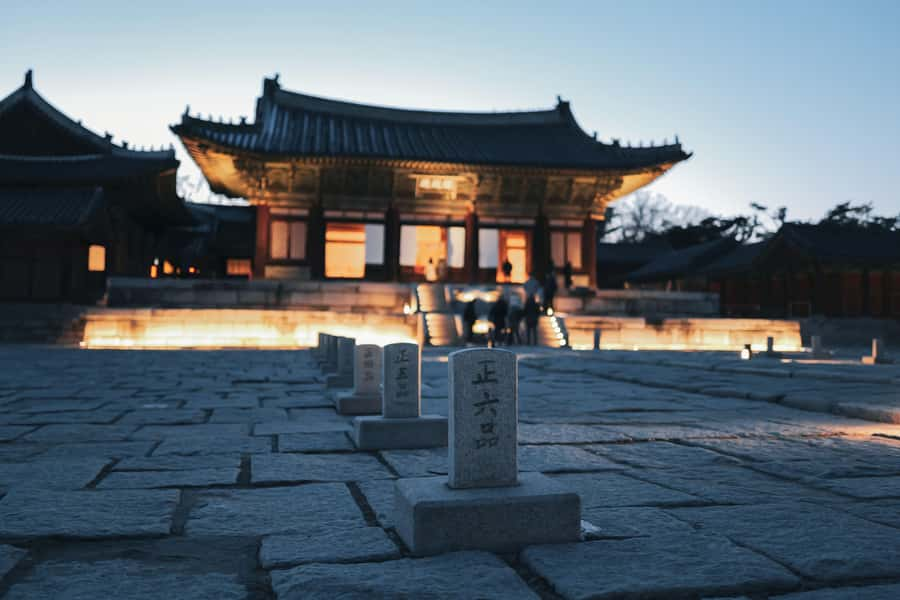
Changgyeonggung Palace after dark is the star here. Lanterns and soft lighting give the Joseon-era buildings and gardens a different mood than a daytime palace visit, then the tour shifts from quiet courtyards to the food stalls of Gwangjang Market. I especially like the pairing of nighttime history and local food, and the fact that you taste several Korean dishes rather than stopping for one ordinary meal.
I also like the route through Jongno, which links Daehangno, Ikseon-dong, Jongro 3-ga, and Jogyesa Temple in one evening. The main drawback is the walking: you cover a lot in four hours, often on foot, and the night can feel cold. This is a good choice if you want a packed introduction to central Seoul, but not if you prefer a slow, sit-down evening.
Key points at a glance
- Changgyeonggung after dark: Spend about an hour touring one of Seoul’s Joseon Dynasty palaces under evening lights.
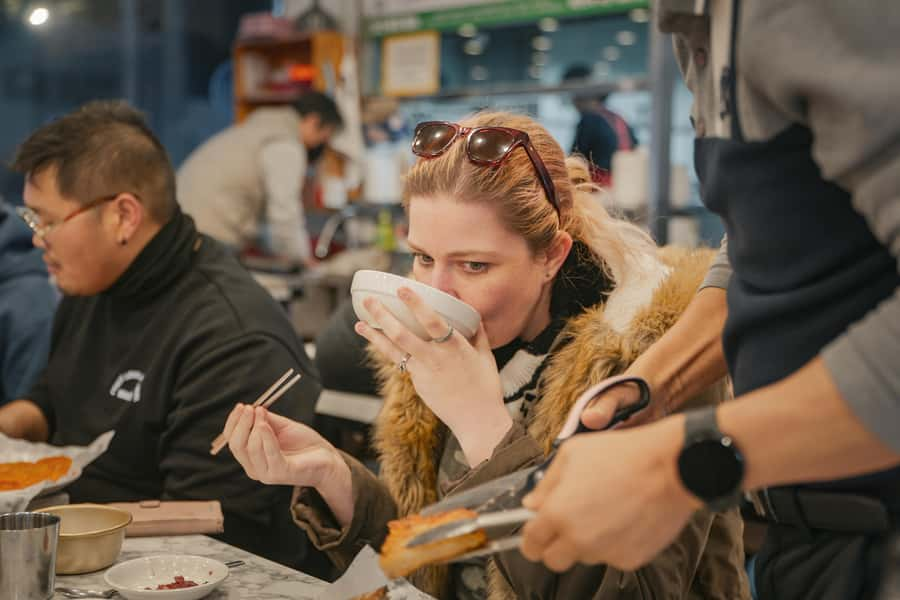
- Four market tastings: Try makgeolli, assorted jeon, chopped live octopus, and local snacks at Gwangjang Market.
- A useful Jongno route: Connect Daehangno, Ikseon-dong Hanok Village, Jongro 3-ga Pocha Street, and Jogyesa Temple.
- Guides who add context: Guides including Mia, Kim, Jay, Inha, and Thomas have been praised for clear explanations, local stories, and attentive group management.
- Good value at $60: Entrance fees, the guide, market food, rice wine, fritters, and octopus are included.
- Plan for walking: The route is wheelchair accessible, but it still involves a moderate amount of movement over four hours.
Why this Seoul night tour works
Many Seoul tours force you to choose between history and food. This one makes the two parts support each other. You begin near Hyehwa Station, in the Daehangno area, then see palace architecture, walk through old neighborhoods, visit a Buddhist temple, and finish with food along the way.
The timing matters. Changgyeonggung feels more hushed at night, while Gwangjang Market is at its most social and energetic around the evening meal. You get a taste of Seoul’s grand royal past and its everyday food culture without spending a full day on either subject.
The tour also gives you a useful first look at Jongno. You will not see every major sight in Seoul, and this is not meant to replace a full palace day or a separate food tour. Instead, it gives you a four-hour framework for several central districts, with a guide to explain what you are seeing.
The activity costs $60 per person. That is fair if you would otherwise pay separately for palace entry, a guided walk, several food portions, makgeolli, and the convenience of knowing which stalls to visit. The value depends partly on your appetite and interest in guided history. If you only want a quick snack and a few photographs, it may feel expensive. If you want a structured evening with food and cultural context, the price is easier to justify.
More Night Food Tours in the world:
- Saigon By Night and Street Food By Motorbike | Opt: Ao Dai Riders
★ 5.0 · 4,066 reviews - Bangkok by Night: Temples, Markets and Food Tuk-Tuk Tour
★ 5.0 · 3,752 reviews - Private Street Food Evening Walking Tour in Ho Chi Minh City
★ 5.0 · 3,175 reviews
Meeting at Hyehwa and crossing Daehangno
The meeting point is outside Exit 4 of Hyehwa Station. Look for the guide holding a Tripper sign. The tour ends back at the same meeting point, so you do not need to arrange a late-night pickup or figure out a new part of Seoul after the final stop.
Daehangno is introduced as the group moves toward the palace. This area is known in the tour route as Seoul’s arts hub, and it helps set up the contrast between modern city life and the older royal grounds ahead. The itinerary passes through Daehak-ro rather than treating it as a full stop, so do not expect a long theater or neighborhood tour here.
Your guide is an important part of the evening. Names associated with this experience include Mia, Kim, Jay, Inha, Thomas, Mindi, and J, though your assigned guide will depend on the date. Mia is especially noted for keeping the group together, explaining history clearly, and adding humor. Kim is praised for local stories and cultural background, while Jay has helped visitors try foods they might otherwise have skipped.
That range matters because the tour contains several transitions. A good guide keeps the evening from feeling like a list of unrelated stops. The strongest guiding style here appears to be friendly and explanatory rather than formal or academic.
Changgyeonggung Palace under the lights
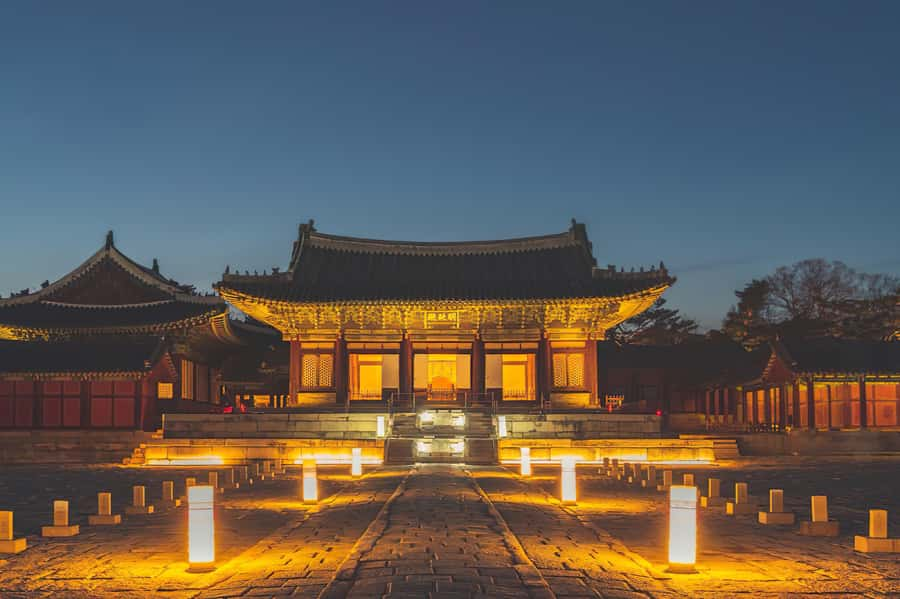
You spend about an hour at Changgyeonggung Palace, including a guided visit and time for photographs. This is the most atmospheric part of the tour. The palace buildings take on a softer appearance under the evening lighting, and the grounds feel less exposed than they often do during a busy daytime visit.
Changgyeonggung is a Joseon Dynasty royal site, and the guide provides the political and cultural background that makes the buildings more than attractive photo settings. You will hear about the palace’s place in Seoul’s royal story while moving through its architecture and gardens.
I like this stop because it gives the food portion some context. Korean cuisine is not presented as a stand-alone novelty. The palace helps explain the older culture behind the customs, ingredients, and social traditions you encounter later in the market.
Allow yourself time to look up from the guide and notice the setting. Night tours can make photographs harder, especially if you are hoping for sharp architectural detail, but the atmosphere is the point. The soft lights, dark sky, and quieter grounds create a different experience from a standard daytime palace visit.
The palace section is guided, so you are not left to guess what each building represents. Several guides, including Mia and Mindi, have been praised for making this portion especially interesting. One practical note: if you are sensitive to cold, bring an extra layer. The evening temperature becomes more noticeable once you stop moving for explanations and photographs.
Gwangjang Market and the first real meal
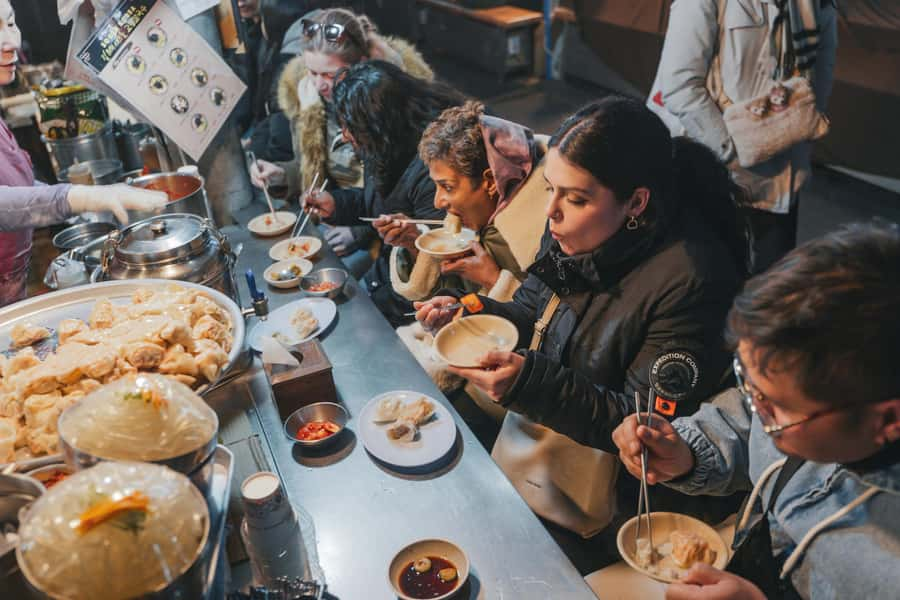
From Changgyeonggung, the group walks about 10 minutes to Gwangjang Market. This is where the tour changes pace. The market’s food area is crowded, colorful, and full of quick meals, snacks, and stalls serving familiar Korean dishes in a direct, informal setting.
Your included tastings are the main value of the evening:
- Makgeolli, a traditional Korean rice wine
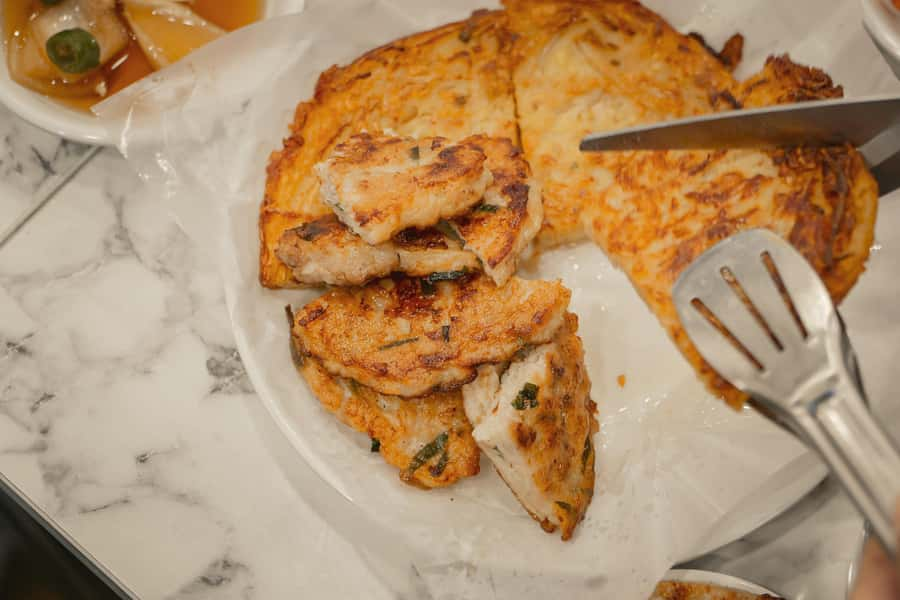
- Assorted jeon, or Korean fritters and pancakes
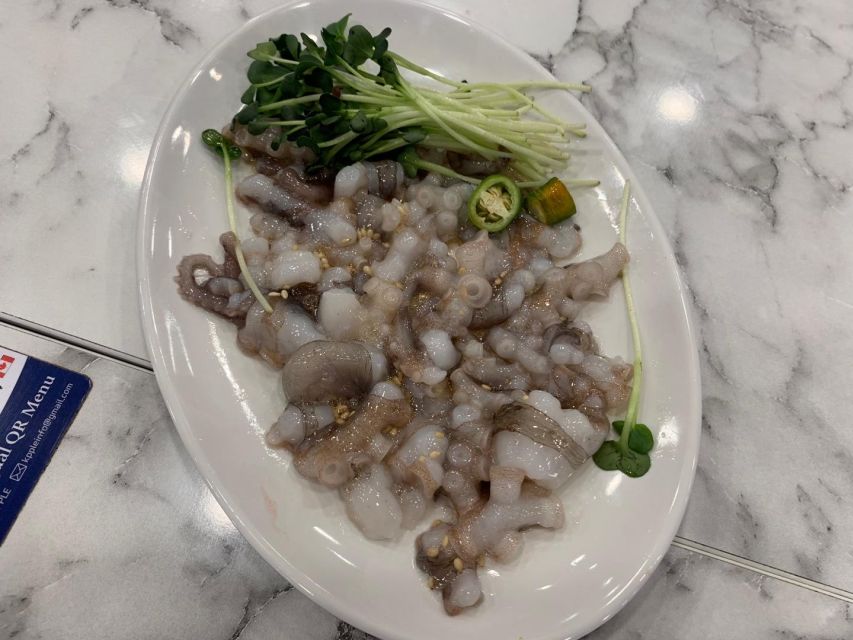
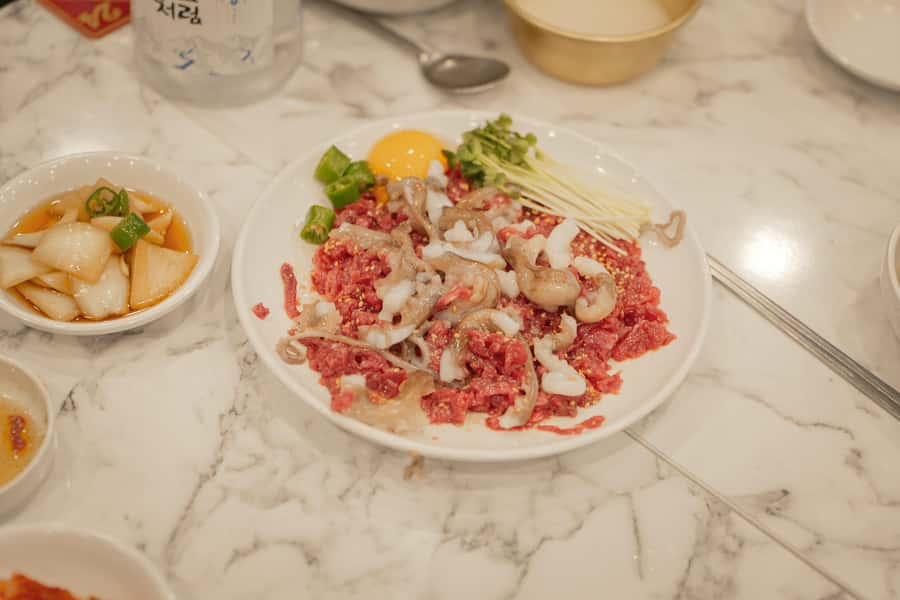
- Chopped live octopus
- Local market snacks, including the option to try kkwabaegi, a twisted Korean doughnut
The jeon selection may include kimchi jeon, tofu jeon, meat jeon, and similar varieties. This is useful for first-time visitors because you can compare several styles instead of ordering one large plate without knowing what you prefer. The fritters are also an easy introduction to Korean comfort food.
Makgeolli adds a distinctly Korean element to the meal. It is not simply another drink included for convenience. The guide can explain its place in local food culture, and tasting it alongside jeon makes sense because the two are often paired.
The chopped octopus is the boldest item. Eating it is optional, so you can try a small portion, decline it, or simply watch others take the plunge. If you do taste it, chew carefully. This is the one part of the menu that may feel more like a challenge than a comfort food.
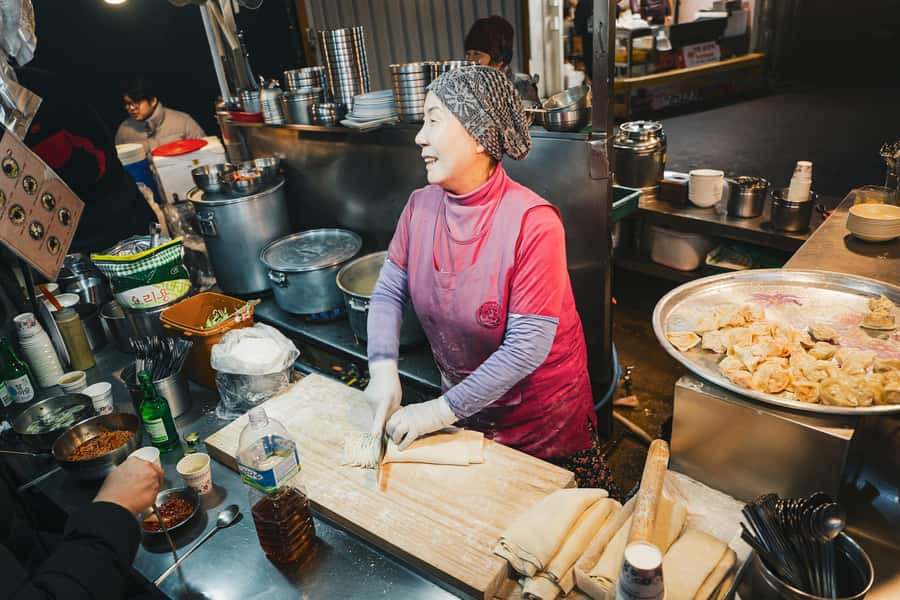
You may also get to sample foods associated with Gwangjang Market’s wider reputation, including dumplings from the stall featured in a Netflix street-food documentary. That particular tasting is not listed as a guaranteed inclusion, so treat it as a possibility rather than a promise. The same applies to the exact snack selection, which can vary.
The tour includes an arranged food experience, but it is not a long restaurant dinner with a private table. You move through the market, taste several items, and learn how to recognize local favorites. That makes it a better fit for curious eaters than for anyone expecting a quiet multi-course meal.
Vegetarian and halal options are available if you specify them when booking. Do that in advance. The standard tastings include meat and seafood, so dietary needs should not be left to chance at the market.
More night markets around the world:
- Phuket: Full Day City Tour with Night Market
★ 4.5 · 2,888 reviews - Seoul: Night Market Food Tour with Local Guide
★ 4.9 · 943 reviews - Cancun Taco Tour, Local Beer and Night Market with Transportation
★ 5.0 · 816 reviews - Bangkok: Night Bike Tour with Temples & Flower Market Visit
★ 4.8 · 751 reviews
Jongro 3-ga and Ikseon-dong after dinner
After Gwangjang Market, you walk about 15 minutes toward Jongro 3-ga Pocha Street. The stop lasts roughly 15 minutes and focuses on sightseeing and explanation rather than another full meal.
Pocha refers to the casual tent-style drinking and dining culture found in Korea. This part of the route gives you a look at Seoul’s evening social life, with food and drinks enjoyed in a more spontaneous setting than a palace courtyard or formal restaurant.
Next comes Ikseon-dong Hanok Village for about 15 minutes. The preserved hanok houses offer a sharp visual contrast with the broad royal grounds at Changgyeonggung. Here the streets are tighter and the traditional homes are woven into a modern urban setting.
This is one of the most useful parts of the tour for orientation. You see how old buildings can sit beside current cafes, shops, and nightlife. The stop is brief, so you will not explore every lane. Still, it adds texture to the evening and helps you understand why Jongno feels different from Seoul’s newer commercial districts.
The walking between stops is manageable for most reasonably active participants, but it adds up. The tour is not difficult in the way a mountain hike is difficult, yet four hours of standing, walking, and moving through crowds can tire you. Wear comfortable shoes and keep your hands free for food and photographs.
Jogyesa Temple and a quieter final stop
Jogyesa Temple is the final major sight, with about 30 minutes for a visit, photographs, and a guided explanation. After the noise of the market and the social atmosphere of Jongro 3-ga, the temple gives the evening a calmer finish.
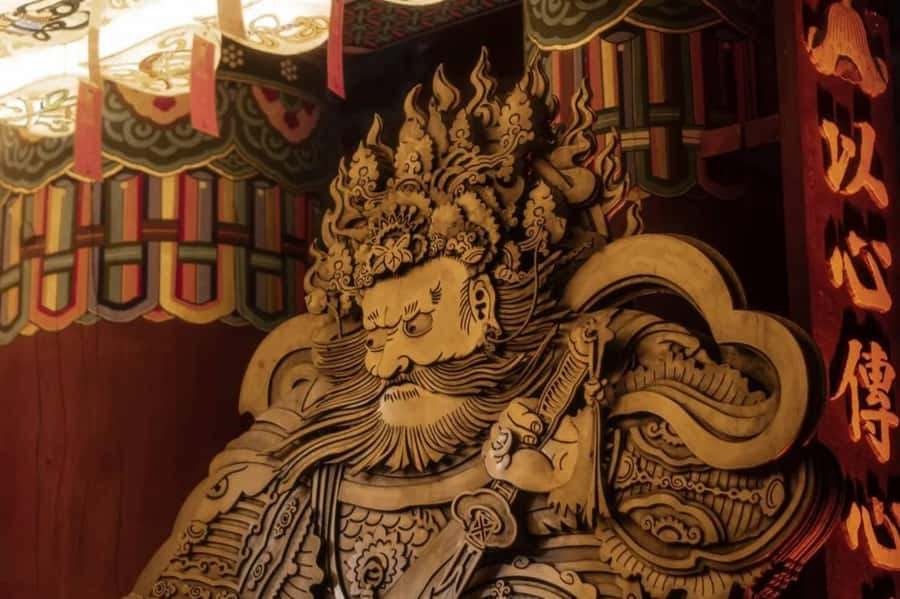
Lanterns illuminate the grounds, and the setting has a peaceful Buddhist character. The guide explains the temple’s role and Buddhist traditions, rather than treating it only as a pretty night photograph. Mia has been especially praised for taking extra time to explain Buddhism, which is useful if this is your first visit to a Korean temple.
Please treat the temple as a religious place, not just another sightseeing stop. Listen to the guide’s instructions and keep your voice respectful. The short visit is enough to appreciate the setting, though anyone hoping for a long meditation experience or a detailed religious tour may want to return independently.
From Jogyesa, the group returns to the original meeting point. Since the tour ends where it begins, you can plan your evening around Hyehwa Station without arranging transport across town.
What the guide adds to the evening
The tour’s strongest feature is the human layer between the stops. The palace, market, village, and temple are all accessible independently, but moving through them with a guide gives the route a clear shape.
Mia is repeatedly praised for patience, humor, and detailed explanations, even in cold or rainy weather. Kim is noted for speaking English well and sharing local stories. Jay has helped make the food stops approachable, particularly for people who were unsure about unfamiliar dishes. Inha is praised for making the route useful as an introduction to Korean culture.
Those details suggest what you should expect from the best version of the tour: plenty of questions, historical background, and help ordering or tasting food. Guide quality can vary by date, of course, and no guide can control market crowds or weather. Still, the consistent focus on explanation and group care is a strong reason to choose a guided route rather than simply copying the same stops from a map.
The tour is offered in Korean and English. If you want a silent walk with only occasional facts, this will feel talkative. If you want to understand why the palace, temple, food, and neighborhoods matter, that is a benefit.
Walking, accessibility, and practical comfort
The tour is listed as wheelchair accessible, but it also involves a moderate amount of walking and several changes of setting. Ask specific accessibility questions before booking if you need more than general wheelchair access, especially concerning the palace grounds, market crowds, and the 10 to 15 minute walks between stops.
The meeting point is easy to identify at Hyehwa Station Exit 4, and hotel pickup is not included. You need to reach the station on your own and return there at the end.
Starting times vary, so check the available departure when booking. A night schedule is essential to the experience because the palace and temple lighting are central parts of the route.
You can cancel up to 24 hours ahead for a full refund, and the reserve-now, pay-later option keeps your plans flexible. These details are useful in Seoul, where weather can change the appeal of a four-hour outdoor walk.
Bring comfortable shoes, a warm layer, and an appetite. If you plan to try the octopus, approach it as an optional taste, not a test of courage. The market still offers plenty to enjoy if you skip it.
Who should book this $60 experience
Book this tour if you have one evening in Seoul and want a broad introduction to Jongno. It is particularly useful during a first visit, when palace history, Korean food, Buddhist culture, and neighborhood orientation all compete for your time.
It also suits solo visitors and couples who want company at the market. A guide can remove the uncertainty of choosing a stall, explain unfamiliar foods, and make a small tasting feel like a proper meal.
Families with older children may enjoy the mix of palace lights and unusual food, though the octopus and four-hour walking schedule may not suit younger children. Food-focused visitors will appreciate the range of tastings, while history fans will value the palace and temple explanations.
You may want another plan if you dislike group walking, avoid alcohol, have strict dietary needs that cannot be arranged in advance, or prefer a relaxed restaurant dinner. The route is full, and the market stop is designed for sampling rather than lingering over one dish.
Should you book it?
I would book this if you want one well-organized evening that connects Seoul’s sights and flavors. Changgyeonggung at night, makgeolli and jeon at Gwangjang Market, the narrow lanes of Ikseon-dong, and lantern-lit Jogyesa Temple make a satisfying combination.
The best reason to go is not one single dish or monument. It is the contrast between them, made easier to understand by a guide such as Mia, Kim, Jay, or Inha. At $60, the included food, drink, entrance fees, and four hours of guiding offer solid value.
Skip it if you need a slow pace or a guaranteed specific menu. Otherwise, this is a practical first-evening tour for getting your bearings in central Seoul while eating well and seeing the city after sunset.
FAQ
Where does the Seoul night tour begin?
It begins outside Hyehwa Station Exit 4 in Hyehwa-dong, Seoul. Meet the guide holding a Tripper sign.
Where does the tour end?
The tour ends back at the Hyehwa Station meeting point.
How long does the activity last?
The tour lasts four hours. Starting times vary, so check availability for the date you want.
What food and drink are included?
The included tastings are Gwangjang Market street food, makgeolli, assorted jeon fritters such as kimchi, tofu, and meat jeon, and chopped live octopus.
Is eating the live octopus required?
No. Trying the chopped live octopus is optional. You can choose not to eat it.
Are vegetarian and halal options available?
Yes. Vegetarian and halal options are available, but you should specify your needs when booking.
More late-night shopping around the world
- National Mall Monuments Night Tour with 10+ Stops, Entry Tickets
★ 4.5 · 4,863 reviews - Small Group National Mall Night Tour with 10 Top Attractions
★ 5.0 · 1,658 reviews - Guided Tour to Marble Mountains & Hoi An Walking Tour , Night Market, Boat Ride
★ 5.0 · 218 reviews - Chiang Mai Temples and Market Tuk-Tuk Evening Night Tour
★ 4.5 · 201 reviews
Just added for nights around the world
- Almería: Legends and Mysteries Evening Walking Tour★ 4.4 · 62 reviews
- Alleppey Night Walk (2 Hours Guided Walking Tour)★ 4.8 · 2 reviews
- Alhambra: Nasrid Palaces Guided Night Tour without tickets★ 3.4 · 5 reviews
- All-inclusive Fado Tour: Show & Dinner. Lisbon at Night★ 5.0 · 2 reviews
- Alanya: Night Safari and Boat Trip with Riverside Dinner★ 4.0 · 3 reviews
- Alanya: Sunset Night Safari with Boat Trip with Dinner★ 4.4 · 89 reviews
- Alexandria: Ultimate Dead of Night Walking Ghost Tour★ 4.4 · 11 reviews
- Agrigento: Skip-the-Line Valley of the Temples Night Tour★ 4.8 · 72 reviews
Seoul Night Tours, compared.
Seoul moonlight walking tour with local historian
Read our review →
Seoul Han River Night Tour: Picnic, Games & Starlight Cruise
Read our review →Browse the lists this tour appears in