
Review · SEOUL
Seoul: Nighttime Hidden Gems Walking Tour
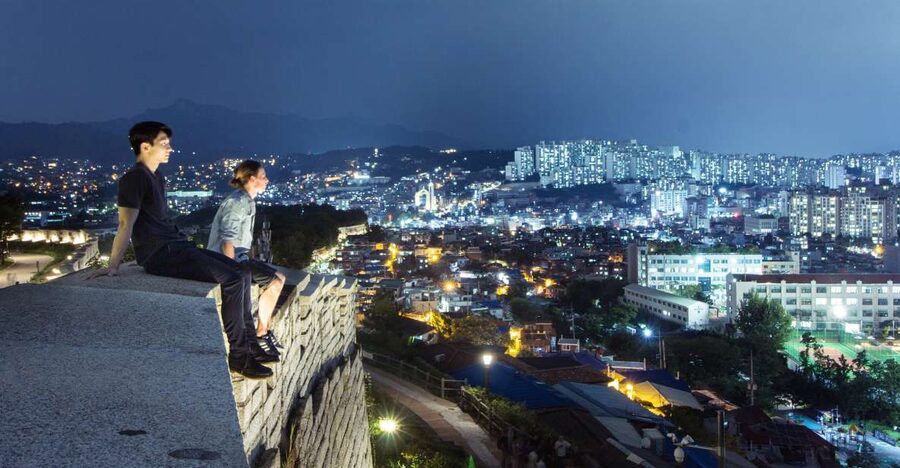
Seoul is more than neon streets and palace gates. This evening walk shows you the city from its hillside neighborhoods, where student life, old homes, public art, and the Hanyang City Wall meet. I like the way guides such as Leah, Jessica, Smin, and Ethan connect the views to real Korean life, including education, housing, work, and social habits. I also like that the tour reaches places you may not find easily on your own, especially after dark.
The main catch is the uphill route. You will handle slopes, stairs, and uneven footing, with stops for photos and explanations. The pace is gentle, but this is not a flat city stroll. Comfortable shoes are essential, and high heels are not allowed.
Key points to know before you book
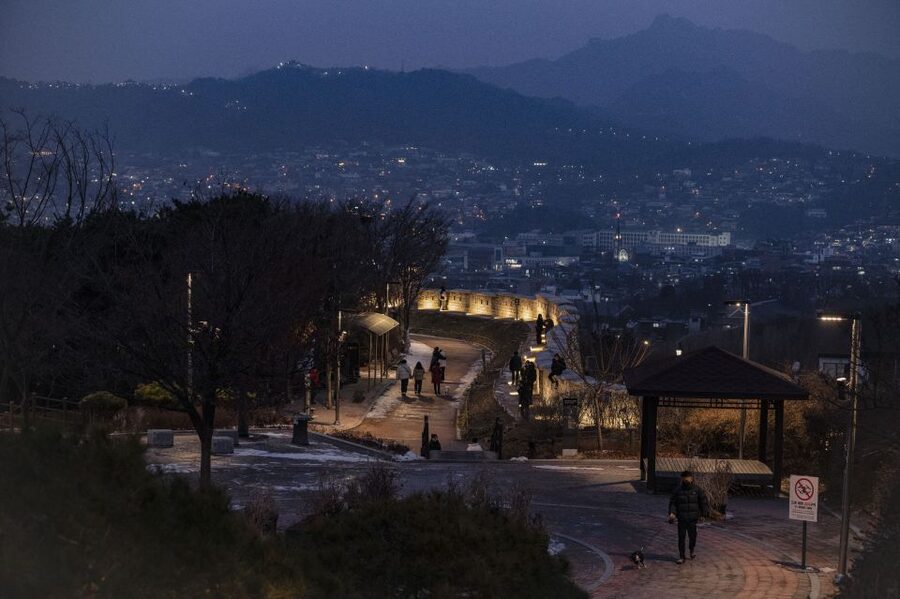
- The city wall is the star after sunset: Hanyang City Wall and Naksan Park offer some of the finest evening views included in a short Seoul walking tour.
- The stories go beyond monuments: Guides discuss Korean universities, student pressure, housing problems, work culture, old neighborhoods, and the changing face of Seoul.
- Ewha Mural Village rewards the climb: Its painted walls and narrow lanes make good photo stops, but the area is best understood as a lived-in neighborhood, not simply an outdoor gallery.
- Expect an uphill route: You will walk on slopes and stairs, with breaks at each stop. People with mobility problems are advised not to join.
- The guides shape the experience: Leah, Jessica, Smin, Jun, Ethan, and others are praised for clear English, humor, patience, local advice, and help with photographs.
- At $33, the value is strong: You get two hours of guiding, cultural explanation, night views, and a route that would be hard to piece together alone.
Why this two-hour walk feels different from a standard Seoul tour
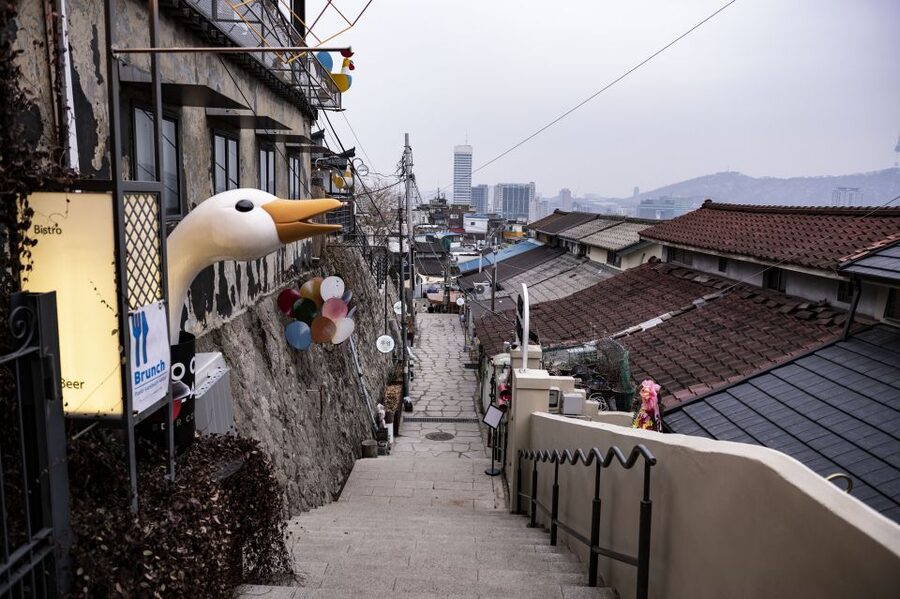
Many Seoul sightseeing walks move from one famous landmark to another. This one takes a side route through the hills above Hyehwa, where the city feels more personal and less polished. You are not only looking at an old wall or a painted alley. You are using those places to understand how Seoul developed and how people live in it now.
The tour begins at Hyehwa Station Exit 2. A guide waits outside the exit, which makes the meeting point simple to find if you arrive by subway. From there, the route moves through Maronie Park and the surrounding university district before climbing toward the mural village, Naksan Park, and the city wall.
I especially like the connection between the stops. Seoul National University is not treated as a quick photo stop. The guide uses university life to explain Korean education, competition, student expectations, and the pressures faced by young people. That gives the walk a useful present-day focus rather than keeping it only in the past.
The guides also invite questions. Several have been praised for answering everything from cultural customs to restaurant recommendations. That matters on a small walking tour, since the best information often comes when you ask about something you noticed along the way.
More Night Walking Tours in the world:
- Private Street Food Evening Walking Tour in Ho Chi Minh City
★ 5.0 · 3,175 reviews - Ghosts of Charleston Night-Time Walking Tour with Unitarian Church Graveyard
★ 4.5 · 2,835 reviews - Savannah’s Ghost City “Dead of Night” Walking Night Tour
★ 4.5 · 2,482 reviews
Hyehwa, Maronie Park, and Seoul National University
Hyehwa is a good starting point because it has a youthful, cultural feel without being one of Seoul’s main tourist zones. Maronie Park helps set the mood. You are close to theaters, student areas, and older streets, so the neighborhood offers an early look at how education, entertainment, and everyday life overlap in Seoul.
The Seoul National University portion gives the tour much of its social value. The guide discusses Korean university culture and the role education plays in society. You may learn about the intense competition students face, the expectations placed on young people, and the way school and work shape family life.
This is one of the strongest reasons to choose the walk. If you only want scenic viewpoints, there are shorter ways to reach one. If you want to understand why Seoul feels so driven, orderly, and demanding, the university discussion adds context that a sightseeing bus cannot provide.
The setting also makes the conversation feel grounded. Instead of hearing a general talk about Korean society inside a museum, you are walking through an active neighborhood with students, shops, parks, and side streets around you. The tour does not pretend that modern Seoul is simple. Guides have spoken frankly about student struggles, housing costs, work culture, and social tensions.
Ewha Mural Village and the story behind the hillside
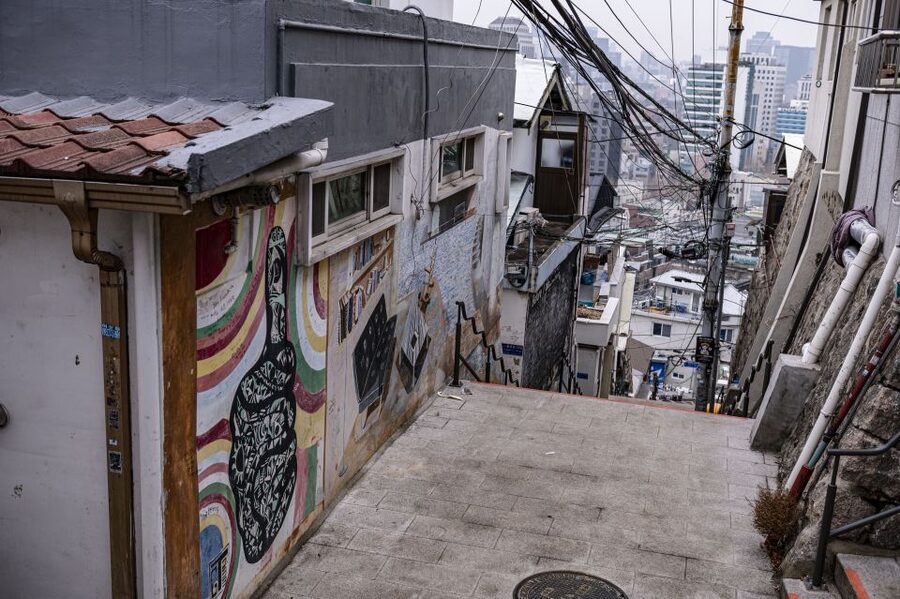
Ewha Mural Village is one of the most photogenic sections of the walk. Its painted walls, stairways, and narrow lanes bring color to a steep old neighborhood. You will have time to look around and take pictures, and guides may suggest useful angles or photo spots.
The artwork is only part of the appeal. The village is also an example of how older hillside districts have changed as Seoul has grown. The route helps you see the area as a real neighborhood with a past, not just a backdrop for photographs.
Some people may find the first impression modest. This is not a large art complex with attractions on every corner. The appeal comes from the combination of murals, small lanes, older homes, and the rising city view. The guide’s explanation helps turn a short stop into a more meaningful one.
The climb begins to matter here. You will walk uphill, and some sections include stairs. Several stops give you a chance to catch your breath while hearing more about the area. The route is described as manageable for people in reasonable condition, but it is not suitable for people with mobility impairments or those who cannot comfortably manage hills.
Naksan Park and the growing lights of Seoul
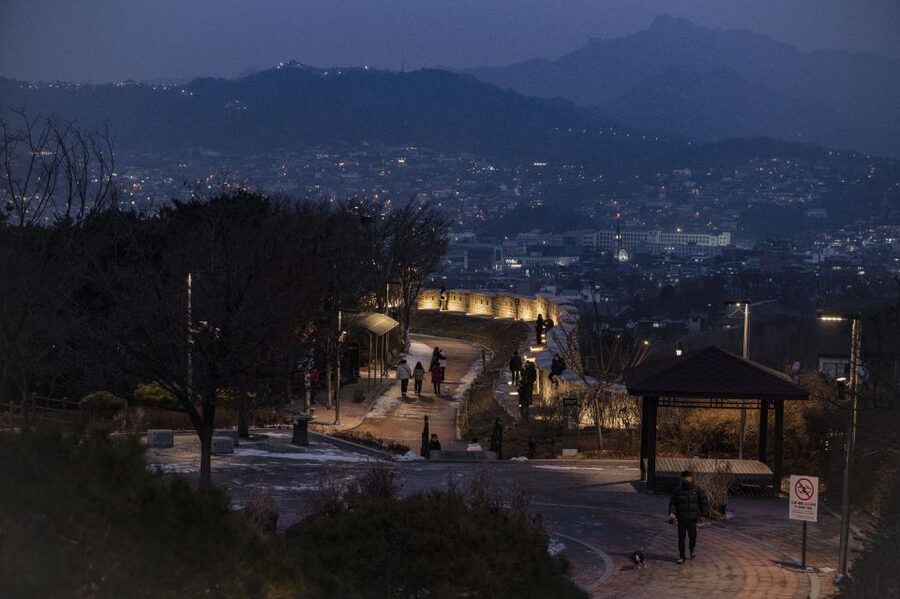
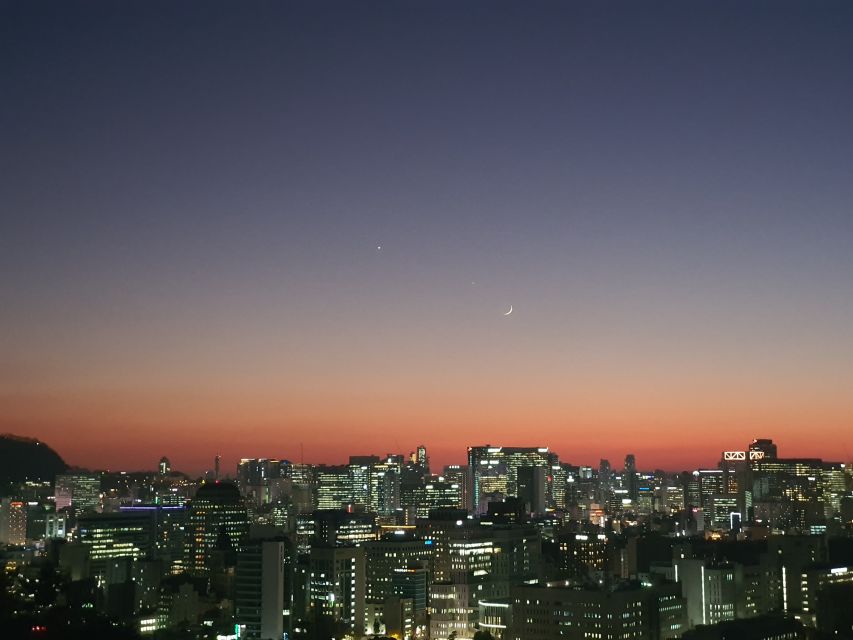
As you climb higher, Naksan Park opens the view. This is where the timing of the tour becomes important. The walk is designed for evening, so you may see the city change from daylight into twilight and then into a field of lights.
The exact light and sunset conditions depend on the day. One evening may offer a strong sunset, while another may bring clouds or rain. The guide cannot control the sky, but the city remains impressive as streets and buildings begin to glow below you.
I like the way the route builds toward this view. You do not simply arrive at a lookout by transport, take a picture, and leave. The uphill walk gives you a sense of the city’s shape. More lights appear as you rise, and the wall and hillside lanes frame Seoul in a way that is different from a tower or rooftop viewpoint.
The park also helps explain why the old capital was located where it was. The tour links the hills, the defensive wall, and the wider city so you can understand Seoul as a place shaped by geography. You get both the broad view and the local story.
Bring a phone or camera, but do not spend the whole walk looking through a screen. The best part is often the contrast between the quiet path, the old stonework, and the huge modern city below.
More night tours around the world:
- Prague: 50-Minute Sightseeing Evening Cruise
★ 4.2 · 33,780 reviews - Amsterdam: Evening Cruise with Optional Wine and Snacks
★ 4.4 · 22,178 reviews - Budapest: By Night Sightseeing Cruise with Welcome Drink
★ 4.3 · 15,533 reviews - Paris: Illuminations River Cruise with Audio Commentary
★ 4.3 · 12,340 reviews
Walking the Hanyang City Wall after dark
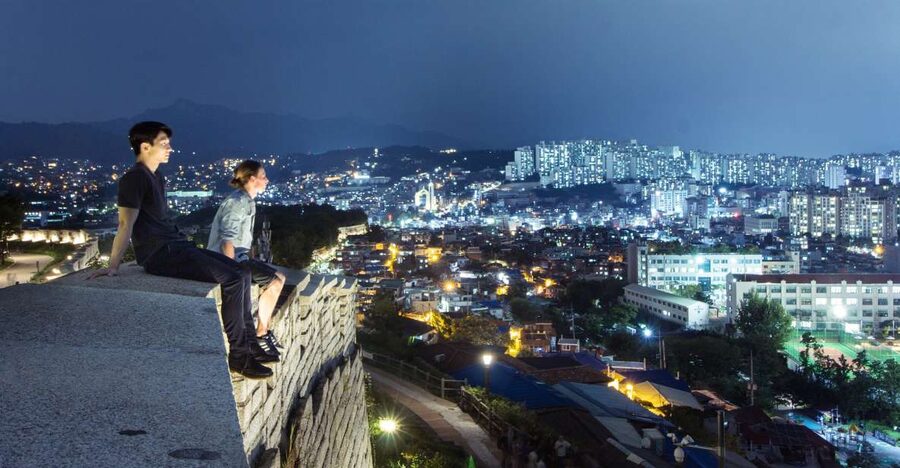
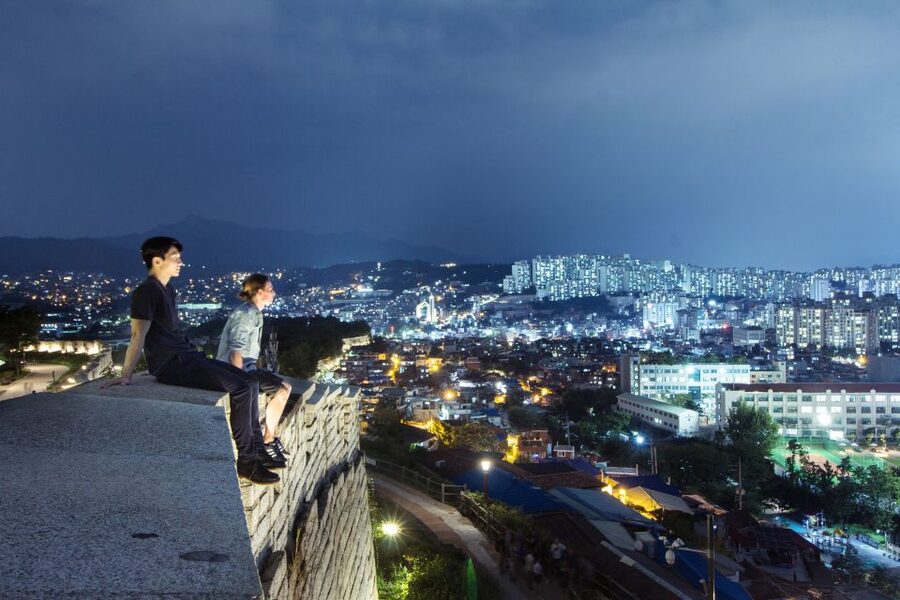
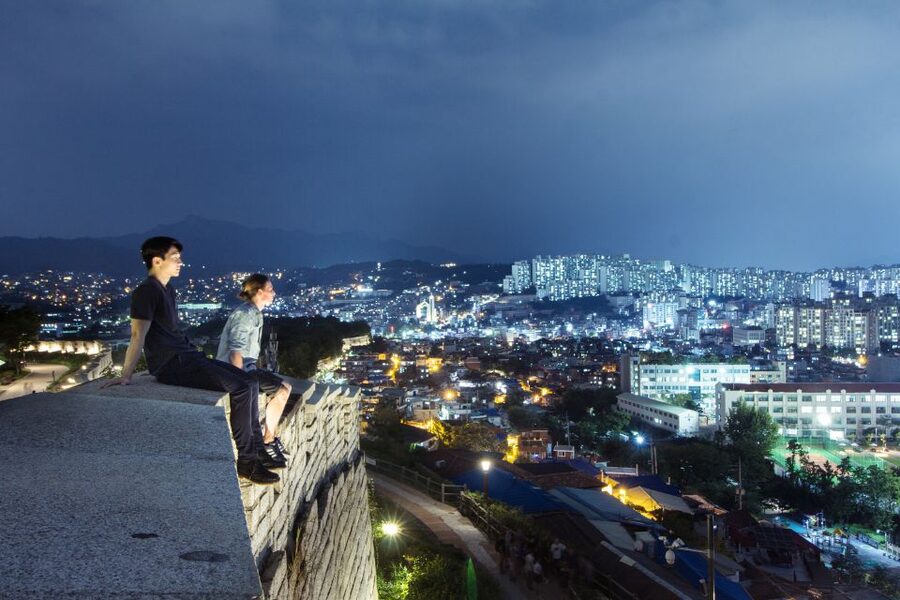
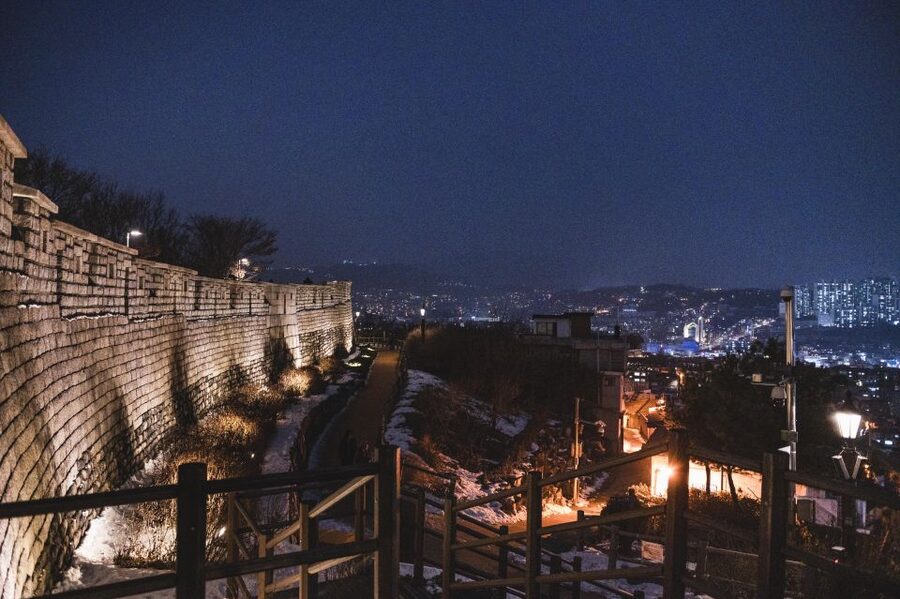
Hanyang City Wall is the historical centerpiece. The wall once marked the limits of the Joseon capital, and sections of it still trace the hills around central Seoul. Here, the past and present sit side by side: old stone defenses on one side, dense modern neighborhoods and high-rise lights on the other.
The night setting gives the wall a special character. You are walking along a historic monument while Seoul shines below. The route has also been associated with a location seen in K-Pop Demon Hunters, which may interest fans looking for a pop-culture connection.
The guide’s role is important here. Stone walls can be easy to admire without understanding. The tour explains how the capital was laid out, why the wall followed the hills, and how Seoul changed around it. That context makes the view more than a pretty finish.
The footing deserves attention. Some roads and paths are steep, and stairs can be tiring. The route is paced with breaks, but you should still wear flat, secure shoes and take care on the descent. High heels are specifically not permitted. If your knees or balance are a concern, choose another activity or contact the provider before booking.
The guides are a major part of the value
The guide roster changes, but several names appear repeatedly in the tour’s recent feedback: Leah, Jessica, Smin, Ethan, Jun, June, Lisa, Min, and Ms. Kim. Their approach is casual and conversational rather than formal. That suits a walking route where questions naturally come up.
Leah is praised for humor, patience, cultural explanation, and practical help. Jessica is noted for keeping groups engaged, allowing breaks, and offering photo advice. Smin is valued for clear explanations of Korean society and history, while Ethan is praised for answering questions and offering helpful food recommendations after the walk.
That does not mean every guide will have the same personality. It does mean the experience depends heavily on who leads your departure. The strongest guides turn the walk into a conversation about daily life, not just a memorized list of dates.
Personal audio receivers have also been provided on some departures. This is a useful touch, especially when the group is spread out on narrow paths or near city traffic. Group size has been described as around 16 people on one departure, though the exact size can vary.
English ability has generally been strong, but accents and group noise can still affect how easily you hear. Stay near the guide, use the receiver when provided, and ask questions if you miss a point.
What $33 gets you
At $33 per person, this is a fair price for a two-hour guided experience in Seoul. You are paying for a local English-speaking guide, a planned route, cultural interpretation, and access to a sequence of viewpoints that would take some effort to connect independently.
The value is best for first-time visitors who want a quick introduction to Seoul’s social life and hillside geography. It is also good for repeat visitors who have already seen the palaces, shopping districts, and major towers and want a different angle.
The tour does not include a meal, drinks, admission to a major paid attraction, or transport after the walk. Its value comes from the guiding rather than from included extras. Hot packs are provided in winter, which is a small but welcome detail on a cold evening.
Free cancellation up to 24 hours before the start and the option to reserve now and pay later make the booking less risky. Still, the weather can affect the views, and the walk is outdoors, so pack accordingly.
Who should book this walk
You should consider it if you want:
- A short evening activity near central Seoul
- City views without visiting a tall observation deck
- A local explanation of Korean education and work culture
- Old neighborhoods, murals, and historic walls in one route
- A guide who can answer questions about daily life
- A gentle but real uphill walk
It is less suitable if you want a flat stroll, a museum visit, or a tour focused only on major royal buildings. The route includes slopes, stairs, and a downhill section at the end. People with walking difficulties are advised not to join, and the activity is not considered suitable for people over 70.
You may also want to skip it if you dislike group walks or prefer to explore at your own pace. The guide controls the timing, although breaks and photo stops are built in.
Practical advice for making the climb easier
Wear walking shoes with good grip. Leave high heels at your hotel, and avoid smooth soles if the weather is wet.
Bring water, even though the walk lasts only two hours. You may not need hiking equipment, but you will feel the hills more in warm weather or after a full day of sightseeing.
Arrive at Hyehwa Station Exit 2 with enough time to find the guide outside the exit. Keep your phone charged for the views and any photos you want to take.
If the weather is poor, expect a different experience. Rain can make steps slippery and reduce the sunset view, although guides have worked to keep groups comfortable and moving at a safe pace. In winter, the supplied hot packs are useful, but you should still dress warmly.
At the end, you may want to ask the guide for food or bar suggestions. One guide recommended a Korean barbecue restaurant that received especially strong praise, and another guest suggested Jazz Story near the end of the route. These suggestions are not part of the tour itself, but they show how useful it can be to keep a few minutes for questions after the walk.
Should you book Seoul’s nighttime hillside walk?
Book it if you want Seoul explained through both its past and present. The views from Naksan Park and Hanyang City Wall are the visual payoff, but the strongest reason to go is the conversation about students, housing, work, history, and the pressures of modern Korean life.
At $33, the tour offers good value in a compact two-hour format. You see murals, parks, a university district, old lanes, and the city wall without spending a full day on a long excursion. Just be honest about your fitness. The walk is not severe for an active person, but the slopes and steps are real.
For first-time visitors, this is a smart early trip in Seoul. It gives you a better sense of how the city works, and it may change the way you see the streets you explore afterward.
FAQ
Where does the Seoul nighttime walking tour meet?
The meeting point is outside Hyehwa Station Exit 2. A guide will be waiting there.
How long does the tour last?
The walking tour lasts two hours.
What language is the tour conducted in?
The tour is conducted in English with a live guide.
Which places are visited?
The route includes Maronie Park, Seoul National University, Ewha Mural Village, Naksan Park, and Hanyang City Wall.
Is the walk difficult?
The walk is described as easy overall, but it includes uphill roads, stairs, and slopes. The guide provides breaks at stops. People with walking difficulties should not join.
Are high heels allowed?
No. High-heeled shoes are not allowed. Comfortable walking shoes are recommended.
Is cancellation available?
Yes. You can cancel up to 24 hours in advance for a full refund. You can also reserve now and pay later.
Just added for nights around the world
- Ubud Day Tour : Waterfall, Temple and Local Night Market Tour★ 5.0 · 17 reviews
- Bali Food Tour: Savor Street Food and Night Market Adventures★ 5.0 · 46 reviews
- Eat like a Local: Venice Cicchetti and Wine Tasting Evening Tour★ 5.0 · 122 reviews
- Venice by Night: Highlights & Hidden Gems Tour★ 5.0 · 128 reviews
- Venice Evening Food Tour: Bites, Drinks & Sit-Down Dinner★ 4.5 · 83 reviews
- Ubud: Village Firefly Night Tour with Dinner★ 4.9 · 23 reviews
- Evening Walking Tour with optional motorboat Ride★ 4.2 · 225 reviews
- [Private Tour] Shilin Night Market Walking Tour With a Private Tour Guide (2-hr)★ 5.0 · 123 reviews
Seoul Night Tours, compared.

Seoul moonlight walking tour with local historian
Read our review →
Seoul: Palace, Temple and Market Guided Foodie Tour at Night
Read our review →
Seoul Han River Night Tour: Picnic, Games & Starlight Cruise
Read our review →Browse the lists this tour appears in