
Review · NORWAY
Oslo: Historic Myths & Legends Evening Walking Tour
Oslo’s old streets become much more interesting when you hear why locals once feared certain spirits, trusted protective bells, and told stories about trolls, nisse, and huldra. This tour links those tales to real places, from the walls of City Hall to the stone defenses of Akershus Fortress.
I like the clear route and the mix of subjects. You get Norse beliefs, medieval punishment, bold thefts, wartime-era history, architecture, and practical city pointers in one short walk. Guides including Maria and Anastasia are praised for warm, funny storytelling. The main drawback is the weather: you are outside for two hours, and winter wind can be fierce.
Key points at a glance
- City Hall folklore: See wooden friezes and hear how Viking beliefs appear in Oslo’s civic art.
- Akershus Fortress: Learn about medieval defenses, prisoners, and the stories tied to its walls.
- Old Oslo in one walk: Connect Christiania Torv, Oslo Cathedral, Bankplassen, and nearby historic streets.
- Crime and punishment: Hear about audacious thefts and how medieval justice dealt with wrongdoing.
- Best for curious adults and teens: The minimum age is 13, though one family said their 8 and 10 year olds loved it.
- Cold-weather planning matters: Comfortable shoes are required, and warm layers are essential for evening departures.
Why Oslo’s myths work better on foot
This is not a ghost-hunting event. You will not go underground or chase apparitions in dark tunnels. Instead, the guide uses ghost stories, underground kingdoms, and old beliefs as a way to explain how people in Norway understood danger, nature, illness, death, and the unknown.
That approach suits Oslo well. The city can feel modern and orderly at first glance, but its older stories add a different layer. A tale about a troll is not only a fanciful yarn. It can point to older ideas about mountains, forests, family protection, and the limits of human control.
I like that the tour does not treat folklore as a cheap scare tactic. The focus is cultural and historical. You hear stories passed down through generations, then connect them to buildings, artwork, and city life.
The format also helps if you are new to Oslo. Instead of trying to memorize a long list of dates, you get a series of memorable stories. By the end, a bell, a carved figure, or a fortress wall may carry more meaning than it did at the start of the evening.
More Night Walking Tours in the world:
- Private Street Food Evening Walking Tour in Ho Chi Minh City
★ 5.0 · 3,175 reviews - Ghosts of Charleston Night-Time Walking Tour with Unitarian Church Graveyard
★ 4.5 · 2,835 reviews - Savannah’s Ghost City “Dead of Night” Walking Night Tour
★ 4.5 · 2,482 reviews
Meeting at City Hall and reading the Viking friezes
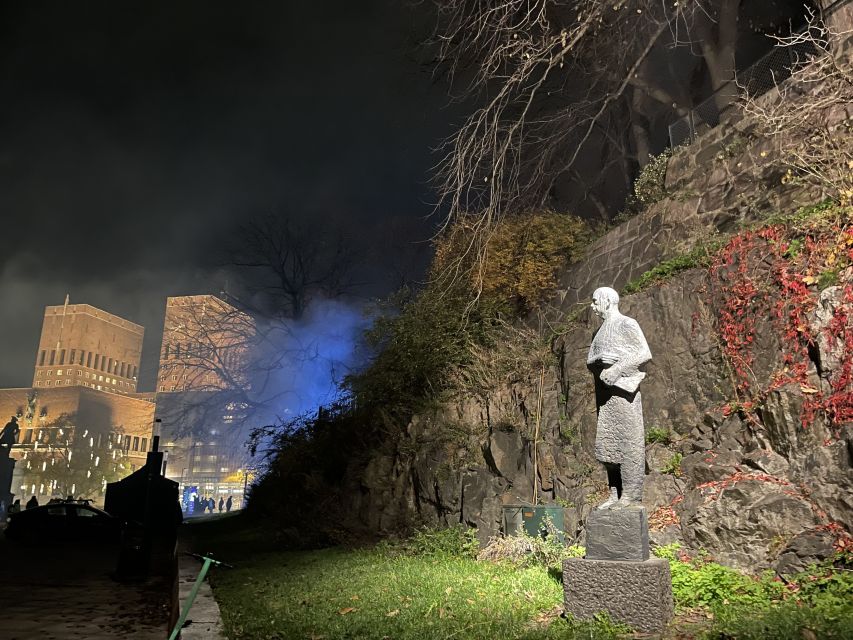
The walk begins near the Swans fountain at the entrance to Oslo City Hall on Fridtjof Nansen’s Square. Arrive with enough time to find the fountain, since the meeting point is outdoors and the tour begins from there.
City Hall gives the tour a strong opening. Its walls feature wooden friezes connected to Viking beliefs, and the guide uses this art to introduce the older world behind the stories. You are not simply looking at decoration. You are learning how Norse ideas about gods, spirits, protection, and fate have continued to shape Norwegian culture.
This stop is especially useful if you plan to visit City Hall separately. The guide gives you details to look for, so you can later return with a better sense of what the carved scenes mean. You also get an early look at how Oslo presents its past through public art.
The guide style matters here. Maria is often singled out for being funny, approachable, and easy to listen to. Anastasia is praised for vivid storytelling and an excellent command of English. The names of your guide will depend on the departure, but the tour clearly relies on personality rather than a dry recital.
Christiania Torv and the older city
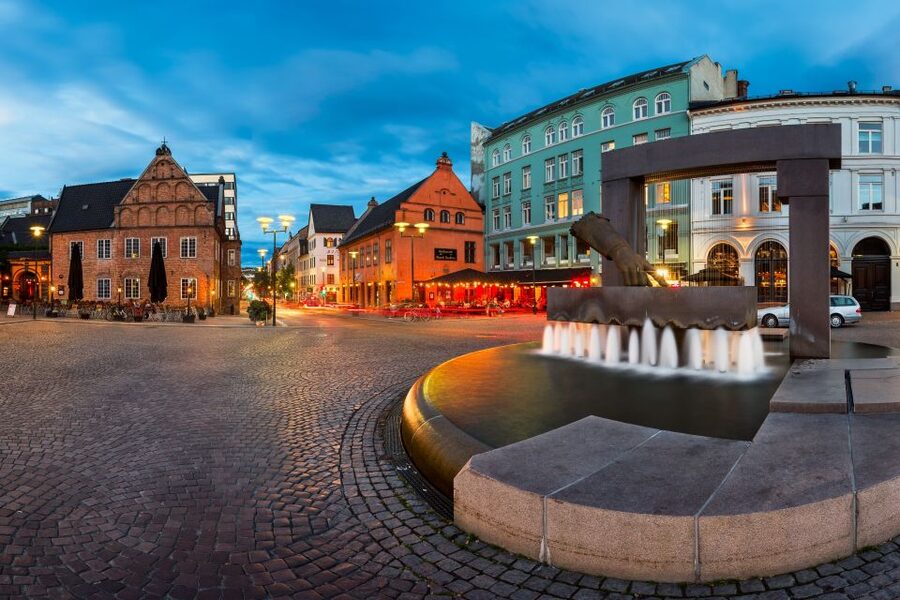
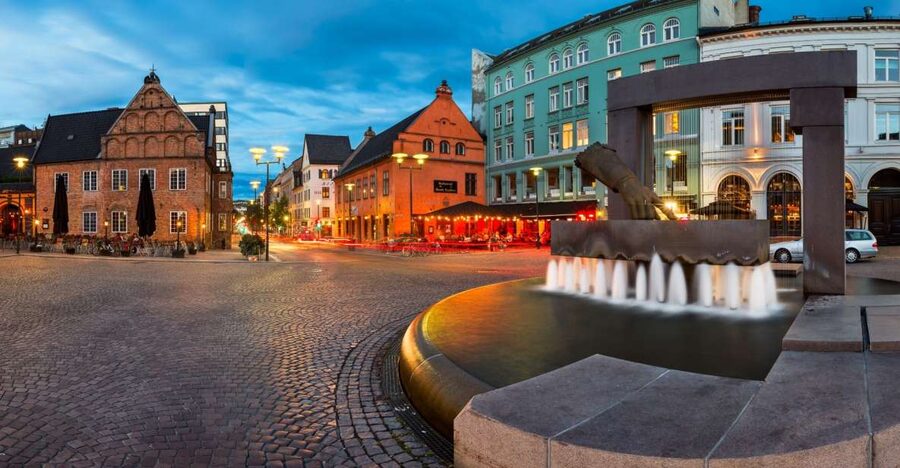
From City Hall, the walk continues to Christiania Torv, one of Oslo’s historic squares. This part helps you picture how the city changed over time and how important events left marks on its streets and buildings.
The guide’s stories here cover more than royal names and construction dates. You hear about people, local characters, unusual events, and the beliefs that shaped everyday decisions. That human angle is one of the tour’s strengths. A city becomes easier to understand when you hear what people feared, what they valued, and how they explained bad luck.
The route is also useful for getting your bearings. Several people used the walk as an introduction on their first day in Oslo, then followed the guide’s suggestions for places to see later. You can ask questions as you go, and the guide may point out areas worth returning to during the rest of your stay.
Do not expect a full museum tour at each stop. The appeal is the connection between places. You move through the city while the guide supplies the missing context. That keeps the two-hour format moving, but it also means you should not book this expecting long indoor visits or detailed access to every building.
Akershus Fortress, prisoners, and medieval engineering

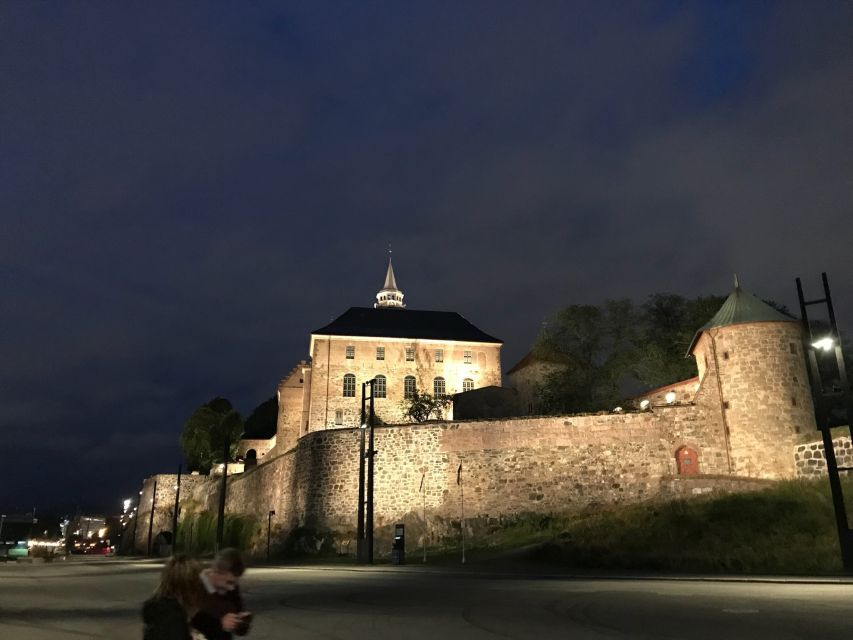
Akershus Fortress is the most substantial stop on the route. Its defensive design reflects Oslo’s need for protection through several periods, and the guide explains how the castle worked as a place of power, security, and confinement.
You will hear about the engineering behind the fortress and the challenges of defending the city. The stonework and layout make more sense once you understand why walls, gates, and elevated positions mattered. The guide also tells stories connected to prisoners held within the fortress and the fates they faced.
This is where the tour’s darker side appears. Stories of imprisonment and death are part of the experience, but the tone is not presented as a horror show. The purpose is to explain how justice and authority operated in earlier Oslo.
The stop rewards patience. Give yourself time to look at the fortress rather than focusing only on the next story. In the evening, lighting can add atmosphere, though darkness may make details harder to see. One December group walked from 4 to 6 p.m. and found the city already dark, but the guide made an effort to keep the sights and stories clear.
A practical point: Akershus includes historic outdoor surfaces, so comfortable shoes are important. The tour is not suitable for wheelchair users or people with mobility impairments. Anyone who finds uneven walking difficult should choose a different Oslo activity.
More history after dark around the world:
- Buda Castle District Dark History, Legends and Vampire Night Tour
★ 4.5 · 1,240 reviews - Creepy Crawl Night-Time Haunted Pub Walking Tour of Savannah’s Historic District
★ 4.5 · 802 reviews - Salem Night Tour: Haunt and History Guided Night Tour
★ 4.5 · 673 reviews - Barcelona: Dark History Night Walking Tour
★ 4.8 · 344 reviews
Bankplassen and the city’s bold thieves
At Bankplassen, the subject shifts from fortress walls to crime. The guide tells stories of daring thefts and complicated robberies that once shook the city.
This part gives the tour a welcome change of pace. Norse mythology can dominate an Oslo folklore experience, but here you get tales about human nerve, planning, greed, and the justice system. The stories help show that Oslo’s past was not only made by kings, sailors, and soldiers. Ordinary people, criminals, officials, and victims all shaped the city’s story.
The discussion of medieval justice is another useful feature. Punishments were often severe, and the rules did not work as they do today. Hearing how crimes were judged helps you understand the fears and pressures of earlier communities without turning the past into a simple good-versus-bad story.
I also like this stop because it gives the walk some humor and suspense. The guide can move from a supernatural tale to a real-world robbery, then explain how the law responded. That variety keeps the evening from feeling like one long mythology lecture.
Oslo Cathedral and the city after dark
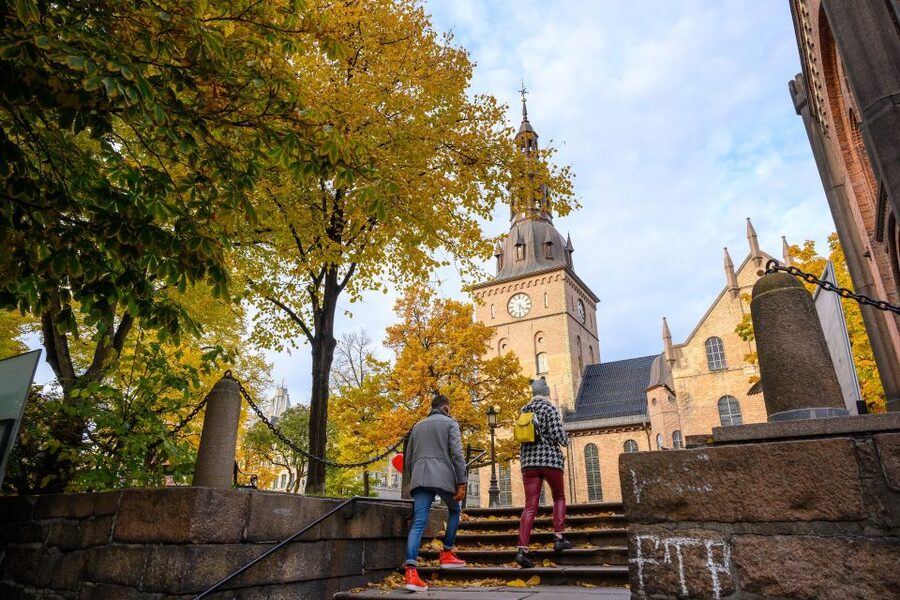
Oslo Cathedral is included among the landmarks visited along the route. The walk gives you a chance to appreciate its place in the city while the guide adds the historical and cultural details that can be easy to miss when you visit alone.
The evening setting is part of the appeal. In summer, you may see the city under a late northern sky. In autumn, one group enjoyed a striking sunset before the streets grew darker. In December, expect full darkness during much of the tour. The mood changes by season, but the guide’s storytelling remains the main event.
You should think of this as an outdoor storytelling walk with sightseeing, not a photography tour. You will see historic buildings and public spaces, but the guide’s explanation gives the route its value. If you want long stops for architectural study or interior visits, add separate time elsewhere in your itinerary.
What the guides do best
The strongest feature is the guide’s delivery. Maria is repeatedly described as warm, lively, and able to answer questions without losing the thread of the walk. Anastasia is praised for passion, clear English, and stories that avoid the most familiar tourist material.
That matters because folklore can fall flat when it is read from a script. Here, the guide’s humor and interaction help the stories feel like local knowledge being passed along. You can ask about myths, buildings, crime, or places to visit later.
The tour also works for solo visitors. One solo participant found the guide particularly helpful for learning city details, while several people appreciated the relaxed pace. You are not expected to stay silent for two hours. Questions, anecdotes, and photo stops fit naturally into the walk.
English is the tour language. The guide is live rather than recorded, so the experience depends on your ability to follow spoken English outdoors. Most of the positive comments focus on clear communication, but winter wind and city noise can still make listening harder at times.
Winter cold, summer light, and what to wear
The weather is the one point I would take seriously. Several winter departures took place in very low temperatures, including conditions in the minus teens. People still found the tour enjoyable, but wind near the waterfront and open squares can feel sharp.
Wear warm layers, gloves, a hat, and shoes with good grip. Comfortable footwear is specifically required, and this is not the time for thin city shoes. A warm drink before or after the walk is a sensible addition, since food and drinks are not included.
Summer and early autumn should be easier physically. You may get soft evening light, a sunset, or a more relaxed outdoor atmosphere. Even then, bring a layer because Oslo evenings can change quickly.
The tour is for ages 13 and older. The stated age rule is firm, although one family reported that younger children enjoyed the stories. If you are planning a family visit, check the current age requirement before booking rather than relying on that isolated experience.
Is $42 a fair price?
At $42 per person, this is not the cheapest way to see Oslo’s old center. Much of the route can be walked independently, and you can visit public areas such as Christiania Torv and the streets around Akershus without a guide.
The value comes from the interpretation. You are paying for two hours of organized storytelling, historical context, and a local guide who can answer questions and suggest what to do next. If you enjoy myths, unusual city stories, and learning why a place matters, the price is reasonable.
I would be less enthusiastic if you only want a quick landmark checklist. The walk does not include food, drinks, hotel pickup, or drop-off. It also does not promise long interior visits. In that case, a free self-guided stroll may suit you better.
For a first evening in Oslo, though, the tour can save you time. It gives you a working map of the old center and several ideas for the rest of your visit. Free cancellation up to 24 hours before the start and reserve-now, pay-later booking also make it easier to fit into a changing schedule.
Who should book this Oslo walk?
I would choose this tour if you like stories more than statistics. It suits adults, older teenagers, solo visitors, couples, and anyone who wants an engaging first look at Oslo’s older center.
It is also a good match if you have already seen the main sights and want a different angle. The myths, local superstitions, prisoners, and robberies add details that a standard sightseeing walk may skip.
You should think twice if you dislike evening cold, need step-free access, or want a tour conducted in a language other than English. It is also not the right pick for anyone looking for a genuine ghost hunt. The supernatural material is used to explain culture and history, not to produce scares.
Should you book the Historic Myths and Legends Evening Walking Tour?
Book it if you want Oslo to feel like more than a collection of handsome buildings. The best moments come when a carved frieze, fortress wall, or old square is linked to a story about fear, law, belief, or human mischief.
I especially like it as a first-day activity. You get a relaxed introduction, practical suggestions for the rest of your stay, and a guide who can make the city easier to read. Just dress for the season, wear proper shoes, and accept that the experience is about storytelling outdoors rather than entering every landmark.
FAQ
Where does the Oslo myths and legends tour begin?
Meet the guide near the Swans fountain at the entrance to Oslo City Hall on Fridtjof Nansen’s Square.
How long does the walking tour last?
The tour lasts two hours.
What language is the tour conducted in?
The tour is conducted in English by a live guide.
Which places are included on the route?
The walk includes Oslo City Hall, Christiania Torv, Akershus Fortress, Oslo Cathedral, Bankplassen, and other historic areas in central Oslo.
Is this a ghost-hunting tour?
No. The tour discusses ghosts, underground kingdoms, and related legends for their historical and cultural meaning. It does not go underground and is not presented as a ghost-hunting expedition.
What should I bring?
Bring comfortable shoes. Warm clothing is especially important in winter because the full experience takes place outdoors in the evening.
Is the tour suitable for children or wheelchair users?
Children under 13 are not permitted. The tour is not suitable for people with mobility impairments or wheelchair users.
Just added for nights around the world
- Ubud Day Tour : Waterfall, Temple and Local Night Market Tour★ 5.0 · 17 reviews
- Bali Food Tour: Savor Street Food and Night Market Adventures★ 5.0 · 46 reviews
- Eat like a Local: Venice Cicchetti and Wine Tasting Evening Tour★ 5.0 · 122 reviews
- Venice by Night: Highlights & Hidden Gems Tour★ 5.0 · 128 reviews
- Venice Evening Food Tour: Bites, Drinks & Sit-Down Dinner★ 4.5 · 83 reviews
- Ubud: Village Firefly Night Tour with Dinner★ 4.9 · 23 reviews
- Evening Walking Tour with optional motorboat Ride★ 4.2 · 225 reviews
- Ubud Traditional Night Market Food Tour-All Inclusive★ 4.4 · 95 reviews
Norway Night Tours, compared.

Oslo: Fjord Evening Cruise with Shrimp Buffet
Read our review →
From Tromso: Arctic Wilderness Snowmobile Evening Tour
Read our review →Browse the lists this tour appears in