Review · BELGIUM
Evening Tour: The Dark Side of Brussels
Brussels gets more interesting after the daylight crowds fade. This two-hour walk links grand squares, Gothic churches, old lanes, and the Marolles while your guide brings out the city’s less-polished stories: punishment, murder, political conflict, and local legends.
I like the route for two reasons: it shows you several central districts in one evening, and the guides often add far more than macabre tales. Guides such as Rahim, Sebastian, David, and Ann Marie have been praised for humor, clear storytelling, and a knack for explaining how Brussels developed. The main drawback is the title. This is not always a dark or spooky tour. It is often a general evening history walk with darker details mixed in.
Key points to know before you book
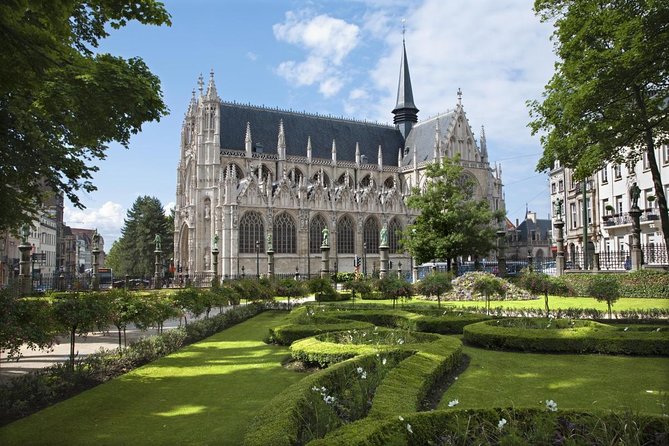
- The route covers nine central stops, from the Sablon to the Marolles and Kapellekerk.
- The darker material varies, with stories of torture, murder, suicide, punishment, politics, and unpleasant chapters in Brussels history.
- The price is unusually low, at $3.62 per group of up to six, so a generous tip is appropriate if your guide does a good job.
- The walk can run longer than two hours, and several people found it more strenuous than the brief description suggests.
- Guide quality is important, since the experience has been led by different people, including Rahim, Sebastian, David, Ann Marie, Ian, Gunny, and Den.
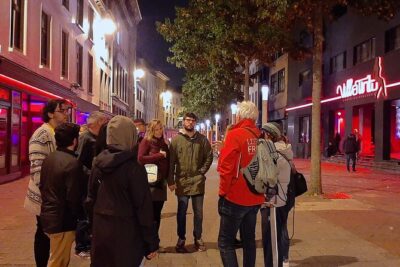
- The group may include up to 35 people, so arriving early and staying near the guide will help you hear the stories.
What the Dark Side of Brussels tour really is
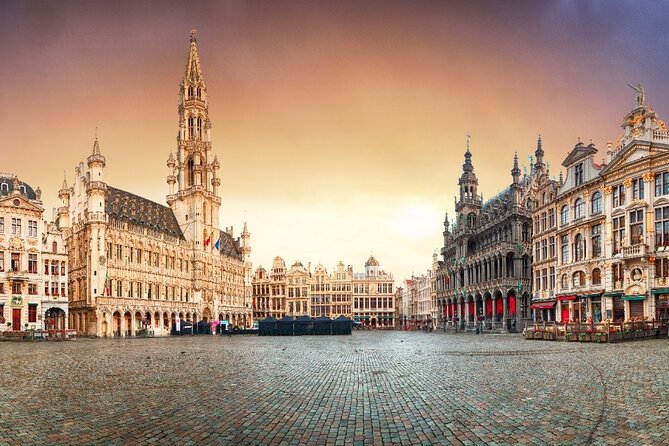
The name suggests a focused tour of crime, ghosts, and grim folklore. You may get some of that, but the route is broader. It uses ordinary streets and famous landmarks to explain the uncomfortable, strange, or overlooked side of Brussels.
You might hear about torture, murder, suicide, punishment, political structures, or the rougher social past of districts such as the Marolles. At other stops, the guide may focus on architecture, church history, urban change, or a lesser-known local fact. That mix explains the high marks from people who wanted a lively introduction to Brussels, but also the lower scores from those expecting a true-crime walk.
I would treat this as an evening city walk with dark historical material, not as a horror show. The setting helps. Brussels after sunset gives the churches, lanes, and courthouse a different mood, even when the subject turns toward politics or architecture.
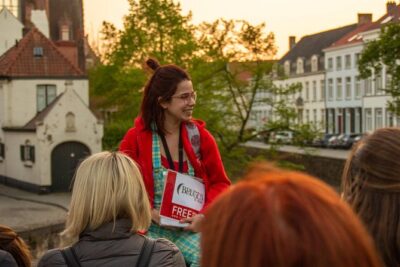
The tour is offered in English, and the guide makes a major difference. Rahim was praised for enthusiasm, warmth, humor, and a real desire to teach. Sebastian was described as entertaining and well informed. David received credit for projecting his voice and managing a sizable group. Ann Marie was praised for storytelling and taking questions. You may get a polished guide with a practiced talk, but the tone and depth can vary.
More night tours around the world:
- Prague: 50-Minute Sightseeing Evening Cruise
★ 4.2 · 33,780 reviews - Amsterdam: Evening Cruise with Optional Wine and Snacks
★ 4.4 · 22,178 reviews - Budapest: By Night Sightseeing Cruise with Welcome Drink
★ 4.3 · 15,533 reviews
Starting at Grand Place and moving toward the Sablon
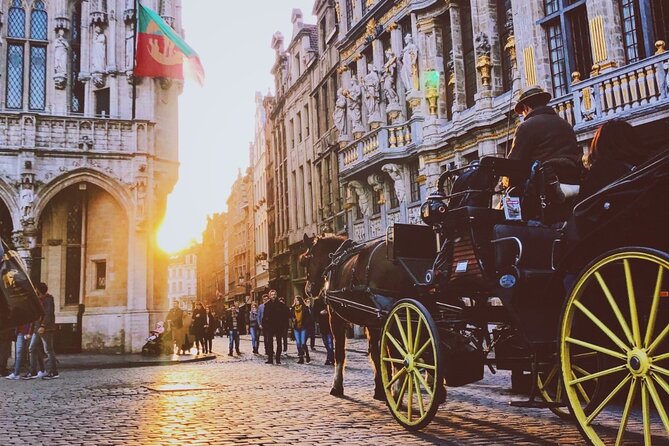
The listed meeting point is Grand Place, Grote Markt. One guide specifically directed people to meet in front of City Hall on the main square, so look for the guide there and arrive early. Grand Place can be crowded, and one person missed the start after searching for the guide for a long time.
The route then takes you toward Place du Grand Sablon, a handsome square known for antiques, food, cafés, and elegant buildings. The stop itself is brief, about 10 minutes, but it gives the guide a good place to explain Brussels as a city of commerce, churches, guilds, and social contrasts.
Do not expect a full market visit during this evening tour. The daytime Grand Sablon has a livelier market feel, while the night stop is mainly about the square, its setting, and the stories tied to the district. It is a pleasant opening because you begin with an attractive part of Brussels before the tour turns toward harsher subjects.
Place Saint-Jean and the Anneessens district
Place Saint-Jean is another short stop, with a church and old buildings framing a compact urban square. Here, the appeal is less about a major attraction and more about seeing how Brussels’ streets fit together. A good guide can turn a simple square into a lesson about local life, religious institutions, and the city’s changing social order.
From there, the walk reaches Tour Anneessens. The name can be confusing because this is described as a district and historical area rather than a single grand monument. Expect a mix of architecture, markets, community life, and stories about modern Brussels.
This is one point where expectations matter. If you want famous sights at every stop, Anneessens may feel modest. If you like seeing how a city works beyond its postcard center, it adds useful context. Several accounts describe the walk as a way to see parts of Brussels that a standard highlights tour may pass by.
Rue de Rollebeek and Notre Dame du Sablon
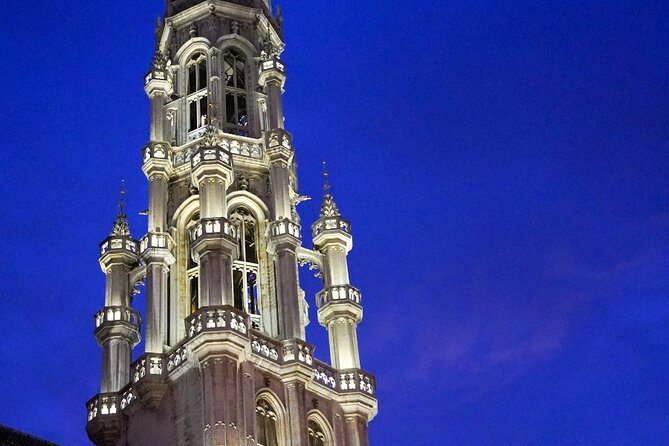
Rue de Rollebeek brings you through a more intimate part of the Sablon. Cobblestones, small shops, cafés, and older façades give the street a slower feel than Grand Place. The guide may use this stop to connect the polished Sablon of today with older social and commercial life.
The next stop is Notre Dame du Sablon, one of the route’s strongest visual moments. This Gothic church is known for elaborate stonework and stained glass. Even if the church is closed, the exterior gives the guide plenty to discuss, and the building helps explain why the Sablon is one of Brussels’ most attractive quarters.
The darker angle here may come from a past event, a local legend, or the wider religious and political setting rather than from anything visibly sinister. That pattern repeats across the tour. The places are often beautiful, but the stories connected to them are not always comfortable.
Same night, a different way out:
- Paris: Illuminations River Cruise with Audio Commentary
★ 4.3 · 12,340 reviews - Prague: Vltava River Night Cruise with Buffet
★ 4.3 · 7,338 reviews - DC Memorials Night Tour: Glass-Roof Convertible Upgrade Option
★ 4.5 · 6,933 reviews - Budapest: Evening Cruise including Drink Options
★ 4.2 · 6,896 reviews
Palais de Justice and the best city view
The Palais de Justice is the route’s biggest landmark. Its scale is hard to miss, and its position above the city gives you broad views across Brussels. This is a good place to pause, catch your breath, and let the guide connect law, punishment, government, and architecture.
The courthouse is particularly suited to this tour’s subject. It allows the discussion to move from the physical building to the justice system and the ways Brussels dealt with crime and punishment. The exact story will depend on the guide, but this is one of the stops most likely to feel connected to the Dark Side theme.
The climb and walking pace deserve attention. The route is not presented as a strenuous hike, yet one person found it more demanding than expected, and another described it as a long walk. If you are reasonably comfortable walking through a city for two hours, it should be manageable. Wear shoes with a firm grip and do not plan a tight appointment immediately afterward.
Petit Sablon and the city’s public memory
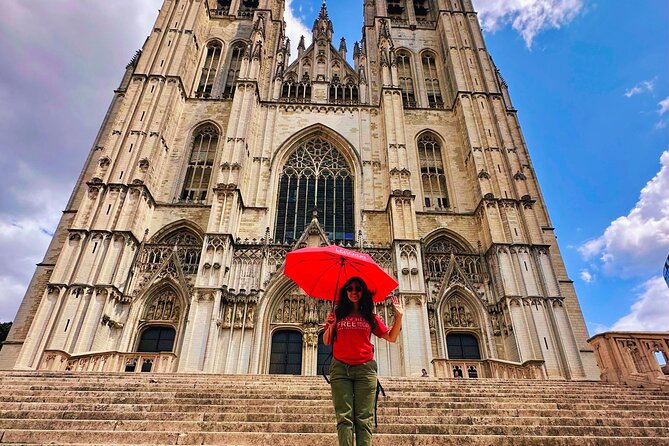
Square du Petit Sablon is a carefully arranged garden surrounded by 48 small bronze figures representing medieval guilds. It is a calmer stop after the courthouse, and it offers an easy lesson in how Brussels presents its past in public spaces.
The square looks refined, but the figures also point to power, trades, wealth, and the organization of medieval city life. A thoughtful guide can use the statues to explain who shaped Brussels and who held influence. This is one of the places where the tour’s broader approach works well, since the story is about society as much as crime.
Because the stop is quiet and attractive, it may feel less dark than the title promises. I would see that as a useful pause rather than a flaw, especially if you want a balanced picture of Brussels instead of two straight hours of grim anecdotes.
Place du Jeu de Balle and the Marolles
The walk then moves into the Marolles and Place du Jeu de Balle. The square is known for its daily flea market, where you can find old photographs, furniture, clothing, and small curiosities. At night, the market itself may not be operating, but the square still gives you a sense of the neighborhood.
The Marolles is one of the route’s more valuable areas because it feels less formal than the Sablon. The atmosphere is local and lived-in, and the guide can explain how the district developed its reputation and identity. This is also where the tour feels most connected to the idea of Brussels’ overlooked side.
Do not expect a polished entertainment district. The appeal is the neighborhood’s character and the contrast with the grand squares earlier in the walk. Stay with the group, since the route passes through ordinary city streets and the group may be spread out while the guide is speaking.
Kapellekerk, the final stop
The tour ends at Église Notre-Dame de la Chapelle, usually called Kapellekerk, on the edge of the Marolles. The church dates back to a chapel founded here in 1134, and its Gothic exterior gives the walk a fitting finish.
This is not a long final visit. The listed stop is about five minutes, so think of it as the endpoint and a last piece of local history rather than a full church tour. The end point is on Rue des Ursulines, close to Brussels-Chapel station, which is useful if you plan to continue by train or public transport.
The ending neighborhood is worth noting. It is popular and central, but it is not the same setting as Grand Place. If you are unfamiliar with Brussels, check your route home before the tour begins.
Price, tipping, and the real value
At $3.62 per group of up to six, the advertised price is remarkably small. That changes how I would judge the value. You are not buying an expensive guided attraction with entry tickets and reserved access. You are paying a tiny booking amount for a walking tour led by a guide who relies on gratuities.
Several people specifically urged visitors to bring euros and tip according to the quality of the experience. That is practical advice. If your guide keeps a large group together, tells clear stories, answers questions, and gives you two useful hours in Brussels, the low booking price should not be treated as the full value of the service.
One awkward detail came up when vouchers ran out at the end of a tour. That sounds like an operational problem rather than a core feature, but it is worth knowing that small extras may not always be available. The important benefit is the walk itself, not a voucher.
Group size, timing, and guide consistency
The maximum group size is 35. That is large enough for the guide’s voice and positioning to matter. David was praised for speaking clearly to a sizable group, but another person found a guide’s quiet voice hard to hear. Stand near the guide, especially at busy squares and beside traffic.
The scheduled length is about two hours, though one guide continued well beyond that and other accounts describe the walk as roughly 90 minutes to two hours. Build in extra time. The route includes several stops, but the walking between them is part of the experience.
Guide quality is the largest variable. The named guides in the feedback include Den, Sebastian, Rahim, Ann Marie, Ian, Gunny, Regime, and David. The strongest praise goes to guides who combine facts with humor and explain the wider political or social setting. A few accounts describe a talk that felt rehearsed or a route that did not match expectations.
The itinerary may also shift. One person felt the stops changed according to the guide and group size. That does not automatically make the tour poor, but you should book it for the subject and style, not because every stop is guaranteed to unfold in a rigid order.
Who should book this evening walk
I would choose this tour if you want a low-cost introduction to Brussels after dark and enjoy stories about odd, unpleasant, or lesser-known history. It suits first-time visitors who want to see the Sablon, Palais de Justice, Petit Sablon, and Marolles in one outing.
It also works well for solo visitors. One solo participant found the group comfortable and the guide attentive. The route gives you structure at a time when you might otherwise wander without much context.
I would be more cautious if you want a dedicated ghost tour, a tightly researched true-crime walk, or a short route with little uphill walking. The tour is also not ideal if you need every stop to match the advertised sequence exactly.
Book at least a little ahead if your schedule is fixed. It is commonly reserved about 14 days in advance, and the activity requires a minimum number of participants. If that minimum is not met, you are offered another date or experience, or a full refund. You can cancel for a full refund up to 24 hours before the start time.
Should you book The Dark Side of Brussels?
Book it if you want an inexpensive, English-language evening walk that mixes landmarks with stories of justice, politics, punishment, and local life. The best guides, including Rahim, Sebastian, David, and Ann Marie, appear to make the tour warm, funny, and genuinely useful.
Skip it if the word dark is the deciding factor. You may get grim tales, but you may also get architecture, civic history, and a broad tour of central Brussels. Go with that expectation, arrive early at Grand Place, wear sensible shoes, stay close enough to hear, and bring euros for a fair tip. That is the approach most likely to turn this very cheap booking into a worthwhile night out.
FAQ
Where does the tour begin?
It begins at Grand Place, also called Grote Markt, in central Brussels. One guide specified the area in front of City Hall.
Where does the tour end?
It ends at Kapellekerk, or Église Notre-Dame de la Chapelle, on Rue des Ursulines near Brussels-Chapel station.
How long does the tour last?
The tour is scheduled for approximately two hours. Some guides may continue longer, while one account described a walk of about 1.5 hours.
Is the tour offered in English?
Yes. English is the listed language for the experience.
What places does the route include?
The route includes Place du Grand Sablon, Place Saint-Jean, Tour Anneessens, Rue de Rollebeek, Notre Dame du Sablon, the Palais de Justice, Square du Petit Sablon, Place du Jeu de Balle, and Kapellekerk.
Is this a ghost or true-crime tour?
Not strictly. It can include stories about torture, murder, suicide, and punishment, but it also covers architecture, politics, churches, neighborhoods, and general Brussels history.
How many people can join?
The maximum group size is 35 people. The booking price applies to a group of up to six.
Can I cancel the booking?
Yes. You can cancel at least 24 hours before the start time for a full refund. Changes or cancellations made less than 24 hours before the start are not accepted for a refund.
Just added for nights around the world
- Ubud Day Tour : Waterfall, Temple and Local Night Market Tour★ 5.0 · 17 reviews
- Bali Food Tour: Savor Street Food and Night Market Adventures★ 5.0 · 46 reviews
- Eat like a Local: Venice Cicchetti and Wine Tasting Evening Tour★ 5.0 · 122 reviews
- Venice by Night: Highlights & Hidden Gems Tour★ 5.0 · 128 reviews
- Venice Evening Food Tour: Bites, Drinks & Sit-Down Dinner★ 4.5 · 83 reviews
- Ubud: Village Firefly Night Tour with Dinner★ 4.9 · 23 reviews
- Evening Walking Tour with optional motorboat Ride★ 4.2 · 225 reviews
- Taipei Street Food & Night Market Tour with a Local: Private & Custom★ 4.5 · 35 reviews
Belgium Night Tours, compared.