Review · BELGIUM
Evening Tour: The Dark Side of Bruges
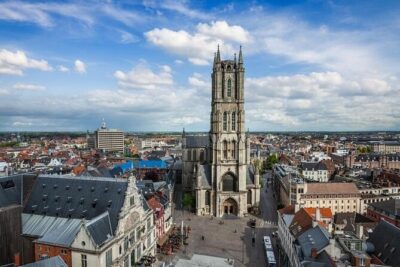
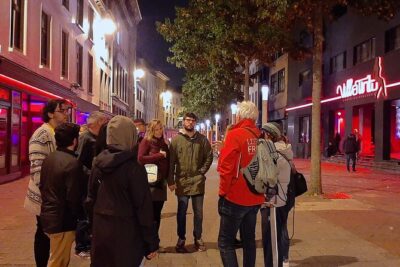
Bruges looks almost too pretty in daylight. After dark, the canals, old squares, and narrow lanes take on a different mood, and this tour uses that change well. You begin at the Markt, then move toward old harbors, forgotten trade routes, a medieval church, city walls, and windmills beyond the center.
I like the way the walk gives you a sense of direction early in your stay, and I like that it reaches places you might skip on a standard central Bruges stroll. Guides such as Martin, Louis, Patrick, Hilde, and Bram have been praised for humor, storytelling, and local pride.
The main caution is that the experience can vary with the guide and group. Some guides speak too softly or with a strong accent, and the walk may run longer than the advertised 90 minutes. Bring a warm layer, listen carefully at the meeting point, and keep your dinner plans flexible.
Key points to know before you book
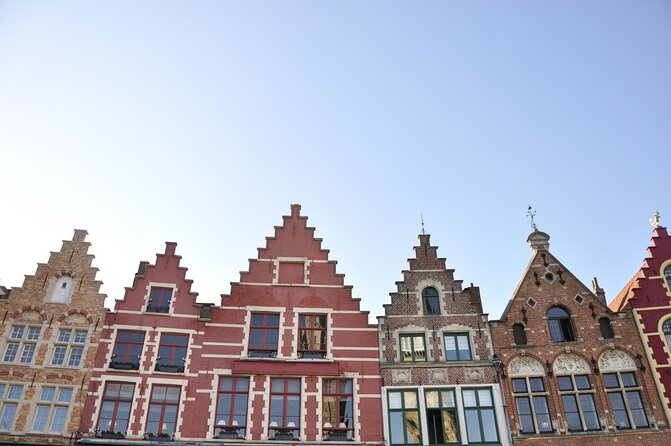
- The route leaves the postcard center: You visit Jan van Eyckplein, Langerei, Adornes Domain, and the windmills rather than staying only around the Markt.
- The tone mixes history with darker folklore: Expect stories of superstition, tragedy, trade, legends, and ghosts, though the exact balance depends on your guide.
- The tour ends at Bauhaus: You receive a buy-one-drink, get-one-free beer offer at the bar, rather than a full drink included with the guide fee.
- The walk is listed at about 90 minutes: Several accounts describe it running closer to two hours or more, so avoid booking a tight dinner reservation.
- The listed price is unusually low: At $3.62 per person, the tour offers strong value if you enjoy walking and plan to tip your guide.
- The advertised group limit is six: Group size information has not always been consistent, so confirm the current number if a small group matters to you.
Starting at the Markt after sunset
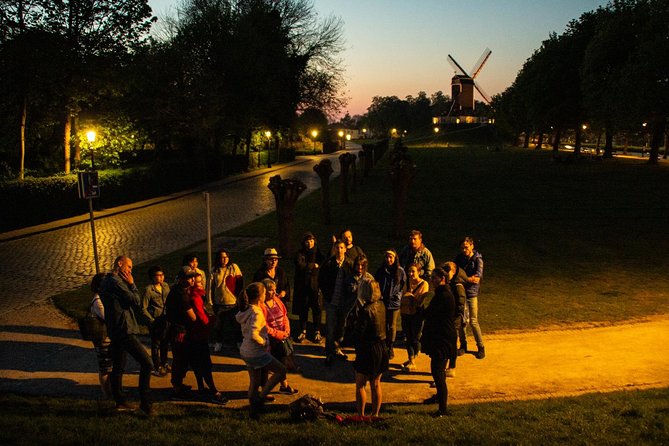
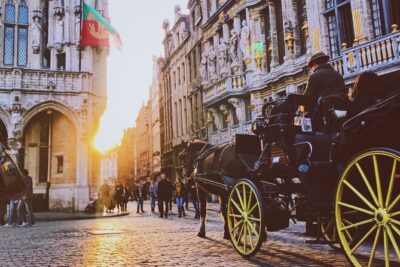
The meeting point is Pieter de Coninck en Jan Breydel Markt, the main square in central Bruges. This is a sensible place to begin because the Markt gives your guide room to explain how Bruges developed before the walk turns toward quieter streets.
You spend about ten minutes here. That may sound short, but it gives the rest of the route a useful frame. You learn why the city became important, how its trade shaped the center, and why the grand square looks the way it does.
The opening is more talk than walking, so arrive ready to stand. One practical point: some people have found the meeting instructions unclear when seasonal changes were made. Check the current start details before leaving your hotel, especially around Christmas.
The tour is offered in English and uses a mobile ticket. It is near public transportation, which makes the start easy to reach from elsewhere in Bruges. The finish is in a different part of town, so do not assume you will return to the Markt with the group.
More night tours around the world:
- Prague: 50-Minute Sightseeing Evening Cruise
★ 4.2 · 33,780 reviews - Amsterdam: Evening Cruise with Optional Wine and Snacks
★ 4.4 · 22,178 reviews - Budapest: By Night Sightseeing Cruise with Welcome Drink
★ 4.3 · 15,533 reviews
Jan van Eyckplein and Bruges’s old harbor
From the Markt, the route heads to Jan van Eyckplein. This square was once connected to the medieval harbor, when Bruges was a major trading city in northern Europe.
I find this stop useful because it corrects the common picture of Bruges as only a pretty canal town. The city’s beauty came with serious commercial muscle. Merchants, cargo, money, and international business once moved through this area.
The square also helps you understand the city’s changing fortunes. Bruges became wealthy through trade, but its access to the sea declined over time. The old harbor story gives you a reason for the grand buildings, canals, and merchant spaces you see elsewhere.
Your guide may spend more time on trade than on ghost stories here. If you booked this expecting a nonstop haunted walk, adjust your expectations. The tour’s darker side is usually woven into the city’s past rather than presented as a theatrical ghost show.
The old exchange near Choco-Story
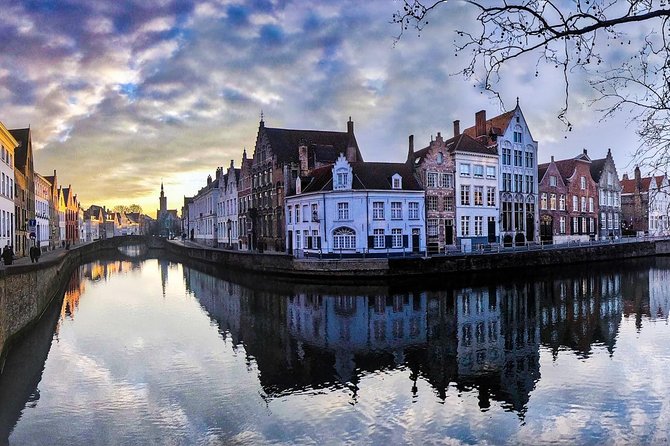
The next stop is around the square beside Choco-Story, Bruges’s chocolate museum. The focus here is not chocolate tasting. Instead, your guide points out the former Italian trading houses and explains the importance of one of the world’s earliest stock exchange markets, dating from the 13th century.
This is one of the better examples of the tour’s method. You are not simply shown a handsome facade. You are told what happened there, who used the space, and how money and trade helped shape Bruges.
I also like the contrast between the modern tourist stop and the older commercial story beneath it. The chocolate museum draws attention today, but the square’s original importance came from business and international trade.
The drawback is that this stop can feel basic if you have already taken a detailed daytime history tour. Some guides focus on clear, broad facts rather than unusual details that you could not find in a guidebook. The quality depends heavily on how well your guide connects the facts to the buildings around you.
Langerei and the Golden Hand Canal
At Langerei, the mood shifts toward superstition. You hear how the picturesque Golden Hand Canal got its name, with a tale involving the devil, tragedy, and a strong dose of local belief.
This is the kind of stop that gives the evening its personality. In daylight, a canal may look simply scenic. At night, the same water and old walls provide a natural setting for stories about fear, greed, bad luck, and supernatural punishment.
The guide’s storytelling matters most here. Martin has been praised for mixing history with humor, while Louis has been praised for noticing small details and bringing the town to life. Other guides, including Patrick, Jonathan, Hein, and Bram, have also led tours, so the voice and pacing may change from one evening to another.
Do not expect every story to be presented as proven fact. The appeal is in seeing how old legends reflect the worries and beliefs of the people who lived here.
Same night, a different way out:
- Paris: Illuminations River Cruise with Audio Commentary
★ 4.3 · 12,340 reviews - Prague: Vltava River Night Cruise with Buffet
★ 4.3 · 7,338 reviews - DC Memorials Night Tour: Glass-Roof Convertible Upgrade Option
★ 4.5 · 6,933 reviews - Budapest: Evening Cruise including Drink Options
★ 4.2 · 6,896 reviews
A look at Vlissinghe, Bruges’s old drinking place
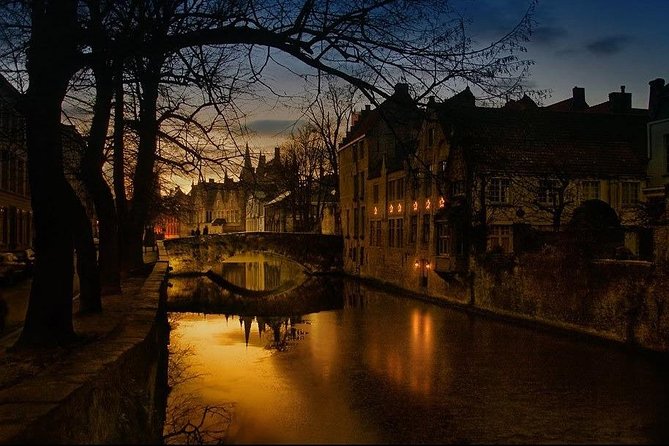
The route pauses near Vlissinghe, described as the oldest bar in Bruges and Belgium, with beer served there since 1515. The stop lasts only about five minutes, so this is mainly an introduction rather than a long pub visit.
That distinction matters. You may see the historic exterior and hear why the bar is important, but the main beer stop comes later at Bauhaus. If you want to visit Vlissinghe inside, plan a separate stop and check its opening arrangements independently.
I like this brief pause because it connects the city’s history to ordinary social life. Bruges was shaped not only by merchants and churches, but also by places where people gathered, drank, argued, and passed along stories.
The tour does not promise a tasting at Vlissinghe. Treat it as a quick historical marker along the route.
Adornes Domain and the Jerusalem connection
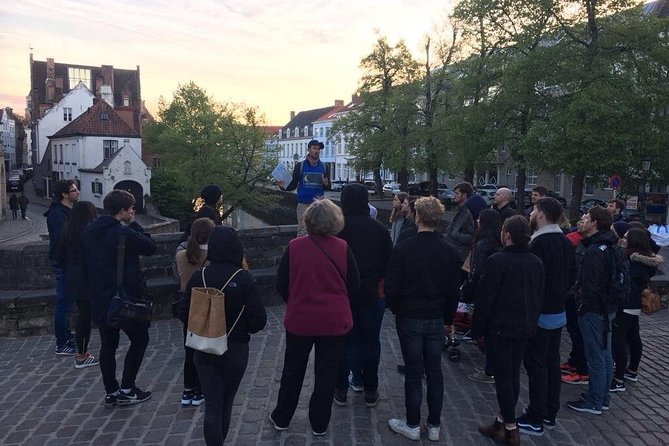
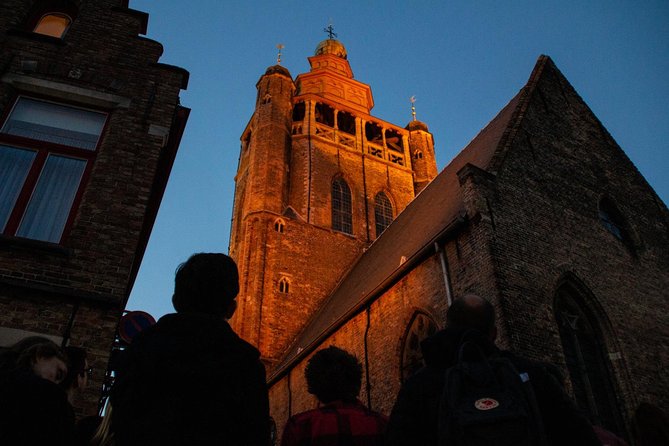
At Adornes Domain, you hear the legend behind an unusual church built as a copy of the Church of the Holy Sepulchre in Jerusalem. This stop adds a religious and personal side to Bruges’s past.
The story is especially effective after the trade and superstition sections because it shows how wide the city’s connections once were. Bruges was not isolated behind its canals. Its wealthy families looked outward, traveled, traded, and brought ideas back with them.
The area also provides a quieter change from the main squares. You see a part of Bruges that many first-time visitors miss when they stay around the Markt and the canals closest to it.
This stop may interest you most if you enjoy buildings with a story behind them. If you prefer a strict ghost tour, the church history may feel less dramatic, but it gives the evening greater range.
Windmills, city gates, and the walk beyond the center
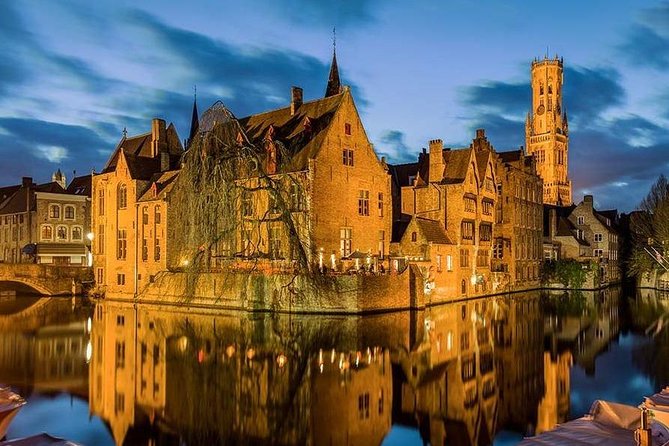
The route then heads toward Sint-Janshuismolen, where you can photograph the windmills on the edge of Bruges and see one of the remaining medieval city gates. This is the most scenic part of the walk for many people.
The distance matters. You are not just hopping between nearby squares. You walk from the historic center toward the outer edge, and the change in setting helps you understand the former limits of the city.
At night, the windmills can be atmospheric, but darkness also makes footing harder. One account describes steps near the windmill without a handrail, so this section may not suit anyone who has trouble with uneven ground or stairs. The tour is described as suitable for most people, and service animals are allowed, but the route is still a walking tour with outdoor surfaces.
I would bring sensible shoes and a coat. Bruges can feel cold beside the canals, particularly when the walk runs late or the weather turns damp. Since poor weather can lead to cancellation, keep an eye on messages before setting out.
Finishing at Bauhaus with a beer offer
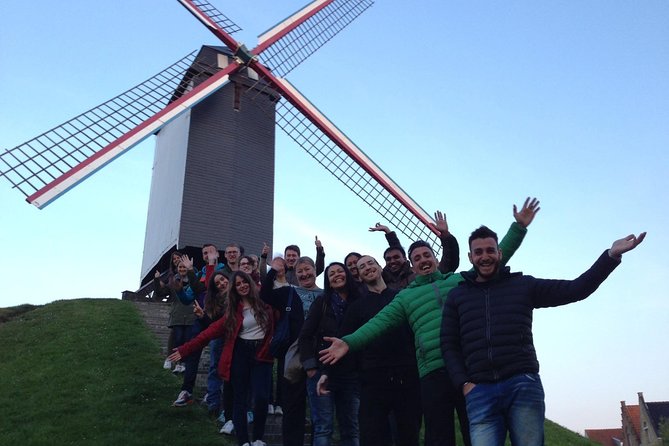
The tour ends at Bauhaus, at Langestraat 121, about a 12-minute walk from the starting point. The listed end time includes about 20 minutes here, giving you a chance to settle into a bar after the outdoor walk.
The advertised benefit is a complementary beer offer: buy one drink and get one beer free. Read that carefully. It is not the same as having a beer automatically included in the price, and you should be prepared to buy a drink to use the offer.
This ending works well for people who want a social finish. It also gives you a practical chance to ask your guide for dinner ideas. One guide has helped people choose a place for mussels and Belgian fries, but you should not count on a full meal at Bauhaus.
Dinner timing deserves attention. The walk starts in the evening, and some guides have run well past 90 minutes. If you eat before the tour, you avoid rushing. If you eat afterward, keep your plan loose and remember that the end point is not the Markt.
Guide quality, pace, and group size
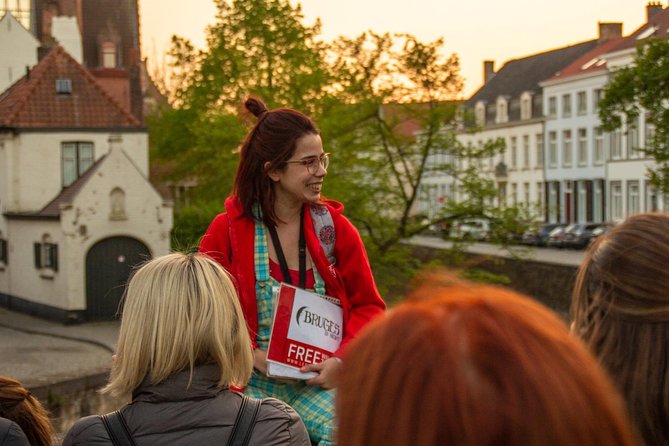
The strongest part of this experience is the guide. The best leaders turn ordinary streets into a sequence of stories, use humor without losing the historical thread, and point out details you might otherwise pass without seeing.
Martin has been singled out for clever, funny explanations. Louis has been praised for his affection for Bruges and his eye for small details. Patrick has been described as entertaining and informative, while Hilde has handled multilingual explanations well. Jonathan has used a short trivia quiz to keep the group involved.
The experience is not perfectly consistent. Some people have found a guide hard to hear because of a quiet voice or strong accent. A guide may also use a book of pictures, but in a larger group not everyone can see the images.
The advertised maximum is six people, which would create an intimate walk with plenty of room for questions. Yet group-size information has not always matched that promise, with one account describing 17 people. If a small group is important to you, confirm the current arrangement before booking.
The pace can also vary. Some guides keep things moving, while others add extra stories and let the tour run over. I would welcome the extra content if I had no later plans, but I would not schedule a fixed dinner, train, or evening show immediately afterward.
Is $3.62 good value?
At $3.62 per person, the price is remarkably low for a 90-minute guided walk. The value is strongest if you want orientation, local stories, and a route beyond the most familiar streets without paying for a large formal sightseeing package.
You should also view the price in context. The fee covers the guide, while the beer arrangement at Bauhaus requires you to buy one drink to receive the second free. A tip is appropriate if your guide puts real effort into the evening, particularly since the tour is priced so low.
The low price does not guarantee a polished performance every time. You are paying for a simple walking format, and the quality rests on the individual guide’s voice, timing, and ability to hold the group together.
For me, the value is excellent for a first evening in Bruges. It gives you a map in your head, a few stories to remember, and several places to revisit in daylight. It is less useful if you want a tightly scripted professional lecture or a guaranteed spooky production.
How this compares with a daytime or boat tour
This walk works well beside a daytime city tour or canal boat ride because it reaches areas those experiences may not cover. The canals and central buildings are not the whole story, and the route toward the windmills gives you a broader sense of Bruges.
A boat tour shows the city from the water and usually emphasizes views. This walk gives you street-level context, local legends, old business districts, and the practical feel of moving through Bruges on foot.
The overlap is limited, although your guide may still explain some familiar history at the Markt and Jan van Eyckplein. If you have already taken a detailed history tour, expect a lighter, more conversational evening rather than a completely new academic account.
I would take this walk early in a Bruges stay if possible. The opening explanation helps you understand the city, and you can return later to the Golden Hand Canal, Adornes Domain, or the windmills in daylight.
Who should book it?
I recommend it to you if you enjoy walking, local stories, old legends, and informal history. It suits couples, solo visitors, and small groups who want a social evening without committing to a costly dinner experience.
It is also a good fit if you have already seen the Markt, Belfry area, and main canals and want to move beyond the familiar center. The end at Bauhaus adds a relaxed social option, though the drink offer is not a complete bar tab.
I would think twice if you need a precise finish time, have difficulty with steps or outdoor walking, or strongly prefer a clear, loud speaker. The tour can run long, and guide quality varies.
Free cancellation is available up to 24 hours before the start. Changes or cancellations inside that window are not accepted, and poor weather or failure to reach the minimum number may lead to a new date, another experience, or a full refund.
Should you book The Dark Side of Bruges?
Book it if you want Bruges to feel like a lived-in city rather than a collection of pretty views. The old harbor, Golden Hand Canal, Vlissinghe, Adornes Domain, and windmills give the evening a useful range, while the legends add just enough shadow without turning the walk into a haunted-house act.
I would make this an early Bruges activity, eat beforehand, wear warm shoes, and leave your evening open after the advertised finish. At the low listed price, the risk is small, especially if you enjoy tipping a good guide and using the Bauhaus drink offer.
Skip it if you need a perfectly timed, highly polished tour or if you already know Bruges well and want only rare, specialist facts. For most first-time visitors who want history, humor, and a different view of the city after dark, it is a smart buy.
FAQ
Where does the tour start?
The tour starts at Pieter de Coninck en Jan Breydel Markt, 8000 Brugge, Belgium.
Where does the tour end?
It ends at Bauhaus, Langestraat 121, 8000 Brugge, Belgium. The end point is about a 12-minute walk from the starting point.
How long does the tour last?
The scheduled duration is approximately 1 hour and 30 minutes. It may run longer, so allow extra time after the stated finish.
What language is the tour offered in?
The tour is offered in English.
Is a beer included?
The tour ends with a drink offer at Bauhaus: buy one drink and get one beer free. The tour information lists the guide as included, but does not describe a drink as automatically included in the tour price.
How large is the group?
The advertised maximum is six people. Group-size information has not always been consistent, so confirm the current group limit if this is important to you.
Is the tour suitable for people with mobility concerns?
Most people can participate, and service animals are allowed. The route includes outdoor walking and may include steps near the windmill, so consider your comfort with uneven surfaces and stairs.
What happens if the weather is poor?
The experience requires good weather. If it is canceled because of poor weather, you can be offered a different date or a full refund.
Just added for nights around the world
- Ubud Day Tour : Waterfall, Temple and Local Night Market Tour★ 5.0 · 17 reviews
- Bali Food Tour: Savor Street Food and Night Market Adventures★ 5.0 · 46 reviews
- Eat like a Local: Venice Cicchetti and Wine Tasting Evening Tour★ 5.0 · 122 reviews
- Venice by Night: Highlights & Hidden Gems Tour★ 5.0 · 128 reviews
- Venice Evening Food Tour: Bites, Drinks & Sit-Down Dinner★ 4.5 · 83 reviews
- Ubud: Village Firefly Night Tour with Dinner★ 4.9 · 23 reviews
- Evening Walking Tour with optional motorboat Ride★ 4.2 · 225 reviews
- Sydney: 90-Minute Panoramic Big Bus Night Tour★ 4.5 · 59 reviews
Belgium Night Tours, compared.