
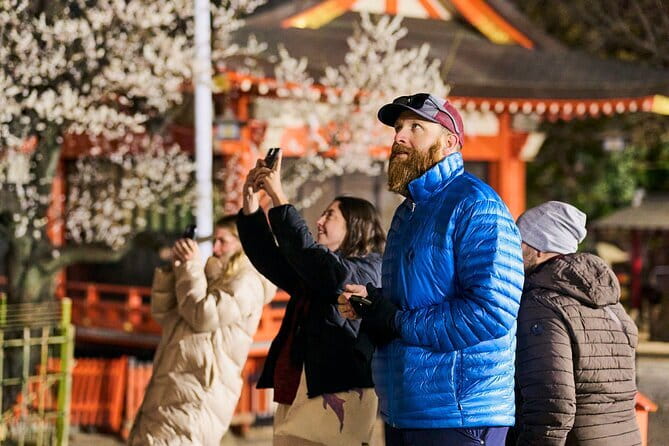
Review · TOKYO
Tokyo: Shinjuku Historical Walking Tour & Secret Backstreets
Shinjuku changes character every few steps. One moment you are under the bright signs of Kabukicho, and the next you are in a narrow lane of tiny restaurants or standing quietly at a shrine. This 90-minute evening walk gives you a simple way to connect those very different sides of Tokyo.
I like the route for two reasons: it takes you to Omoide Yokocho and Golden Gai, places that are easy to miss when you only follow the main streets, and it ends at Hanazono Shrine, a calm counterpoint to the neon. The guide also gives restaurant and bar suggestions you can use later.
The main limitation is time. Ninety minutes is enough for an introduction, not a full exploration of Shinjuku. You will see the outside of many attractions, and food, drinks, shrine offerings, and omikuji cost extra.
Key points to know before you book
- Start at Shinjuku Station’s East Exit Police Box: The meeting point is at 3-chōme-38-1 Shinjuku, beside one of Tokyo’s busiest stations.
- Follow the route through old and new Shinjuku: The walk combines Omoide Yokocho, neon Kabukicho, Kabukicho Tower, Golden Gai, and Hanazono Shrine.
- Use the guide for local food advice: Guides such as Mao, Akari, Ai, Aki, Naoto, and Ren have offered suggestions for restaurants, bars, shopping, and later exploring.
- Expect a walking introduction, not a tasting tour: One vending machine drink recommended by the guide is included, but meals, drinks, omikuji, and shrine offerings are not.
- Night brings the strongest atmosphere: Neon signs and nightlife make the route especially photogenic, though some businesses may be closed depending on the time.
- The price is modest for a private introduction: At $25.20 per person, the tour is useful if you want orientation and context before exploring alone.
Why Shinjuku makes a good first-night walk
Shinjuku can feel like several cities packed into one district. The station is huge, the streets are crowded, and the entertainment areas are spread through a maze of lanes. A map will get you from point to point, but it will not always explain why one alley feels old and intimate while the next is dominated by giant signs and high-rise attractions.
That is where a local guide helps. The walk gives you a basic mental map of the East Exit area, then adds stories about the people, customs, and past of Shinjuku. You are not simply checking off sights. You are learning where to return when you want dinner, a drink, a photo, or a quieter pause.
The price also makes sense as an orientation tool. At $25.20, you are paying less than the cost of many organized city activities for a private guided walk. The value is strongest at the beginning of a Tokyo stay, when a short introduction can save you time and help you choose where to spend later evenings.
Do not expect admission to a major attraction, a full meal, or a long stop inside a bar. The tour is built around walking, explanations, recommendations, and seeing the area with a local escort.
More Night Walking Tours in Japan
- Kyoto: Gion Magical Night Walking Tour with Geisha Trivia
★ 4.9 · 2,393 reviews - Night Walk in Gion: Kyoto’s Geisha District
★ 4.5 · 2,003 reviews - Osaka Backstreet Nightlife & Street Food Walking Tour
★ 5.0 · 1,011 reviews
Meeting at Shinjuku East Exit
The tour begins at the police box near Shinjuku Station’s East Exit, at 3-chōme-38-1 Shinjuku. This is a practical meeting point because it is near public transportation, but the station area can be confusing. Give yourself time to find the correct exit rather than arriving at the last minute.
The activity ends back at the meeting point. That makes it easy to continue your evening from the same part of Shinjuku, although the tour does not provide a separate drop-off at a restaurant or hotel.
The activity is described as private, with only your group participating. That is helpful if you want to ask questions or adjust the conversation toward food, history, photography, or nightlife. One published experience involved a group of 15, so confirm the arrangement at booking if group size matters to you.
Several guides have been praised by name, including Mao, Akari, Maya, Cherry, Hannah, Nana, Ai, Ren, Ayaka, Aki, Glenda, and Naoto. The exact guide depends on the date and availability. A useful pattern appears across the strongest experiences: guides ask about your interests, explain local customs, point out places you might otherwise pass, and offer suggestions for the rest of your stay.
Omoide Yokocho and the old Shinjuku
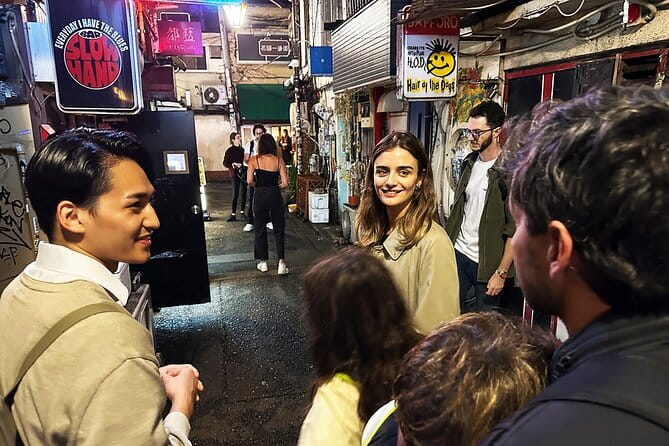
Omoide Yokocho, also called Memory Lane, is one of the most appealing parts of the walk. Tucked beside the larger streets, it has a nostalgic feel and narrow lanes lined with small eating places. It offers a glimpse of an older Shinjuku, one built around compact restaurants rather than giant signs and towers.
This is a good place to have a guide because the lanes are easy to wander through without understanding how the area fits together. You can ask about the food spots you see and note which places you may want to revisit later.
The practical catch is that the tour does not include a meal here. You are seeing the setting and receiving recommendations, not sitting down for a tasting session. If you want to eat in Omoide Yokocho afterward, keep the tour timing in mind and ask the guide for suggestions.
For photographers, this is one of the strongest parts of the route. The tight passageways, small storefronts, and contrast with the nearby station area give you a different view of Tokyo than the usual wide city streets.
Kabukicho under the neon
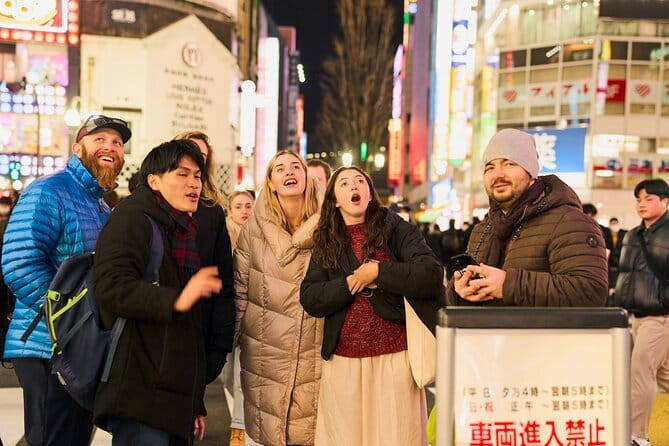
Kabukicho is Shinjuku’s entertainment district, widely known as Sleepless Town. At night, its signs and illuminated buildings create the classic Shinjuku look. The tour allows about 10 minutes here, enough to get oriented and understand the district’s basic character.
A guide is especially useful in a place that can feel loud and confusing. You can hear about the area rather than simply seeing a wall of advertisements. The walk also provides a chance to ask which streets and venues fit your interests.
This is not a guided visit into a club, bar, or restaurant. The route takes you through the district and gives you food and nightlife advice. That distinction matters if you are expecting a hosted evening with drinks or personal introductions.
The signs and streets are at their most photogenic after dark. Still, your exact view can depend on the time slot and weather. The experience requires good weather, and rain can affect both comfort and photo opportunities.
Same night, a different way out:
- Tokyo Bar Hopping Tour in Shinjuku (All-You-Can-Drink + Dinner)
★ 5.0 · 3,587 reviews - Kyoto Night Foodie Tour in Gion (9+ dishes + 6 Sake tastings)
★ 5.0 · 1,762 reviews - Tokyo Night Foodie Tour in Shinjuku – Seasonal Sushi, Wagyu Beef
★ 5.0 · 1,161 reviews - Osaka Bar Hopping Night Walking Tour in Namba (3 bars, 6 tastes)
★ 5.0 · 958 reviews
Kabukicho Tower and modern Tokyo
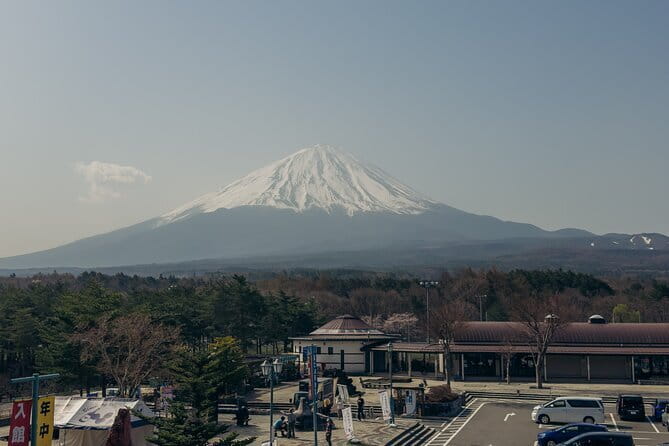
Kabukicho Tower is a newer addition to the district. The complex includes multiple attractions and gives the traditional nightlife area a modern, high-rise counterpart. The tour allows about 25 minutes here, the longest listed stop.
That extra time helps show how Shinjuku is changing. You see a district that is not only made up of old lanes and small bars, but also large new developments designed for entertainment, dining, and city views.
The tour does not include admission to paid attractions inside the tower. The stop is about the building and its place in Kabukicho. One useful benefit is that some guides have taken their groups to a free observation deck, though this may depend on the guide and the day. Treat that as a possible extra, not a guaranteed feature.
If you are interested in city photography, ask your guide about the best free viewing option available during your walk. That kind of current local advice can be more useful than a fixed sightseeing schedule.
Golden Gai, tiny bars, and narrow lanes
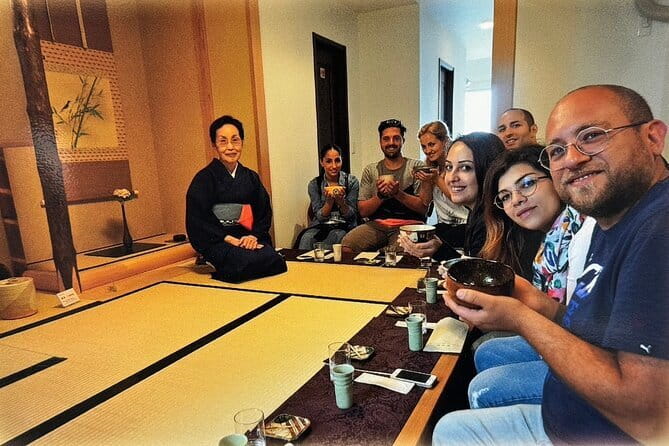
Golden Gai receives about 15 minutes. This compact area is known for narrow alleys and very small bars, each with limited space and its own character. It is one of the places that can feel difficult to approach on your own, especially if you do not know the local customs or opening patterns.
The short stop gives you a look at the area without pretending that you can understand it all in one visit. You can note the bars that interest you, ask about returning later, and learn how Golden Gai fits into Shinjuku nightlife.
Again, this is not a bar crawl. You should not assume that a drink or entry is included. The guide provides context and recommendations, while any later visit is your own expense.
Golden Gai also shows why a walking tour can be more useful than a bus or large group sightseeing trip. The lanes are too small for vehicles, and the appeal is in the details: tiny entrances, close-set buildings, and the sudden shift from a major city street into a pocket-sized nightlife quarter.
Hanazono Shrine, a quiet ending
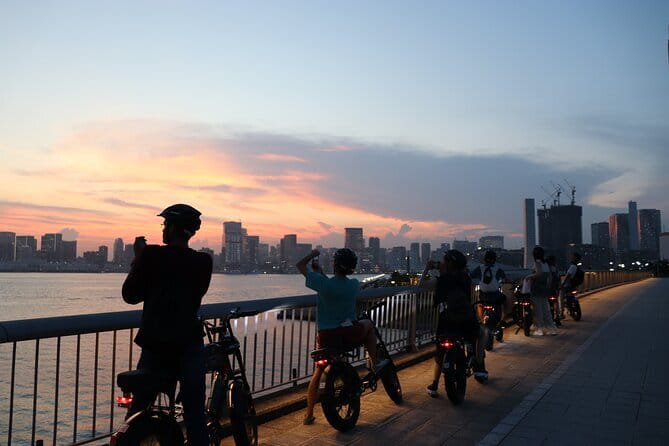
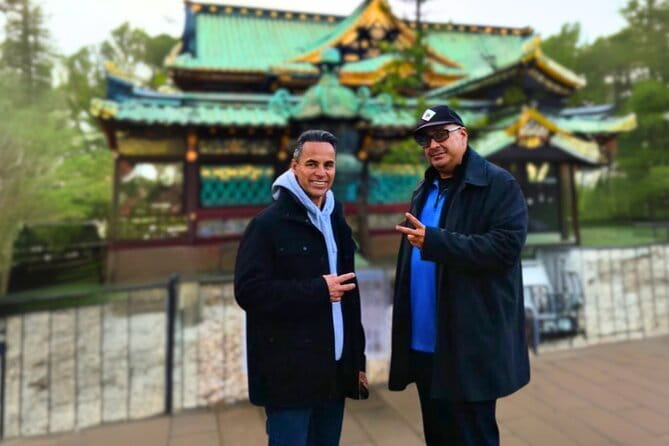
Hanazono Shrine is the final major stop and one of the route’s best choices. Set in the middle of Shinjuku, it offers a quiet place to talk about Japanese shrine customs after the noise of Kabukicho and Golden Gai.
The tour allows about 20 minutes here. That is enough time for an explanation of the shrine, a look at the grounds, and an introduction to practices such as offering a small amount of money or purchasing omikuji. Those costs are not included.
This ending gives the walk a useful rhythm. Instead of finishing in another neon district, you have time to slow down and process what you have seen. Guides such as Aki and Naoto have been especially noted for explaining shrine traditions clearly, while Glenda was praised for ending the walk in a pleasant shrine area.
You do not need to be religious to appreciate the stop. It provides cultural context and a calm photo setting. Follow the guide’s instructions, keep your voice low, and treat the grounds as a place of worship rather than only a sightseeing stop.
What the guides add to the route
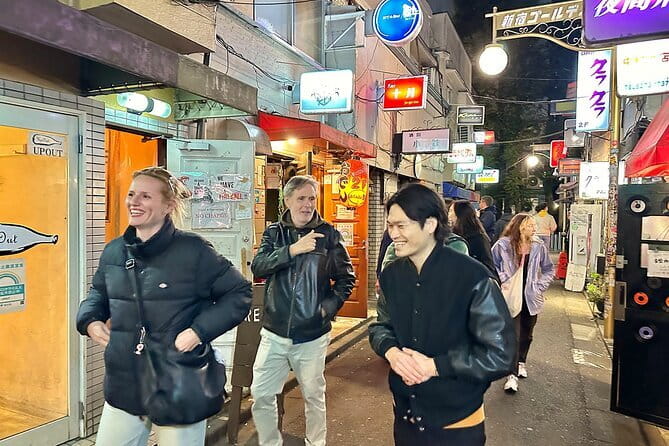
The guide is the main reason to choose this walk over following a free online map. Mao has been described as adjusting the tour to match guests’ interests. Akari has helped visitors get oriented around the area where they were staying. Ren has shown the backstreets, bars, restaurants, and local subculture in a friendly way.
Ayaka has managed a larger group while keeping the tour informative, and Naoto has been noted for giving clear meeting directions and walking the group back toward the station. These details point to the practical role of the guide: not just reciting facts, but helping you feel more comfortable in a complicated district.
Guides also provide advice that is hard to capture in a standard itinerary. You can ask what to eat, where to shop, which bars may suit your style, and what to return to after the tour. The exact quality will depend on the individual guide, but the activity is designed around that personal exchange.
You also receive one vending machine drink recommended by the guide. It is a small inclusion, but it fits the walk. This is not a food tour, so do not book it expecting samples or a sit-down meal.
Is $25.20 good value?
I consider $25.20 a fair price for a 90-minute private introduction, especially if this is your first time in Shinjuku. You get a guide, a route through several contrasting areas, local recommendations, and help with the district’s layout.
The value is lower if you already know Shinjuku well or are happy exploring narrow streets on your own. One reasonable criticism is that the route can feel like something you could walk without a guide. The difference comes from the explanations and advice, so ask questions rather than quietly following along.
The tour also does not include food, alcoholic drinks, paid attractions, shrine offerings, or omikuji. Budget extra money if you plan to eat in Omoide Yokocho or Golden Gai, or if you want to visit an attraction inside Kabukicho Tower.
Free cancellation is available up to 24 hours before the start time. Changes or cancellations made inside that window are not refunded, and poor weather can lead to a different date or a full refund.
Who should book this Shinjuku walk?
I would choose this tour for a first visit to Tokyo, a solo visitor who wants a little confidence in Kabukicho, or anyone staying near Shinjuku who wants useful advice for later evenings. It also suits photographers looking for neon streets, compact alleys, and a shrine setting in one short outing.
It works well for people who like history and local customs but do not want a long formal lecture. The route is active without being a full-day walk, and most people can participate.
I would skip it if you want a tasting tour, a bar-hopping evening, or guaranteed entry to attractions. I would also look elsewhere if you need a fully accessible route, since the information provided does not describe the walking surface or accessibility arrangements.
Should you book it?
Book this walk if you want a quick, low-cost introduction to Shinjuku with a local guide who can help you understand the district and choose where to return. The strongest parts are Omoide Yokocho, Golden Gai, the neon streets of Kabukicho, and the quiet finish at Hanazono Shrine.
Go in with the right expectations. You are paying for orientation, stories, and practical advice, not dinner or a packaged nightlife event. If that sounds useful, $25.20 is a sensible way to get your bearings before exploring Shinjuku on your own.
FAQ
How long does the Shinjuku walking tour last?
The tour lasts approximately 1 hour and 30 minutes.
Where does the tour begin?
It begins at the police box by Shinjuku Station’s East Exit, at 3-chōme-38-1 Shinjuku, Shinjuku City, Tokyo 160-0022, Japan.
Where does the tour end?
The activity ends back at the meeting point.
What places are included on the route?
The route includes Omoide Yokocho, Kabukicho, Tokyu Kabukicho Tower, Shinjuku Golden Gai, and Hanazono Shrine.
Is the tour private?
Yes. The activity is described as private, with only your group participating.
Is food or alcohol included?
No meals or alcoholic drinks are included. One vending machine drink recommended by the guide is included.
Do shrine offerings and omikuji cost extra?
Yes. Purchasing omikuji and making a small offering at the shrine are not included in the tour price.
Can I choose a tour time?
Yes. Different time slots are available when booking.
What is the cancellation policy?
You can cancel at least 24 hours before the start time for a full refund. Cancellations or changes made less than 24 hours before the experience are not refunded or accepted. If poor weather causes the activity to be canceled, you will be offered another date or a full refund.
More history after dark around Japan
- Buda Castle District Dark History, Legends and Vampire Night Tour
★ 4.5 · 1,240 reviews - Creepy Crawl Night-Time Haunted Pub Walking Tour of Savannah’s Historic District
★ 4.5 · 802 reviews - Salem Night Tour: Haunt and History Guided Night Tour
★ 4.5 · 673 reviews - Oslo: Historic Myths & Legends Evening Walking Tour
★ 4.8 · 408 reviews
Just added for nights around Japan
- [1 Group Only ] Osaka: Private Night Food Tour for Family★ 5.0 · 2 reviews
- Private Tokyo Night Tour★ 5.0 · 115 reviews
- Kyoto Private Night Tour with a Local – Bars, Bites & Culture★ 5.0 · 48 reviews
- Osaka After Dark: Small-Group Night Food Tour (Max 6)★ 4.5 · 245 reviews
- Osaka Nighttime tour★ 5.0 · 270 reviews
- Osaka: Bar-Hopping Night Tour in Namba★ 4.7 · 117 reviews
- Osaka: Private Vibrant Nighttime Photoshoot (Dotonbori)★ 4.9 · 80 reviews
- Tokyo by Night Photography Tour (Private Option Available)★ 5.0 · 151 reviews
Tokyo Night Tours, compared.
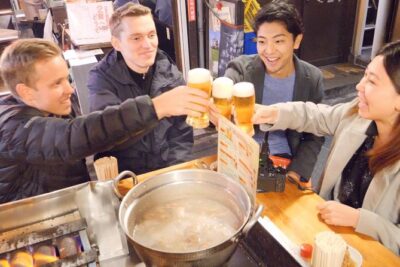
Tokyo Bar Hopping Tour in Shinjuku (All-You-Can-Drink + Dinner)
Read our review →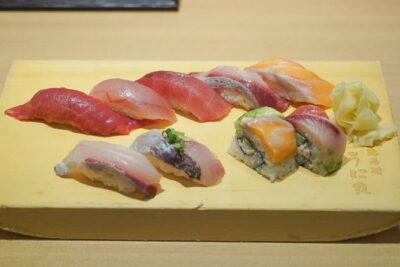
Tokyo Night Foodie Tour in Shinjuku – Seasonal Sushi, Wagyu Beef
Read our review →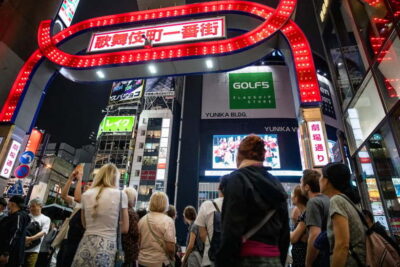
Tokyo: Dark Side of Tokyo Shinjuku Red Light Walking Tour
Read our review →
Tokyo After 5: Authentic Japanese Food & Drink Night Tour
Read our review →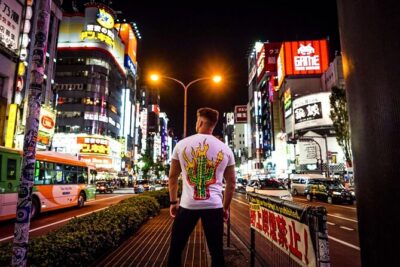
Tokyo by Night Photography Tour (Private Option Available)
Read our review →
Browse the lists this tour appears in