
Review · OSAKA
Osaka Nighttime tour
Osaka’s best nightlife is often found at a small restaurant table, not behind a famous sightseeing sign. This evening food walk takes you through Tenma, a local eating district, for three stops that cover familiar Osaka favorites and a wagyu yakiniku meal where you grill the beef yourself. You finish full, slightly better informed, and hopefully with a few new dishes in your vocabulary.
I like the way the tour moves through three separate restaurants, rather than asking one place to do everything. I also like the small group limit of eight, which gives guides such as Kaori, Mayura Kai, and Akiko room to explain dishes, answer questions, and adjust the evening when possible.
The main drawback is the price: $198 per person is a serious outlay for a three-hour food tour. The booking is also non-refundable, and the experience is not recommended if you have a serious food allergy.
Key things to know before you book
- Tenma gives you a local food setting: The tour spends the evening around Tenjinbashi and Temma Station, rather than focusing on a major sightseeing strip.
- Four food stages fill roughly three hours: You begin with street-vendor food, then eat okonomiyaki, kushikatsu, and wagyu beef.
- The restaurant plan can change: The evening’s restaurants depend on the schedule, so you should expect the food categories more than fixed venues.
- Drinks are part of the experience: Various drinks are included, including a Japanese cocktail with the wagyu course.
- Groups stay small: A maximum of eight people makes this more personal than a large food crawl.
- You return to the starting point: The meeting point is Shichifukujin Temma Station, and hotel pickup is not included.
Why Tenma is a smart place to eat in Osaka
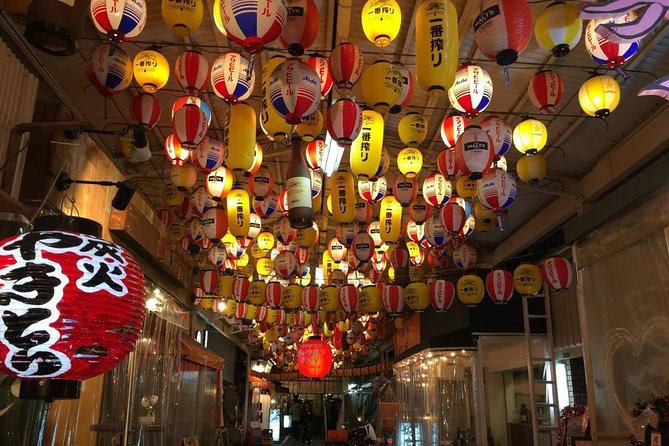
The tour centers on Tenma and the Tenjinbashi area, a part of Osaka known for local food streets and compact restaurants. You are not simply checking dishes off a menu. You are moving through the sort of neighborhood where the evening is built around eating, drinking, and conversation.
That setting matters. Osaka is often called Japan’s kitchen, and food here is closely tied to ordinary city life. Tenma gives you a chance to see that side of Osaka after dark, with meals spread across several modest stops instead of one formal dining room.
The meeting point is Shichifukujin Temma Station at 4-chōme-12-1 Tenjinbashi, Kita Ward. You need to make your own way there, since hotel pickup and transportation to the attractions are not included. The tour ends back at the same meeting point, a useful detail if you are planning another evening activity or need to find your way back to your hotel.
The tour lasts about three hours and 10 minutes. That is long enough for a proper meal, but short enough to fit into an evening in Osaka. I would avoid scheduling a major reservation immediately afterward. The food is served in stages, and the group needs time to walk, sit down, eat, and hear the guide explain what is in front of you.
More night tours around Japan:
- Kyoto: Gion Magical Night Walking Tour with Geisha Trivia
★ 4.9 · 2,393 reviews - Night Walk in Gion: Kyoto’s Geisha District
★ 4.5 · 2,003 reviews - Kyoto Night Foodie Tour in Gion (9+ dishes + 6 Sake tastings)
★ 5.0 · 1,762 reviews
The first taste: street food around Tenjinbashi
The opening stop lasts about 30 minutes and focuses on traditional food from a local street vendor. This is a useful beginning because it gets you eating quickly and introduces the informal side of Osaka’s food culture.
You might find small, easy-to-eat items rather than a full sit-down dish. The point is variety and context. Your guide can help you understand what you are eating, how it is prepared, and why it belongs in the local food story.
I like this first stop because it eases you into the evening. You do not need to arrive knowing the Japanese menu. You can follow the guide’s lead, try something you might not pick on your own, and save plenty of room for the restaurants ahead.
The short timing also keeps the pace moving. If you prefer long meals with plenty of quiet time, this may feel quick. If you want to sample a lot in one night, the 30-minute format works well.
Okonomiyaki in a cozy restaurant
The second stop brings you to an authentic Osaka okonomiyaki restaurant for about 30 minutes. Okonomiyaki is a savory pancake-style dish made with a batter and other ingredients, then finished with sauces and toppings. It is one of Osaka’s signature foods, and eating it in the city where it is so closely associated makes the dish more meaningful than ordering a generic version elsewhere.
This stop is designed as a focused taste, not a long dinner. You will have enough time to try the dish and hear about its ingredients, but the group soon moves on. That is important if you are the sort of person who likes to linger over one plate. This tour is built around range.
The guides add much of the value here. Mayura Kai, one of the guides connected with the experience, previously worked as a chef. Her background gives her a useful way to explain ingredients and cooking methods. Kaori and Akiko have also led evenings, with Akiko noted for making food suggestions that helped diners try dishes outside their usual choices.
You should not expect the same guide every time. The experience can be shaped by who leads your group, but the guide names associated with it include Kaori, Mayura Kai, and Akiko. That variety is worth keeping in mind when you book.
Kushikatsu with a drink
The third stop lasts about an hour and centers on kushikatsu at a local restaurant, with drinks included. Kushikatsu is food coated and fried on skewers, and it is one of the most typical Osaka dishes you can try on an evening like this.
This is the first longer restaurant stop, so it gives you more time to settle in. You can taste several items, enjoy a drink, and ask questions without feeling rushed from the first bite. The exact selection may depend on the restaurant and schedule, but the central idea is a casual meal built around skewered food.
The drink matters because it changes the mood from simple sampling to a proper night out. The tour includes various types of drinks, so you are not paying for a food-only experience and then adding every beverage separately. Still, if you do not drink alcohol, you should confirm the available options before booking, since the details of the drink selection are not specified.
Kushikatsu can be a good stop for curious eaters because skewers make it easy to try several flavors. At the same time, fried food becomes filling quickly. You are advised to come hungry, but not so hungry that you rush the first two stops. The evening is designed as a progression, and saving room is part of the strategy.
Same night, a different way out:
- Tokyo Bar Hopping Tour in Shinjuku (All-You-Can-Drink + Dinner)
★ 5.0 · 3,587 reviews - Tokyo Night Foodie Tour in Shinjuku – Seasonal Sushi, Wagyu Beef
★ 5.0 · 1,161 reviews - Osaka Backstreet Nightlife & Street Food Walking Tour
★ 5.0 · 1,011 reviews - Osaka Bar Hopping Night Walking Tour in Namba (3 bars, 6 tastes)
★ 5.0 · 958 reviews
The main event: grilling wagyu beef
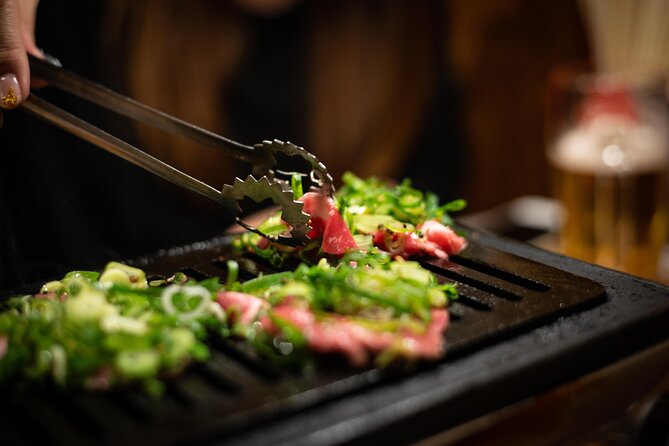
The final stop lasts about an hour and features wagyu beef, with different cuts served for you to try. You grill the beef yourself and pair it with a refreshing Japanese cocktail.
This is the course that most clearly affects the price. Wagyu is a premium product, and the experience is not just about receiving a plate of beef. You take part in cooking different cuts, compare them, and learn how the texture and flavor change from one part to another.
The self-grilling format also makes this feel more social. You are not sitting through a formal tasting with a fixed script. You are cooking, eating, and talking while the guide helps the group understand what it has been served.
The wording around wagyu is important. You are promised different parts, but the precise cuts are not listed. If you have a favorite cut or a firm expectation about the grade of beef, you should not assume it will be available. The restaurant can change depending on the schedule.
This final hour gives the tour a strong finish. After street food, okonomiyaki, and kushikatsu, the wagyu course provides a different texture and a more substantial meal. The Japanese cocktail adds another local touch, though you should check with the guide if you need a nonalcoholic option.
What the guides add to the meal
Food tours rise or fall on the person leading them. Here, the guide is not only there to point at a restaurant and move you to the next table. The guides explain dishes, ingredients, and aspects of Japanese food culture and Osaka itself.
Mayura Kai is described as a former chef, which is especially useful if you want more detail about preparation. She has also included a supermarket visit during some evenings, showing that the exact format can sometimes expand beyond the core restaurant route. That supermarket element should not be treated as guaranteed, but it shows the kind of practical food knowledge she may bring to a tour.
Kaori has led evenings for couples and is associated with a friendly, personal style. Akiko has helped diners choose food they would not normally order. Those details matter because a good guide can make an unfamiliar menu much less intimidating.
The small group cap of eight supports that style. You can ask why a dish is served a certain way, what an ingredient is, or how a restaurant fits into Osaka’s food culture. In a large group, those questions often get lost. Here, the format gives them a better chance of being answered.
Dietary needs require care. One private tour was adapted for dietary requirements, but that does not mean every public departure can handle every restriction. The experience is specifically not recommended for people with serious food allergies. Contact the provider before booking if your diet is a central concern, and do not rely on last-minute changes.
Is $198 a fair price?
At $198 per person, this is not a budget food walk. You are paying for several restaurant stops, multiple types of food, drinks, a wagyu course, and a guide who helps you navigate the evening.
The value is strongest if you would otherwise struggle to find these places or order these dishes on your own. You get a planned route through Tenma, a meal spread across three restaurants, and help understanding what you are eating. The small group size also makes the cost easier to justify for people who value personal attention.
The value is weaker if you are comfortable ordering in Osaka by yourself, already know the city’s food districts, or mainly want one inexpensive dinner. You could spend less by choosing a restaurant and ordering directly. The tour makes sense as both a meal and a guided introduction to Osaka’s food culture.
The included drinks also matter. The evening is not simply a sequence of food samples with extra beverage costs waiting at each stop. Still, the exact drink range is not given, so I would not book it expecting a particular sake, beer, or cocktail beyond the Japanese cocktail mentioned with the wagyu course.
Because the booking is non-refundable and cannot be changed, choose your date carefully. That rule is especially important at this price.
Who will enjoy this Osaka night tour?
I would recommend it to a first-time visitor who wants a structured introduction to Osaka food without spending hours researching restaurants. It also suits couples, small groups, and solo visitors who like meeting a guide and eating in a compact group.
It is a strong pick if you want to try okonomiyaki, kushikatsu, and wagyu in one evening. It also suits people who enjoy food explanations, since the guides give information about ingredients, cooking, and Osaka’s food traditions.
You may want to skip it if you have serious food allergies, dislike moving between restaurants, or prefer to control every dish you order. It may also be a poor fit if $198 feels high for an evening meal, especially since the restaurants can change and the exact dishes beyond the featured categories are not fixed.
The tour is near public transportation, and most people can participate. The mobile ticket makes access simple, but you still need to arrive at the correct Temma meeting point on your own.
My take on the evening
I like this tour because it treats dinner as a walk through Osaka life rather than a single reservation. You get a street-food opening, a short okonomiyaki stop, a longer kushikatsu meal with drinks, and a hands-on wagyu finale.
The best part is the combination of range and guidance. You can try dishes you might not order alone, while guides such as Mayura Kai, Kaori, and Akiko help make the menu easier to understand. The main cautions are the high price, the fixed no-refund rule, the changing restaurant schedule, and the limits around serious food allergies.
Should you book it?
Book this tour if you want a guided, food-heavy introduction to Tenma and value trying several Osaka specialties in one night. The wagyu grilling and small group size add real interest, and the included drinks make the package more than a simple restaurant crawl.
Skip it if you want the cheapest possible dinner, need strict control over ingredients, or already feel confident exploring Osaka’s food districts on your own. For everyone else, arrive hungry, leave room after the first stop, and treat the $198 as the cost of a guided evening of eating rather than just the price of a meal.
FAQ
Where does the Osaka nighttime food tour start?
It starts at Shichifukujin Temma Station, located at 4-chōme-12-1 Tenjinbashi, Kita Ward, Osaka, 530-0041, Japan.
Where does the tour end?
The activity ends back at the meeting point.
How long does the tour last?
The tour lasts approximately three hours and 10 minutes.
How many restaurants do you visit?
You visit three local restaurants. The planned food includes okonomiyaki, kushikatsu, and wagyu yakiniku, with an initial street-vendor food stop in the Tenjinbashi area.
Is wagyu beef included?
Yes. The final food stop includes wagyu beef, different cuts to try, and a Japanese cocktail.
Are drinks included?
Yes. Various types of drinks are included in the experience.
Is transportation included?
No. Hotel pickup, hotel drop-off, and transportation to or from attractions are not included.
How large is the group?
The tour has a maximum of eight people.
Can I cancel or change my booking?
No. The experience is non-refundable and cannot be changed for any reason.
Just added for nights around Japan
- Kyoto Private Night Tour with a Local – Bars, Bites & Culture★ 5.0 · 48 reviews
- Private Tokyo Night Tour★ 5.0 · 115 reviews
- Osaka After Dark: Small-Group Night Food Tour (Max 6)★ 4.5 · 245 reviews
- Osaka: Bar-Hopping Night Tour in Namba★ 4.7 · 117 reviews
- Osaka: Private Vibrant Nighttime Photoshoot (Dotonbori)★ 4.9 · 80 reviews
- Tokyo by Night Photography Tour (Private Option Available)★ 5.0 · 151 reviews
- Kyoto: Gion Sunset Walking Tour with Local Guide★ 4.7 · 351 reviews
- Kyoto Foodie Night Tour★ 5.0 · 376 reviews
Osaka Night Tours, compared.
Osaka After Dark: Small-Group Night Food Tour (Max 6)
Read our review →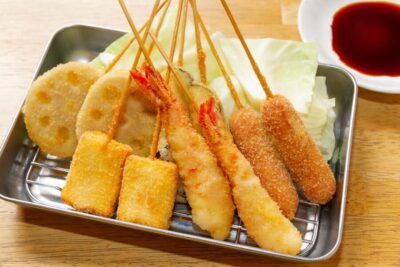
Browse the lists this tour appears in