
Review · LISBON
Lisbon by Night: Guided Walking Tour – The Unholy Secrets
Lisbon’s darker past comes alive on this 105-minute evening walk from Rossio to Alfama. You’ll hear about the Inquisition, the 1506 New Christian massacre, the Aljube prison, the great earthquake, and the people who shaped Lisbon after disaster. Guides such as Maria, Amanda, Andreia, and Clara turn these events into spoken drama rather than a dry timeline.
I like the way the tour combines real historical events with creepy aftermath, instead of leaning only on ghost tales. I also like the small-group feel reported by several guests and the practical route through Baixa and Alfama, which helps you get your bearings early in a Lisbon visit. The main drawback is the walking: the pace can be brisk, and the route includes hills, so it is not suitable for wheelchair users or anyone with limited mobility.
Key points to know before you book
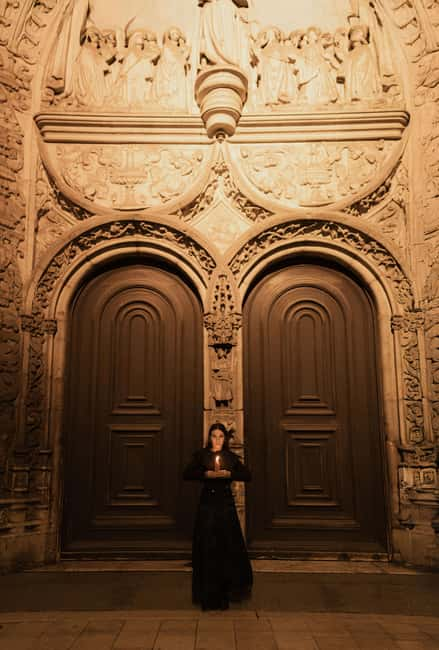
- A dark history lesson: Expect the Portuguese Inquisition, the 1506 massacre, prison stories, earthquakes, and political power struggles.
- Theatrical guides: Maria, Amanda, Andreia, Clara, and other English-speaking storytellers use character work and dramatic narration.
- A useful first-night route: The walk begins at Rossio, crosses Baixa, and finishes in Alfama.
- Only $23 per person: The price is fair if you value a live performance and historical context, though it is more than a basic orientation walk.
- Bring good shoes: The route moves through old streets and hills, with one guest describing the pace as fast between stops.
- Plan for outdoor weather: Rain and wind do not cancel the experience automatically, so dress for Lisbon’s evening conditions.
Lisbon’s dark side begins in Rossio
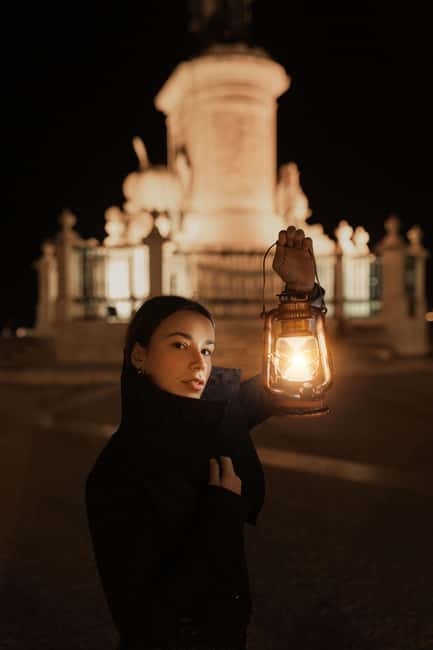
Meet beside Joalharia Ferreira Marques, the old jewelry shop on the south side of Praça Dom Pedro IV, better known as Rossio Square. Your guide will be holding a lantern, which is a useful detail in a busy square and fits the mood without turning the meeting point into a theatrical stunt.
Rossio is a smart place to begin. It sits at the center of Lisbon’s historic core, with Baixa spreading downhill toward the Tagus and Alfama rising to the east. Starting here gives you an immediate sense of the city’s basic shape before the stories lead you into narrower streets.
The guide speaks English, and the central feature is not an entrance ticket or museum visit. It is the guide’s delivery. Maria has been praised for bringing stories to life with strong character work, while Amanda has been noted for clear explanations and helpful answers. Andreia is known for a personable style, and Clara has received praise for giving the city a fresh angle.
Guide assignments can change, so you should not book on the assumption that one particular person will lead your walk. Still, the repeated pattern is clear: this experience depends heavily on a guide who can perform as well as explain. The best moments are likely to come when a guide takes on the voice or manner of a person from Lisbon’s past.
More Night Walking Tours in Lisbon:
- Lisbon by Night: Golden and Blue Hour Photography Walk
★ 5.0 · 4 reviews - Private Street Food Evening Walking Tour in Ho Chi Minh City
★ 5.0 · 3,175 reviews - Ghosts of Charleston Night-Time Walking Tour with Unitarian Church Graveyard
★ 4.5 · 2,835 reviews
Baixa reveals disaster, power, and public fear
From Rossio, the route moves through Baixa, Lisbon’s lower central district. You will walk rather than enter monuments, and the focus remains on what happened in and around these streets. That matters because the tour is strongest when it makes ordinary-looking squares and corners feel connected to events you might otherwise miss.
The stories cover several difficult chapters. The Portuguese Inquisition is a major theme, including its effects on people accused of religious disobedience. The tour also addresses the 1506 massacre of New Christians, one of the most painful episodes in Lisbon’s past. This is not history polished for a postcard. It deals with persecution, fear, punishment, and public violence.
The storytelling format gives these events a human scale. Instead of only hearing dates and names, you are asked to picture the people caught in them. That approach explains why the tour appeals to visitors who already know Lisbon’s monuments but want a less familiar account of the city.
You should expect a serious subject, even when the guide adds humor or dramatic touches. This is not a light ghost walk built around jump scares. One useful feature is the balance between documented events and the eerie stories that grew around them. If you want only legends, you may find the history-heavy approach less spooky than expected. If you want a more grounded account, that balance is a strength.
The 1755 earthquake changes the meaning of the city
The Lisbon earthquake is another key part of the route. The disaster and its aftermath help explain why Baixa looks different from the older districts nearby and why Marquês de Pombal is so important to Lisbon’s story.
The tour treats the earthquake as more than a dramatic tale of destruction. It connects the disaster to the city’s response and to Pombal’s rise as a powerful figure. This adds a useful political layer. You are not simply hearing that Lisbon was damaged; you are considering how catastrophe changed the city and helped reshape authority.
For me, this is where the tour can offer more value than a standard haunted walk. The dark material is tied to changes in urban life and government. You come away with a clearer idea of why the historic center contains such different streets and moods within a short distance.
Keep your expectations realistic. There are no monument admissions included, and the tour does not promise interior visits. The value comes from the guide placing familiar streets into context. If you want to go inside churches, prisons, or historic buildings, you will need separate plans and tickets.
From Baixa to Alfama, the route gets tighter and steeper
The walk finishes in Alfama, where the street pattern changes quickly. Baixa is broad and orderly compared with the older lanes climbing toward the hillside. In Alfama, the route becomes more intimate, and the idea of forgotten stories fits the setting naturally.
The old quarter is also where the physical demands become clearer. You should wear comfortable shoes and expect uneven streets and uphill walking. One guest described the walk between stops as fast, with one significant hill. That is useful advice, especially if you are dealing with foot pain, balance issues, or a tight evening schedule.
The tour is not suitable for wheelchair users or people with mobility impairments. That is not a minor footnote. Alfama’s slopes and narrow streets make the route a poor choice for anyone who needs a fully accessible path. If you have limited stamina but can walk hills, contact the operator before booking rather than assuming the pace will be easy.
The route itself is useful for a first night in Lisbon. You pass through central areas and finish in one of the city’s oldest neighborhoods. Along the way, guides may point out places to eat or share local tips. One guest particularly valued those suggestions, while another enjoyed learning about Lisbon’s ginjinha culture. Treat such moments as helpful extras, not guaranteed tasting stops, since the official inclusions cover the guide and narration only.
More guided evenings out around Lisbon:
- Lisbon: Guided Nighttime Electric Bike Tour
★ 5.0 · 3 reviews - Waitomo: Glowworm Caves Guided Tour by Boat
★ 4.5 · 4,908 reviews - London: Christmas Lights Nighttime Bus Tour with Live Guide
★ 4.1 · 3,720 reviews - Te Anau: Glowworm Caves Guided Tour
★ 4.6 · 2,611 reviews
Aljube prison and the city’s forgotten voices
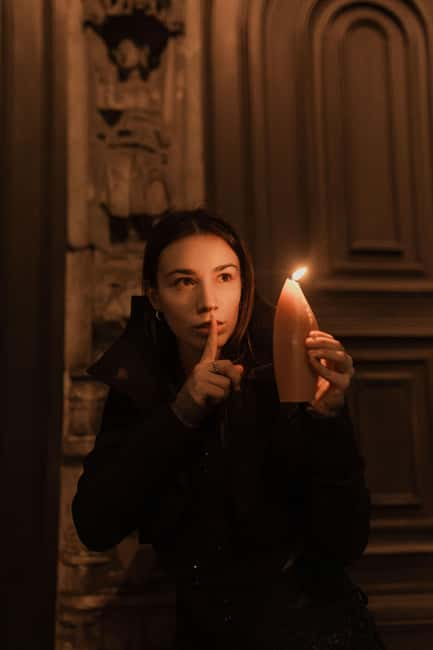
The Aljube prison stories add another layer to the walk. They bring the focus away from famous rulers and disasters and toward confinement, fear, and the people who disappeared into Lisbon’s prison system.
This is one reason the experience feels different from a standard city introduction. The tour does not stop at kings, explorers, and grand buildings. It also asks you to consider the people who suffered under institutions and political systems. That darker angle can make the city feel more complicated, but it also makes the history more honest.
The theatrical style works well here when it remains tied to place. A strong guide can make a narrow street or old wall feel like part of a larger story without pretending that every legend is proven fact. The most useful question to keep in mind is which parts are historical record and which parts belong to later folklore. The tour’s appeal comes from hearing both, with more weight given to actual events than to standard ghost lore.
This is also where the tour may not suit young children or anyone looking for a carefree evening activity. The subject matter includes persecution, prison, massacre, and death. The organizers do not list a specific minimum age, so families should decide based on the child’s comfort with serious historical themes.
The lantern and the live performance
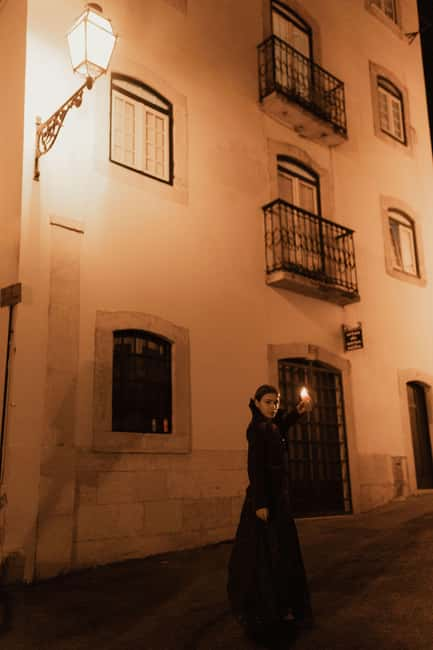
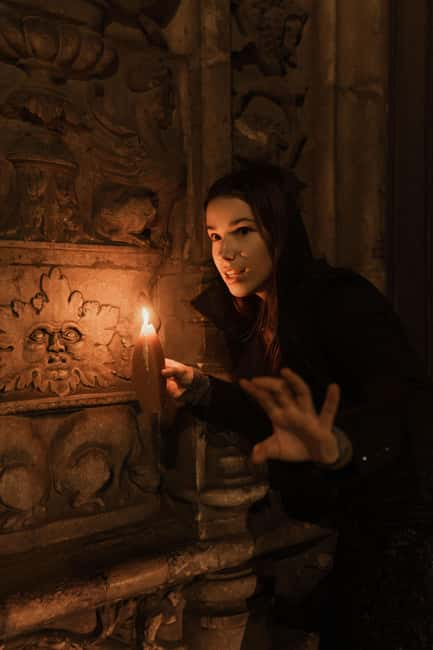
The lantern is the simple visual marker at the meeting point, but the guide’s performance is the real centerpiece. The walk uses theatrical narration, character voices, and vivid scenes to make Lisbon’s past easier to picture.
Amanda has been praised for combining historical information with clear answers to questions. Maria is often described as energetic and dramatic, including in poor weather. Andreia has been recognized for a friendly, informed presentation, and Clara for giving a fresh perspective on the city. These details matter because a storytelling tour can vary more by guide than a museum visit does.
You should expect participation in the broad sense, such as listening, asking questions, and moving from place to place. The experience is not described as an audience show with seats or a formal stage. It remains a walking tour, so the drama unfolds outdoors and changes with the street around you.
Rain and wind can affect the mood and comfort. The tour has gone ahead in poor weather, and a good guide can make rain part of the evening rather than a complete loss. Still, take a waterproof layer and wear shoes with a firm grip. Lisbon’s stone streets can be unpleasant when wet.
Is $23 a fair price?
At $23 per person, this sits above a free orientation walk but below the cost of many ticketed evening performances. You are paying for 1 hour and 45 minutes with a live English-speaking guide, not for monument entry or transport.
I think the price is fair if you want three things at once: a guided route, a focused history lesson, and a bit of performance. The tour covers subjects that are easy to miss when you explore alone, and the guide’s interpretation gives the information a clear shape.
The value is weaker if you only want to see Lisbon’s streets or collect exterior photos. You can walk through Baixa and Alfama without a paid guide. You may also prefer a conventional history tour if theatrical delivery feels distracting.
The strongest value comes from booking it early in your stay. You learn the layout of central Lisbon, hear about places you may want to revisit, and receive food or neighborhood tips along the way. Several people have used it on their first night and found that it helped them get oriented.
Timing, cancellation, and what to bring
The stated duration is 105 minutes, although the description sometimes calls it a two-hour experience. Plan for 1 hour and 45 minutes, with a little flexibility for questions, weather, or the pace of the group.
The start time varies, so check the available departure times for your date. It is described as a night tour, but the exact darkness and seasonal conditions will depend on when you visit.
You can cancel up to 24 hours in advance for a full refund. A reserve-now, pay-later option is also available, which helps if your Lisbon plans are still shifting. Water bottles are not included, so bring your own, especially in warm weather.
The essential packing list is short:
- Comfortable walking shoes
- Water
- A light waterproof layer when rain is possible
- Warm clothing for a windy evening
There are no monument admissions included. The tour is conducted in English, and the provider is Shadowing Tours.
Who will enjoy this Lisbon walk?
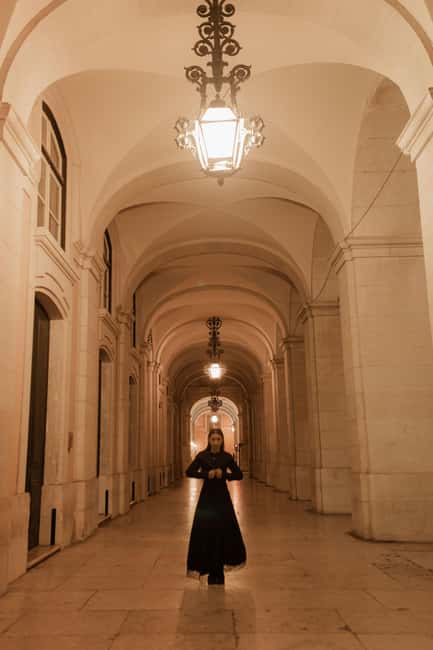
I would choose this tour if you like history presented through people, tension, and atmosphere rather than a list of dates. It suits curious first-time visitors, fans of local legends, and anyone who wants to understand the city beyond its famous viewpoints and tiled facades.
It is also a good match for adults who want a different first-night activity. The route gives you a useful introduction to Rossio, Baixa, and Alfama while showing you places you might otherwise pass without a second thought.
I would think twice if you dislike walking uphill, need an accessible route, or prefer quiet historical explanation without performance. The content can be grim, and the pace may feel quick if you want to stop often for photographs.
Should you book Lisbon by Night: The Unholy Secrets?
Book it if you want dark history with a human voice, not a generic ghost walk. The best reasons are the focus on the Inquisition and 1506 massacre, the link between the earthquake and Pombal’s political rise, and the theatrical approach used by guides such as Maria, Amanda, Andreia, and Clara.
Skip it if you need step-free access, cannot manage hills, or want to enter monuments. At $23, it is a reasonable buy for a live storytelling experience and a useful first look at central Lisbon. Bring good shoes, allow the full 105 minutes, and expect the city to feel more complicated by the time you reach Alfama.
FAQ
How long does Lisbon by Night: The Unholy Secrets last?
The tour lasts 105 minutes, or 1 hour and 45 minutes.
Where does the tour begin?
It begins at Praça Dom Pedro IV 7, beside Joalharia Ferreira Marques on the south side of Rossio Square.
How will I identify the guide?
The guide will be holding a lantern at the meeting point.
Where does the tour finish?
The walking tour finishes in Alfama.
What language is the tour conducted in?
The live tour guide speaks English.
What historical subjects are covered?
The tour covers the Portuguese Inquisition, the 1506 New Christian massacre, the Lisbon earthquakes, Marquês de Pombal, Aljube prison, and other dark stories from the city’s past.
Are monument entrance fees included?
No. Entrance to monuments at the stops is not included.
Is the tour suitable for wheelchair users?
No. The activity is not suitable for wheelchair users or people with mobility impairments.
Can I cancel the booking?
Yes. You can cancel up to 24 hours in advance for a full refund. A reserve-now, pay-later option is also available.
Just added for nights around Lisbon
- Private half-day Lisbon by Night Fado UNESCO Heritage &Views★ 5.0 · 3 reviews
- Lisbon: Sunset/Night Boat Party with Open Bar, Snacks & DJ★ 4.7 · 113 reviews
- Private Boat Night Tour – Lisbon★ 5.0 · 4 reviews
- Lisbon: Private Evening Tour with Drinks & Bites in Alfama★ 4.1 · 24 reviews
- Lisbon: Sailing Tour by Night★ 4.7 · 15 reviews
- Lisbon: Luxury Sailboat Cruise at Night★ 4.9 · 95 reviews
- Lisbon Night Cruise: Illuminated Sights on the Tagus River★ 4.2 · 124 reviews
- Lisbon lights: A Cinematic Photoshoot at night★ 5.0 · 4 reviews
Lisbon Night Tours, compared.

Devour Lisbon Bairro Alto Evening Food & Wine Tour
Read our review →
Lisbon: Disco Night Cruise with DJ and Open Bar
Read our review →

Lisbon by Night Tour: Fado Show and Dinner with Pick-up
Read our review →
Lisbon Night Cruise: Illuminated Sights on the Tagus River
Read our review →
Lisbon: Sunset/Night Boat Party with Open Bar, Snacks & DJ
Read our review →

Browse the lists this tour appears in