
Review · INDIA
Evening Walking tour with Fire Ceremony – The Pushkar Route
Pushkar changes character when the sun drops. This three-hour walk takes you from old temples to the lake ghats, ending with Maha Aarti, the Hindu fire ceremony that gives the evening its focus. Bells, lamps, water, and chanting create a far calmer side of town than you may see during the day.
I like the small group of no more than six, which gives you room to ask questions. I also like that the tour is explicitly shopping-free, keeping the evening aimed at temples, customs, and local streets rather than sales stops. The main consideration is timing: much of the experience centers on Hindu religious places, so it suits you best if you want cultural context and a respectful, unhurried walk rather than a broad sightseeing sweep.
Key points to know before booking
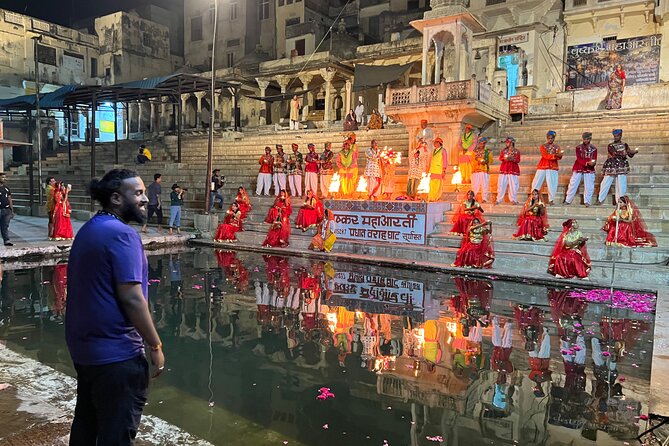
- Maha Aarti at Brahma Ghat: The fire ceremony beside Pushkar Lake is the evening’s central experience.
- Seven stops in about three hours: You visit important temples, a Sikh gurdwara, Old Rangji Temple, and sections of the lake.
- A genuinely small group: The maximum is six people, useful for questions and easier movement through temple areas.
- Shopping-free by design: Your time stays focused on religion, history, customs, and photography.
- Local guides such as Manish and Kapil: Past visitors specifically praised their friendly explanations and willingness to answer questions beyond the planned route.
- A low-cost cultural introduction: At $8 per person, the tour offers strong value if you want orientation and context more than private transport or elaborate amenities.
Why Pushkar is especially good after sunset
Pushkar is closely tied to its lake and temples, and an evening walk lets you see both in a quieter frame. The tour begins at 5 pm, a useful start time because it takes you into the period when temple rituals and evening prayers become the main event.
You are not simply ticking off monuments. The guide explains the religious meaning of the places you visit, including the role of Brahma, Vishnu, and the many shrines around the lake. That context matters in Pushkar, where a temple can appear modest from the street yet hold a central place in local worship.
The route also gives you a look at the town after dark. Streets that can feel busy and commercial during the day take on a more atmospheric quality in the evening, especially around the ghats. Still, this is not a silent walk through an empty town. Pushkar remains a working religious center, and the value comes from seeing daily worship alongside the town’s nighttime character.
The group limit of six is one of the best practical features. A guide can usually respond to individual questions more easily than on a large coach tour, and the walk feels less like a procession. Pickup is offered, though the supplied details do not specify the pickup area, so check that point when booking.
More Night Walking Tours in India
- Evening Walking Tour with Fire Rituals-The Pushkar Route
★ 4.9 · 108 reviews - Jaipur Heritage Evening Walk – The Twilight Magic of Pink City
★ 5.0 · 93 reviews - Bangalore : Evening Food Street Walk and Market Visit
★ 5.0 · 34 reviews
Brahma Ghat and the first look at the lake
The first stop is Brahma Ghat, one of the important ghats along Pushkar Lake. It is also associated with the Maha Aarti, so beginning here gives you an early sense of why the lake is more than a scenic place.
Ghats are steps and platforms leading toward the water, often used for prayer and religious rituals. At Pushkar, they form a long ring around the lake, with temples and shrines close by. Your guide can help explain the customs taking place around them, which is useful if you are unfamiliar with Hindu worship.
Brahma Ghat is also linked with a Shankaracharya temple built at its entrance by Shri Jayendra Saraswati. The stop is scheduled for about 30 minutes, enough for an introduction without making the whole tour feel fixed in one location.
You should treat the ghat as a place of worship first and a photo stop second. The tour promises attractive photography spots, but the exact conditions depend on the evening’s activity and light. Your guide is the right person to follow on where photography is appropriate.
Brahma Temple and Pushkar’s unusual religious identity
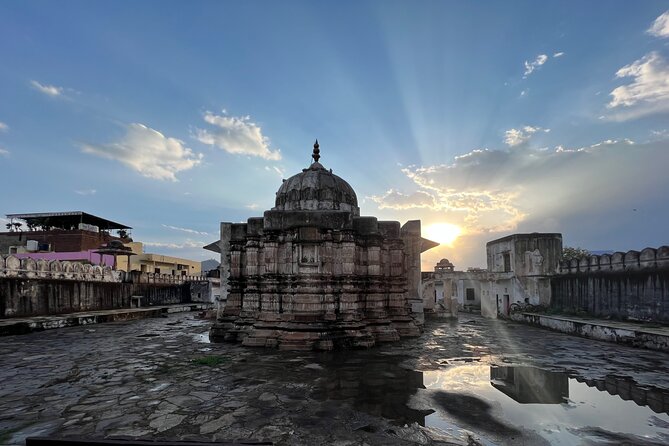
The Brahma Temple is one of the few existing temples in India dedicated to Brahma, the Hindu creator-god. That alone makes it a significant stop for anyone interested in Indian religion, since Brahma temples are far less common than temples dedicated to Vishnu or Shiva.
The temple structure dates to the 14th century, with later partial reconstruction. You have about 30 minutes here, and the guide’s explanation helps turn the visit into more than a quick look at an old building.
This is one of the tour’s strongest stops for first-time visitors to Pushkar. Without guidance, you might see a busy religious site without understanding why this particular temple matters. Manish has been praised for friendly, clear explanations, while Kapil has been singled out for answering questions about Hinduism and the temples beyond the basic route.
The tour information does not promise an exclusive entrance, special access, or an extended private ritual. You are booking interpretation and company, not a behind-the-scenes temple visit. That distinction keeps expectations realistic and helps explain the low price.
Maha Aarti at Brahma Ghat
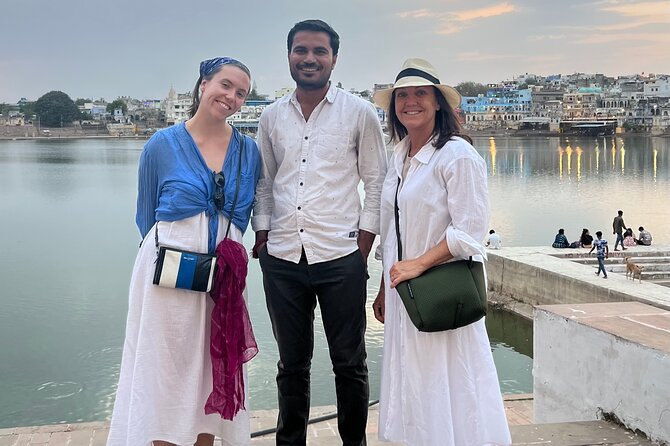
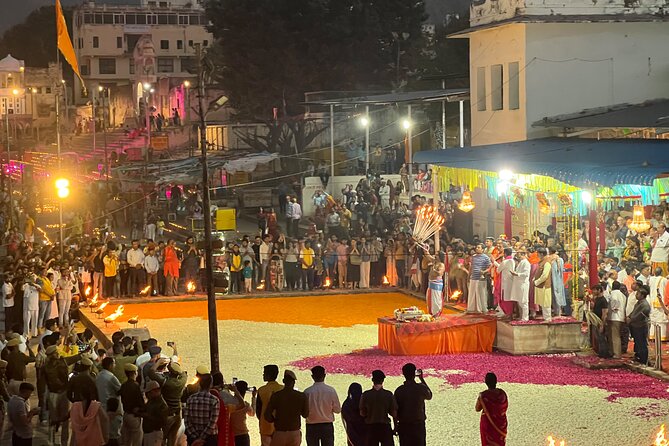
The second visit to Brahma Ghat is devoted to the evening Aarti, or fire ceremony. The route lists about 25 minutes for this part, though the exact rhythm of a religious ceremony can naturally vary.
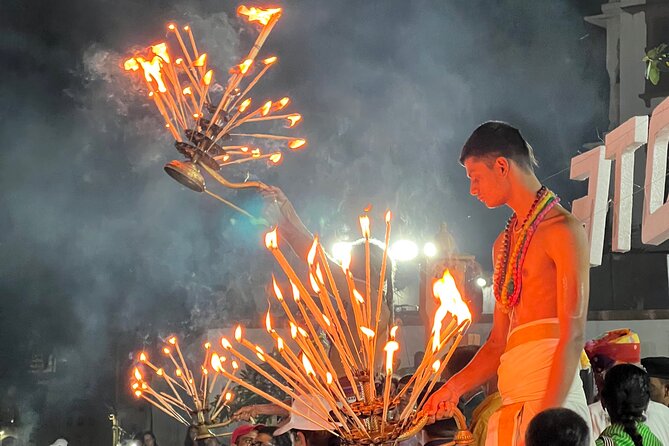
Aarti uses fire as part of worship. At Pushkar Lake, the ceremony brings together lamps, prayer, bells, and the water of the lake. The setting gives the ritual much of its force, especially as daylight fades and the ghats become the focus of the town.
This is the part of the experience most likely to stay with you. You are not being asked to treat the ceremony as a performance. The value is in observing a living custom respectfully, with a guide who can explain what you are seeing and how it fits into Pushkar’s religious life.
The ceremony may not suit you if you want a fast, highly structured sightseeing tour. It asks for a little patience and attention. If you enjoy cultural experiences that leave room for quiet observation, this is a strong reason to book.
Same night, a different way out:
- Mumbai: Street Food and Night Markets Tour
★ 4.9 · 719 reviews - Mumbai by Night: Private Iconic Sights Tour in Lights
★ 4.9 · 261 reviews - Mumbai By Night: Lights & Luminance
★ 5.0 · 246 reviews - Delhi: Guided Evening Tour of Delhi City
★ 4.8 · 233 reviews
Varaha Temple and the Vishnu connection
Varaha Temple is dedicated to Varaha, an incarnation of Lord Vishnu. The temple is described as one of Pushkar’s ancient religious sites and one of the eight Swayambhu Kshetra of Vishnu, a term connected with sacred places believed to have a special divine origin.
The temple was built in the 12th century by King Anaji Chauhan. You have about 25 minutes here, giving the guide time to explain the connection between the temple, Vishnu, and the wider network of Hindu beliefs.
This stop adds balance to the Brahma-focused parts of the tour. You see that Pushkar’s religious identity is not limited to one god or one famous temple. The route helps connect different traditions within Hindu worship, which is especially helpful if you are trying to understand the town rather than only photograph it.
Temple visits can vary in atmosphere, and the supplied details do not state whether every interior area is accessible at all times. Plan to follow local guidance and treat the site as an active place of worship.
Gurudwara Sahib and Pushkar’s religious mix
The Gurudwara Sahib is a Sikh temple known for its beauty and calm setting. Its inclusion is important because the walk is not limited to one branch of religion. Pushkar is presented here as a place where Hindu, Sikh, and other religious traditions share the same town.
The stop lasts about 30 minutes, one of the longer visits on the route. That gives you time to understand what a gurdwara is and how it differs from the Hindu temples visited earlier.
This is a useful reminder that culture in Pushkar is not a single-color story. You get a wider view of the town’s religious life by seeing more than the famous Brahma Temple and the lake. A guide can also help you avoid the common mistake of treating every religious building as if it follows the same customs.
The tour description does not provide a dress code or specific visitor instructions. Ask your guide what is appropriate before entering, and follow the site’s rules. Respectful behavior matters more here than rushing to collect another photograph.
Walking the 52 ghats around Pushkar Lake
The lake walk covers part of Pushkar’s 52 ghats and includes small, old temples along the water’s edge. This is where the tour becomes less about major landmarks and more about the details you could easily miss on your own.
You will see places used for prayer, small shrines, and viewpoints around the lake. The route promises attractive photography spots, but the larger benefit is orientation. By walking the ghats with a local guide, you gain a clearer sense of how the lake shapes Pushkar’s streets and religious life.
The word spiritual walk is appropriate here, but do not expect a wilderness stroll. This is an urban religious area, and the appeal comes from its temples, sounds, rituals, and old lanes. Comfortable walking shoes are sensible, though the supplied information does not state the surface conditions or any accessibility details.
Because the lake is central to the tour, this section ties together the earlier stops. Brahma Ghat, the Aarti, the smaller shrines, and the town’s temples all make more sense once you see how closely they are arranged around the water.
Old Rangji Temple near Varaha Ghat
The final listed stop is Old Rangji Temple, located near Varaha Ghat in the middle of town. It is about 200 years old and dedicated to Lord Vishnu. The temple was commissioned as part of Pushkar’s long religious tradition, and its location makes it a fitting end to a route through the town’s older center.
The scheduled visit is shorter, about 15 minutes. That suggests a compact introduction rather than a long temple lecture, but it also keeps the three-hour route moving.
Old Rangji Temple gives you one more example of how varied Pushkar’s sacred buildings can be. After the older Brahma and Varaha sites, this temple helps show that the town’s religious importance has continued through later periods as well.
The route includes several temples in one evening, so you should not expect a detailed architectural study of each one. The strength is the combination: several distinct sites, a religious ceremony, and the lake, all connected by a local guide.
The $8 price and what you receive
At $8 per person, this is a strong-value tour if you want a guided introduction to Pushkar’s religious center. You receive roughly three hours of walking, explanations at seven listed stops, a small group capped at six, and access to a planned route that would be harder to piece together on your own.
The value is mainly in the guide’s time and local interpretation. There is no indication of a meal, private vehicle, paid special access, or luxury service. If you want those extras, this is not that kind of product. If you want someone to explain why the Brahma Temple matters, point out less-visited sites, and help you understand the Aarti, the price is modest.
The tour is also explicitly shopping-free. That matters because it protects your evening from the sales stops that can creep into sightseeing outings. You spend the available time on temples, ghats, customs, and streets.
The small size adds further value. Past guide feedback highlights Manish’s friendliness and clear information, as well as Kapil’s ability to answer questions beyond the standard route. You cannot assume which guide will lead your departure, but those names give you a useful sense of the guiding style to expect: personal, conversational, and focused on explanation.
Practical details for your evening
The tour starts at 5 pm and lasts about three hours. It is offered with pickup and a mobile ticket, and confirmation is received at booking. The meeting arrangements should be checked carefully because the supplied information does not state the exact pickup zone or meeting address.
Most people can participate, and public transportation is nearby. The tour is a walking experience, so the key practical issue is your comfort with spending an evening on foot and moving between several religious sites.
The maximum group size is six. That is small enough for direct questions, but the tour remains a shared experience rather than a private walk. If you want a fully personal schedule, ask whether a private option exists, though no such option is specified here.
You can cancel for a full refund up to 24 hours before the start time. Cancellations or changes made within 24 hours are not refunded or accepted, based on local time.
Who should book the Pushkar Route
I would choose this tour if you are visiting Pushkar for the first time, want to understand Hindu customs, and prefer a human guide to a self-guided list of monuments. It is also a good fit if the Maha Aarti is important to you and you want help placing the ceremony in its local setting.
The tour suits curious visitors who enjoy asking questions. The positive guide feedback points to an experience where you can ask about Hinduism, temple traditions, and places that are not always obvious from the main streets.
I would be more cautious if you want a relaxed evening with very little walking, or if you prefer secular sightseeing with no religious focus. The route is built around temples, ghats, prayer, and customs. That is its strength, but it is also the clear limit.
Should you book this evening walk?
Book it if you want an inexpensive, small-group way to see Pushkar after dark and understand what you are looking at. The best reasons are the Maha Aarti, the shopping-free format, the seven-stop route, and the chance to ask a local guide direct questions.
Skip it if you are looking for private transport, a food tour, or a long architectural study of one temple. For most first-time visitors who want a respectful introduction to Pushkar’s religious life, $8 buys a useful evening and far more context than walking the lake alone.
FAQ
What time does the evening walking tour start?
The tour starts at 5 pm.
How long does the Pushkar evening tour last?
The experience lasts approximately three hours.
What places are included on the route?
The route includes Brahma Ghat, Brahma Temple, Varaha Temple, Gurudwara Sahib, Pushkar Lake and its ghats, Old Rangji Temple, and a return visit to Brahma Ghat for the evening Aarti.
Is the fire ceremony included?
Yes. The tour includes Maha Aarti, the Hindu fire ceremony at Brahma Ghat beside Pushkar Lake.
How many people can join the tour?
The tour has a maximum of six travelers.
Can I cancel for a full refund?
Yes. You can cancel at least 24 hours before the experience start time for a full refund. Cancellations or changes made less than 24 hours before the start time are not refunded or accepted.
Just added for nights around India
- Mumbai by Night: Private Tour of Iconic Sights in Lights★ 5.0 · 86 reviews
- Jaipur: Private Evening Tour with Monkey Temple Sunset★ 4.6 · 27 reviews
- Bangalore : Evening Food Street Walk and Market Visit★ 5.0 · 34 reviews
- Evening Walking Tour with Fire Rituals-The Pushkar Route★ 4.9 · 108 reviews
- Mumbai Street Food & Night Markets★ 5.0 · 225 reviews
- Evening Food Tour★ 5.0 · 88 reviews
- Delhi: Guided Evening Tour of Delhi City★ 5.0 · 78 reviews
- Old Delhi Night Food Tour – Kitchens & Local Stories★ 5.0 · 85 reviews
India Night Tours, compared.
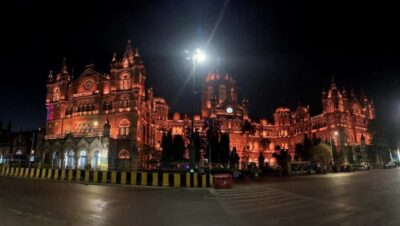
Mumbai by Night: Private Iconic Sights Tour in Lights
Read our review →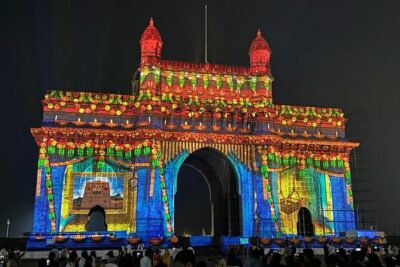
Evening Walking Tour with Fire Rituals-The Pushkar Route
Read our review →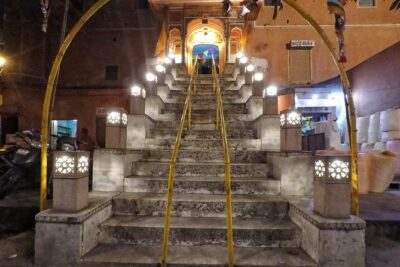
Jaipur Heritage Evening Walk – The Twilight Magic of Pink City
Read our review →
Browse the lists this tour appears in