
Review · PARIS
Paris by Night Walking Tour: Ghosts, Mysteries and Legends
Paris looks romantic after sunset, but this walk points your attention toward its grim past: executions, massacres, prisons, plague, political violence, and stories that have gathered a supernatural edge over time. You move through central Paris with a guide, beginning near Pont Neuf and ending by Hôtel de Ville.
I like two things here. First, the route connects famous sights to events you might otherwise miss, especially the Conciergerie and Square du Vert-Galant. Second, the price is modest for roughly two hours with a group capped at 20 people. The main drawback is clear: this is often more of a dark-history walk than a true ghost tour.
Key points to know before booking
- The route begins at Pont Neuf and ends near Hôtel de Ville, crossing the historic center on foot.
- The Conciergerie and Marie Antoinette’s imprisonment provide one of the evening’s strongest historical settings.
- Square du Vert-Galant includes a Templar execution story, set beside one of Paris’s prettiest riverfront spots.
- Saint-Germain-l’Auxerrois connects the walk to the 1572 St. Bartholomew’s Day Massacre.
- The tour is best for dark history and unusual stories, not for constant scares or paranormal investigation.
- Comfortable shoes matter, since the walk covers roughly 10,000 steps according to one detailed account.
Paris after dark, with the romance turned off
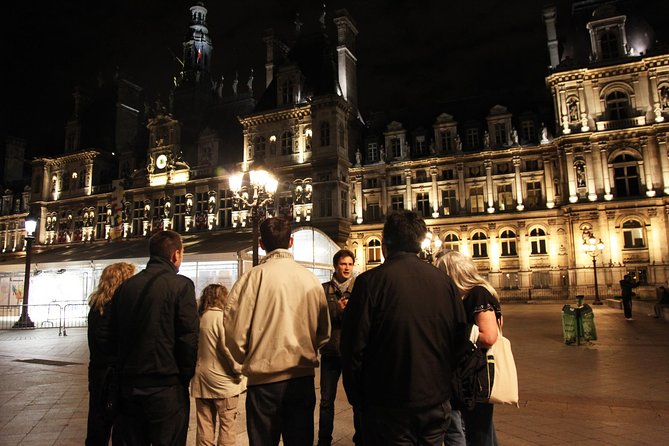
This experience uses nighttime Paris as a backdrop for stories about violence and fear. You do not simply look at monuments. You hear what happened around them, from medieval punishments to the French Revolution, the Paris Commune, and the city under Nazi occupation.
That range is part of the appeal. The tour is not tied to one century or one kind of horror. One story may concern a royal prisoner, another a religious massacre, and another a public execution. The mix gives you a sharper sense of how often political power in Paris relied on spectacle and punishment.
I would set your expectations carefully. The title promises ghosts, mysteries, and legends, but the actual emphasis can vary by guide. Guides such as Sophia, Daniel, Thelma, Sylvia, Ami, Emmy, and Kritika have led versions of this walk, and their style appears to shape the evening. Some guides lean into spooky tales and theatrical storytelling. Others offer a more direct history lesson.
That variation is not necessarily bad. If you enjoy French history and want a different way to see familiar streets, the factual material can be rewarding. If you want jump scares, haunted buildings, and a steady stream of supernatural stories, you may find the tone too restrained.
More Night Walking Tours in Paris:
- Private Street Food Evening Walking Tour in Ho Chi Minh City
★ 5.0 · 3,175 reviews - Ghosts of Charleston Night-Time Walking Tour with Unitarian Church Graveyard
★ 4.5 · 2,835 reviews - Savannah’s Ghost City “Dead of Night” Walking Night Tour
★ 4.5 · 2,482 reviews
Starting beside Pont Neuf and Square du Vert-Galant
Meet at the equestrian statue of Henri IV at 15 Place du Pont Neuf. This is a central location on Île de la Cité, near one of Paris’s best-known bridges, so it is a practical place to begin an evening walk.
The first important setting is Square du Vert-Galant, the pointed green space at the western end of Île de la Cité. Today it is a pleasant riverfront spot associated with Henri IV and his mistresses. At night, the same place becomes the setting for the story of the last Knights Templar being burned at the stake.
That contrast works well. You are standing in a calm public garden while hearing about a punishment carried out centuries ago. The story also shows the tour’s basic method: take a familiar Paris view and attach a darker layer to it.
The stop itself is short, listed at about five minutes. Do not expect a long visit or an indoor presentation. You will be standing outdoors while the guide speaks, so the quality of the storytelling matters more than the site’s physical remains.
One caution is worth keeping in mind. A historical setting can be powerful without every detail being presented with academic precision. If you care deeply about medieval or sixteenth-century history, listen critically and treat dramatic claims as part of the tour’s storytelling rather than a substitute for a specialist lecture.
The Conciergerie and the memory of Marie Antoinette
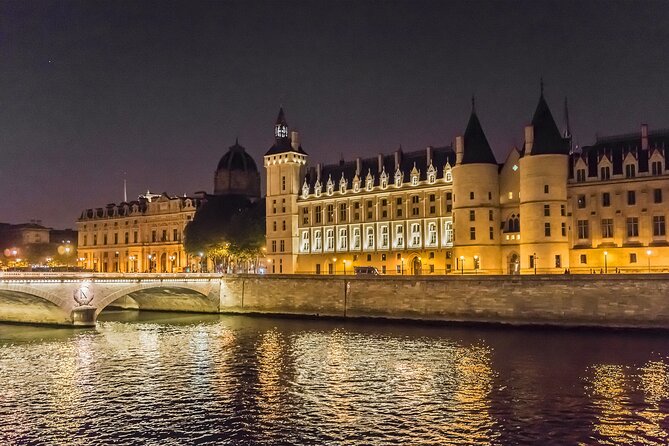
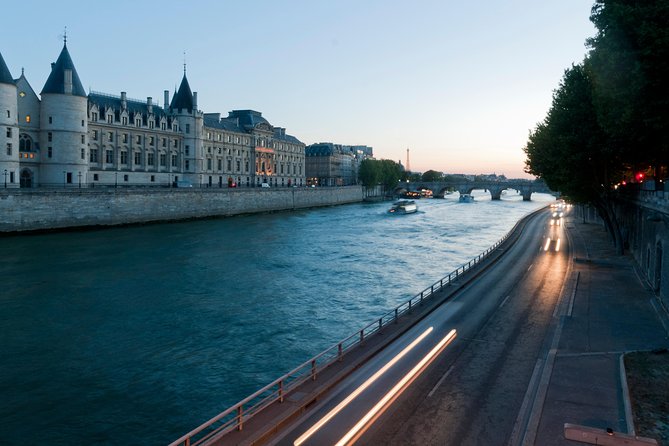
The Conciergerie is one of the most effective stops because its prison history is closely tied to the French Revolution. You learn that Marie Antoinette was held there before her execution, bringing the Revolution’s political drama down to the level of a real room, a real prisoner, and a real final chapter.
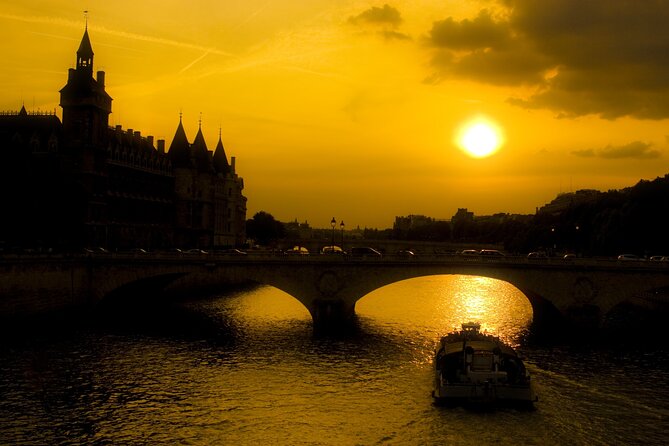
The building is part of the Palais de Justice complex on Île de la Cité. Even from outside, its medieval and institutional character suits the subject. This is not a romantic Paris postcard. It is a reminder that the city’s grand center also served as a place of confinement and judgment.
The tour uses Marie Antoinette as an entry point, but the wider subject is the system around her. During the Revolution, people were judged and sentenced to the guillotine, sometimes before crowds who treated punishment as public entertainment.
That public element is one of the more unsettling ideas on the walk. The history is not only about what happened to prisoners. It is also about the people who watched, cheered, or gathered to witness an execution.
You should not expect a full indoor visit to the Conciergerie. The experience is a walking tour, and the listed route describes passing by major sites rather than entering them for extended tours. If you want to see the prison rooms and revolutionary courtroom spaces from inside, plan a separate visit.
Saint-Germain-l’Auxerrois and the 1572 massacre
The walk then reaches Eglise St-Germain l’Auxerrois, a church with origins reaching back to the seventh century. Here the guide explains the St. Bartholomew’s Day Massacre of 1572, when tens of thousands of Huguenots were killed in a wave of religious violence.
This stop gives the tour one of its strongest historical subjects. The massacre was not a single isolated act of violence. It became a wider attack tied to the tense struggle between Catholics and Protestants in France.
The church’s location beside the Louvre area adds weight to the story. You are not hearing about distant events in a remote battlefield. You are near the old royal center, where religion, monarchy, and political fear were tightly linked.
The stop is again brief, about five minutes. That is enough for a clear introduction, but not enough for a full explanation of the political background. I would do a little reading before the tour if this period interests you. You will then get more from the guide’s references to Catherine de’ Medici, Henri IV, the royal marriage, and the events surrounding the massacre.
Here too, guide quality matters. Some guides make the material personal and easy to follow. Others deliver names and dates quickly. The best versions of this walk seem to use the church as a scene in a connected story, rather than treating it as a place to pause for one isolated fact.
More night tours around Paris:
- Paris: Illuminations River Cruise with Audio Commentary
★ 4.3 · 12,340 reviews - Paris: Big Bus Panoramic Night Tour by Open-Top Bus
★ 4.4 · 4,168 reviews - Paris: Illuminated Evening River Cruise & Waffle Tasting
★ 4.1 · 2,697 reviews - Paris: Happy Hour Evening Cruise on the Seine River
★ 4.2 · 1,673 reviews
Palais de Justice and the theatre of punishment
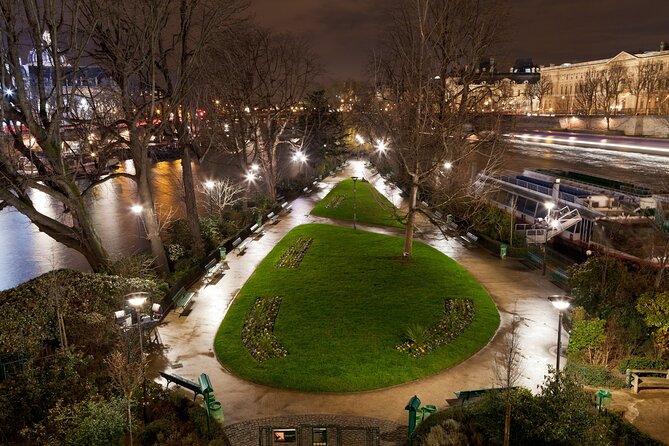
At the Palais de Justice de Paris, the subject turns to judgment, torture, and the guillotine. You learn how people accused during the French Revolution were sentenced and how punishment could become a public event.
The site carries an unusual contrast. It was praised in its own time as a major work of French architecture, yet it was also tied to the legal machinery that sent people to their deaths. That contrast is exactly the kind of detail that makes this tour more interesting than a basic stroll past monuments.
I like this section because it asks you to look at grand architecture differently. A courthouse may appear formal and impressive, but its walls also represent fear for those summoned before it. The guide connects the building to kings, revolutionaries, and ordinary people caught in political upheaval.
The darker material is not especially graphic in the information provided, but it can be intense. This is not a light family activity built around jokes and costumes. The tour is better suited to older children and adults who can handle stories about murder, torture, religious violence, and executions.
The walk may also include discussion of wars, plague, the Paris Commune, and the Nazi occupation. Those subjects widen the focus beyond medieval legends. If you want only old ghost tales, this broader history may feel off target. If you want to understand how Paris endured repeated periods of crisis, it gives the evening more substance.
Finishing at Hôtel de Ville
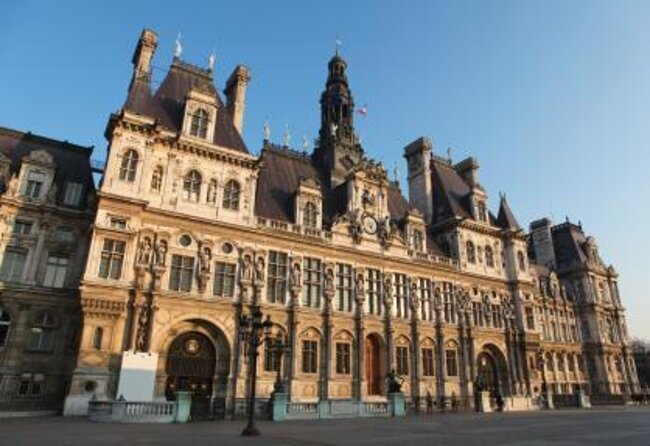
The route ends near Place de l’Hôtel de Ville, a large square that has hosted celebrations, royal occasions, and public events. It was also a major execution site from 1310 to 1830, including the executions of Ravaillac and La Brinvilliers.
Ending here gives the walk a fitting final image. The same public space that could host parties and royal celebrations also served as a stage for punishment. Paris repeatedly used its central squares for both civic life and public violence.
The finish near Hotel La Ville, at 70 Rue de Rivoli, is useful if you want to continue exploring central Paris on your own. The tour does not include hotel drop-off, so you are responsible for making your own way back afterward.
One weakness is the travel time between points. The route covers a lot of ground, and there can be stretches when you are simply walking while waiting for the next story. One detailed account estimated roughly 10,000 steps. I would not book this expecting a stop at every corner. It is a moving lecture with scenic pauses.
What the guides do best, and where the experience varies
The strongest guides make the city feel connected. Sophia is described as a warm storyteller who answered questions and offered suggestions for other places to visit, including Père Lachaise Cemetery. Daniel is praised for keeping a steady pace while mixing historical facts with stories. Thelma and Sylvia are noted for clear presentations, while Ami is associated with connecting legends across the route.
Those details point to the most important variable: presentation. The basic route is fixed, but the evening can feel very different depending on who leads it. A lively guide can turn a ten-minute walk into part of the story. A less engaging guide may leave you feeling that you are simply moving from one fact to the next.
Some versions also appear to include more ghost material than others. You might hear about spirits and lingering presences, but you should not count on every stop having a haunting attached to it. The dependable subject is Paris’s violent past.
There is also a concern about historical accuracy. A serious complaint described major errors involving Catherine de’ Medici, Henri IV, the Saint Bartholomew’s Day Massacre, and the Knights Templar. That does not prove every guide repeats the same claims, but it is a reason to treat the tour as popular storytelling rather than a scholarly authority.
If you spot a claim that sounds doubtful, ask a question. The better guides welcome interaction, and several versions of the tour have been praised for answering questions clearly. You will get more from the walk if you participate instead of staying at the back of the group.
Value at $18.10 and practical planning
At $18.10 per person, this is inexpensive by Paris tour standards. You receive about two hours with a local English-speaking guide, and the group is limited to 20 people. That makes the price particularly fair if your goal is a guided orientation to central Paris at night.
The value drops if you expect a polished theatrical production. There are no stated costumes, special effects, food, hotel pickup, or indoor admissions included. You are paying for the guide’s route, stories, and interpretation of public places.
I would wear supportive shoes and dress for an outdoor evening. The tour is near public transportation, but no private transfers are provided. You should also arrive ready to stand and walk for the full two hours.
The meeting point is the equestrian statue of Henri IV at Pont Neuf. The end point is near Hotel La Ville on Rue de Rivoli. Confirmation arrives when you book, and free cancellation is available if you cancel at least 24 hours before the start time. If the minimum group size is not reached, the operator offers another date or a full refund.
Who should book this Paris night walk?
I would choose this tour if you are visiting Paris for the first time and want a low-cost evening activity that adds context to famous sights. It works especially well after a day spent seeing the city’s art and grand architecture, since the guide shows you the less polished side of the capital.
It also suits people who like historical personalities, public punishment, religious conflict, and unusual city stories. Teenagers can enjoy it if they are comfortable with grim subjects, and several accounts describe the walk as fun even for families with older children.
I would hesitate if you already know French history well. You may recognize many of the central topics, and the pace can leave little room for detailed debate. I would also skip it if your main goal is a genuinely frightening paranormal tour.
Should you book it?
Book this walk for dark Parisian history at a modest price, not as a guaranteed ghost hunt. The strongest reasons to go are the nighttime setting, the compact central route, the Conciergerie, the story of the St. Bartholomew’s Day Massacre, and the contrast between public celebration and public execution at Hôtel de Ville.
Go with flexible expectations about the guide and the balance of fact versus legend. If you enjoy a good story and do not mind walking several miles, this is an easy way to see familiar Paris from a harsher, more unusual angle.
FAQ
How long does the Paris by Night Walking Tour last?
The tour lasts approximately two hours.
What language is the tour offered in?
The tour is offered in English.
Where does the tour begin?
The meeting point is the equestrian statue of Henri IV at 15 Place du Pont Neuf, 75001 Paris.
Where does the tour finish?
The walk ends near Hotel La Ville at 70 Rue de Rivoli, 75004 Paris.
What places are included on the route?
The route includes Square du Vert-Galant, Eglise St-Germain l’Auxerrois, the Conciergerie area, Île de la Cité, the Palais de Justice de Paris, and Place de l’Hôtel de Ville.
Is hotel pickup included?
No. Hotel pickup and drop-off are not included.
How many people can join the tour?
The group has a maximum of 20 travelers.
Can I cancel for a full refund?
Yes. You can cancel for a full refund up to 24 hours before the experience begins. Changes or cancellations made less than 24 hours before the start time are not accepted for a refund.
Just added for nights around Paris
- Paris: Private Christmas Lights Tour by Citroën 2CV★ 4.8 · 62 reviews
- Paris: Private Guided City Tour at Night in Citroën 2CV★ 4.6 · 75 reviews
- Private tour of Paris by Night with Champagne★ 4.7 · 323 reviews
- Paris Private Night Tour with River Cruise and Champagne Option★ 4.5 · 64 reviews
- Paris by Night★ 5.0 · 405 reviews
- Paris Evening Snapshot Bike Tour★ 4.7 · 479 reviews
- Paris Illuminations Tour with Moulin Rouge Show and Cruise Option★ 3.5 · 702 reviews
- Paris Big Bus Open Top Panoramic Night Tour★ 4.0 · 874 reviews
Paris Night Tours, compared.
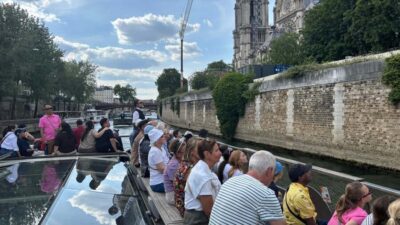
Paris: Illuminations River Cruise with Audio Commentary
Read our review →
Paris: Big Bus Panoramic Night Tour by Open-Top Bus
Read our review →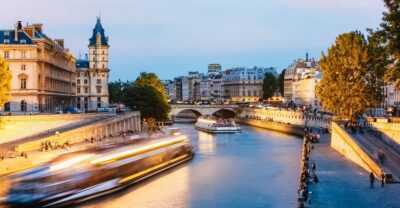
Paris: Illuminated Evening River Cruise & Waffle Tasting
Read our review →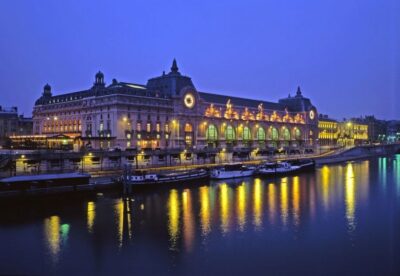
Paris: Happy Hour Evening Cruise on the Seine River
Read our review →
Paris: Discover Paris by Night in a Vintage Car with a Local
Read our review →
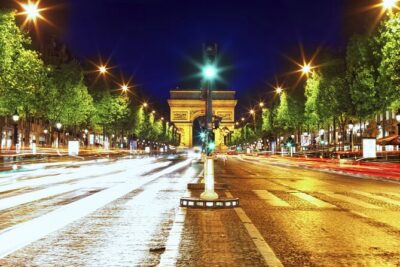
Paris Illuminations Tour with Moulin Rouge Show and Cruise Option
Read our review →
Browse the lists this tour appears in