
Review · ROME
Rome: Paranormal Night Walking Tour & Secret Backstreets
Rome’s past gets much darker after sunset. This two-hour walk turns Campo de’ Fiori, old bridges, small madonnas, and shadowy lanes into a stage for tales of executions, murders, doomed artists, and restless spirits. Guides such as Ana, Maham, Antonio, Domenica, and Yousef bring different voices and humor to the same sinister side of the city.
I like the small-group limit of 20 and the way the route uses lesser-seen streets rather than simply circling Rome’s headline sights. I also like the value: at $34, you get two hours of live storytelling, evening sightseeing, and a useful introduction to corners you may otherwise pass without noticing.
The main drawback is that this is a storytelling walk, not a theatrical haunted-house show. The ghostly mood depends on your guide and your imagination, and the tour is conducted in English only. Wear sensible shoes, arrive early, and be ready to walk outdoors in changing weather.
Key points to know before you book
- Giordano Bruno sets the mood: The meeting point beneath his statue in Campo de’ Fiori immediately brings Rome’s darker past into focus.
- The route favors atmosphere over major interiors: Expect streets, bridges, fountains, chapels, and façades rather than a long series of indoor visits.
- Guides make the difference: Ana, Maham, Antonio, Domenica, Yousef, Sara, Dina, and others have been praised for warm delivery, humor, and strong storytelling.
- The walk ends near Castel Sant’Angelo: That makes it easy to continue an evening around the river or nearby historic center.
- It is spooky, but not only scary: The stories also offer social history, local detail, and odd facts about people who shaped Rome.
- $34 is fair for a two-hour evening activity: The price works best if you value live narration and a different view of familiar streets.
Starting under Giordano Bruno in Campo de’ Fiori
Meet your guide at Campo de’ Fiori, beneath the statue of Giordano Bruno. Look for the yellow Carpe Diem Tours flag or sign, and arrive at least 10 minutes before departure. Late arrivals are not eligible for a refund, so this is not the time to cut your dinner close.
Campo de’ Fiori is a fitting starting point because the statue immediately puts the tour’s theme in place. From the first stop, you are looking at a public square tied to punishment, belief, and the uneasy relationship between power and ordinary people. Your guide uses that setting to move into Rome’s darker stories.
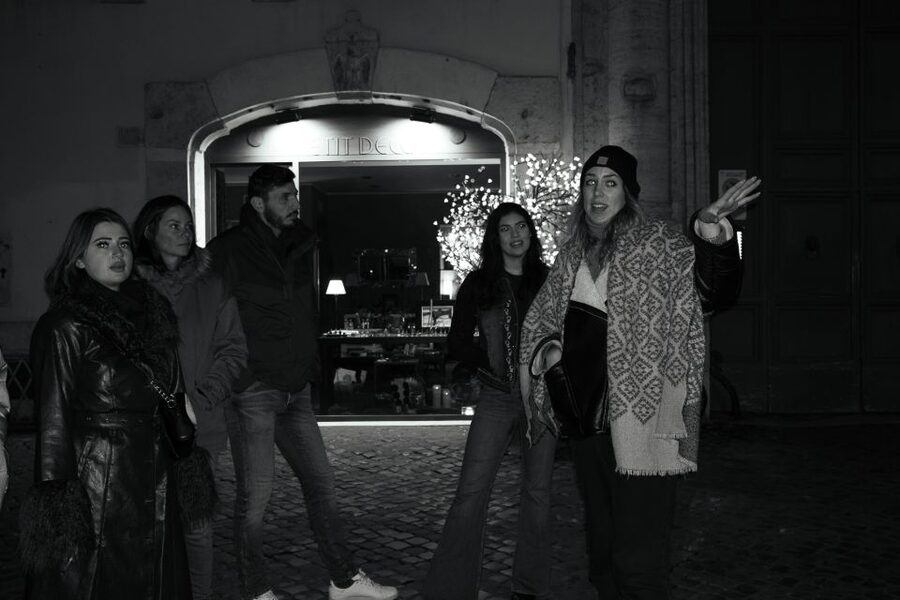
The tone can vary with the guide. Ana has been praised for being lively and inclusive, Maham for a gentle but gripping delivery, and Antonio for strong historical storytelling. Yousef and Sara have also been singled out for humor and the ability to keep a group focused while walking through busy streets.
That variety matters. This is not an audio recording with a fixed pace. A good guide can make a familiar square feel fresh, answer questions, and adjust the mood when a story becomes especially grim.
More Night Walking Tours in Italy
- Rome: Small-Group Guided Day or Night Walking Tour
★ 4.8 · 1,009 reviews - Rome by Night Walking Tour – Legends & Criminal Stories
★ 4.5 · 1,003 reviews - Rome: Small-Group City Highlights Moonlight Walking Tour
★ 4.9 · 949 reviews
Giordano Bruno and Piazza Farnese
The statue of Giordano Bruno is the first formal stop, with about 15 minutes listed for guided sightseeing. You can expect the guide to use the statue and square as a doorway into Rome’s religious and political conflicts.
The route then continues to Piazza Farnese. This is one of the grander spaces on the walk, and its broad setting provides a contrast to the narrow lanes ahead. Here, the experience shifts between public power and private drama, with stories tied to popes, artists, and the city’s ruling families.
I like this early pairing. Campo de’ Fiori gives you a charged public setting, while Piazza Farnese helps show how Rome’s dark tales are often linked to beautiful places. You do not need a separate lesson in architecture to appreciate the contrast. The guide lets the setting do part of the work.
Do not expect extended museum time at either stop. The value comes from hearing the story in the place connected with it, then moving on before the evening loses its pace.
Small madonnas and Rome’s street-level history
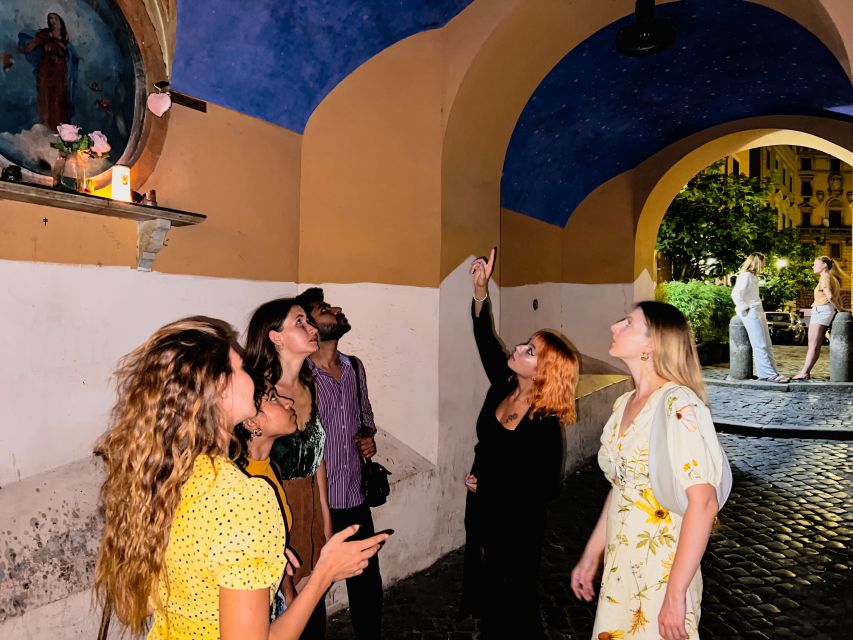
One of the more unusual stops is Madonna della Pietà, described as a small madonna, or Madonnella. These modest religious images are easy to miss during a daytime walk. At night, with a guide pointing out the detail, they become part of the city’s quieter visual language.
This is the kind of stop that makes the route more than a standard ghost story circuit. You are not only hearing about famous figures and gruesome events. You are also learning to notice small details placed around Rome’s streets, the sort of thing you might otherwise walk past without a second look.
The route is designed for movement, with each listed stop receiving guided attention before the group continues. That keeps the experience active, but it also means you should not expect long periods to sit down or study every site at leisure.
Crossing Ponte Sisto after dark
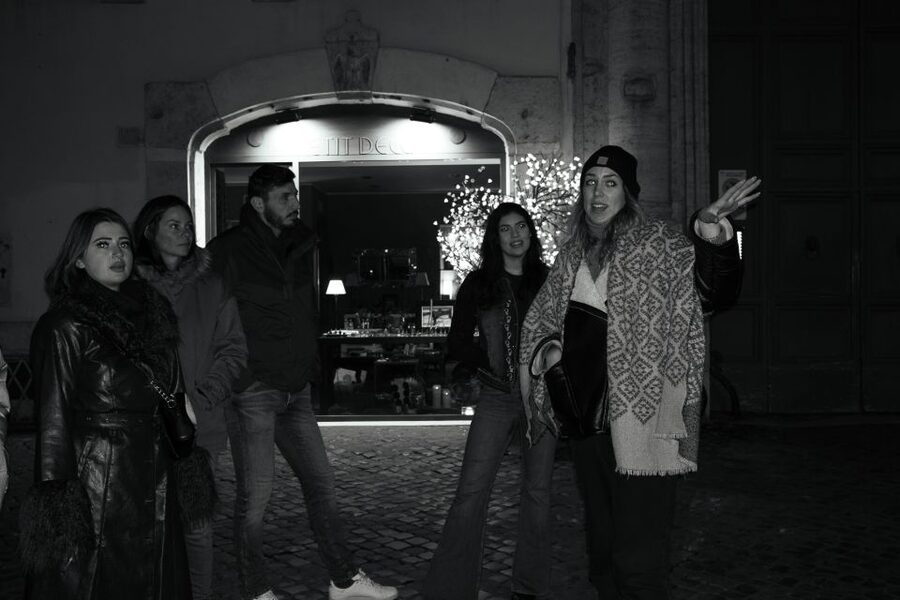
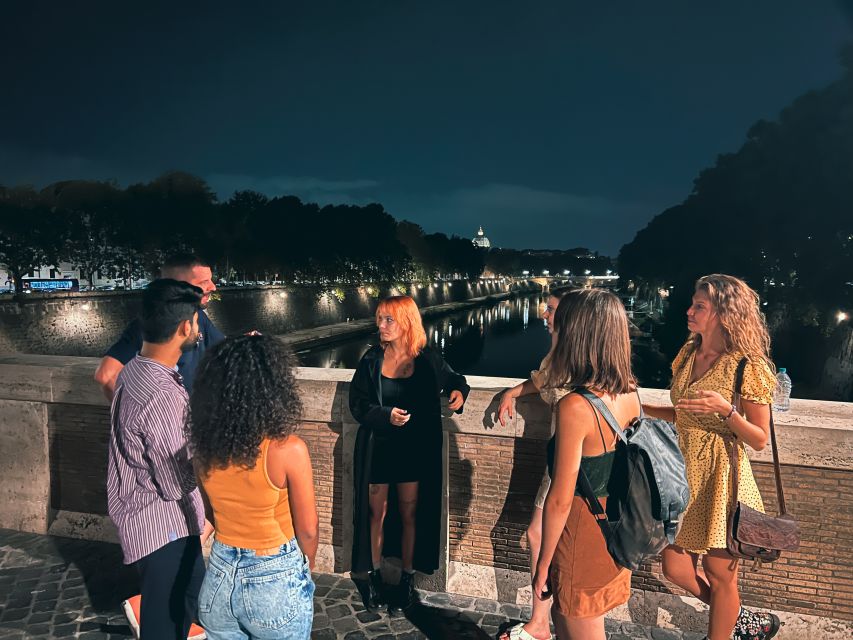
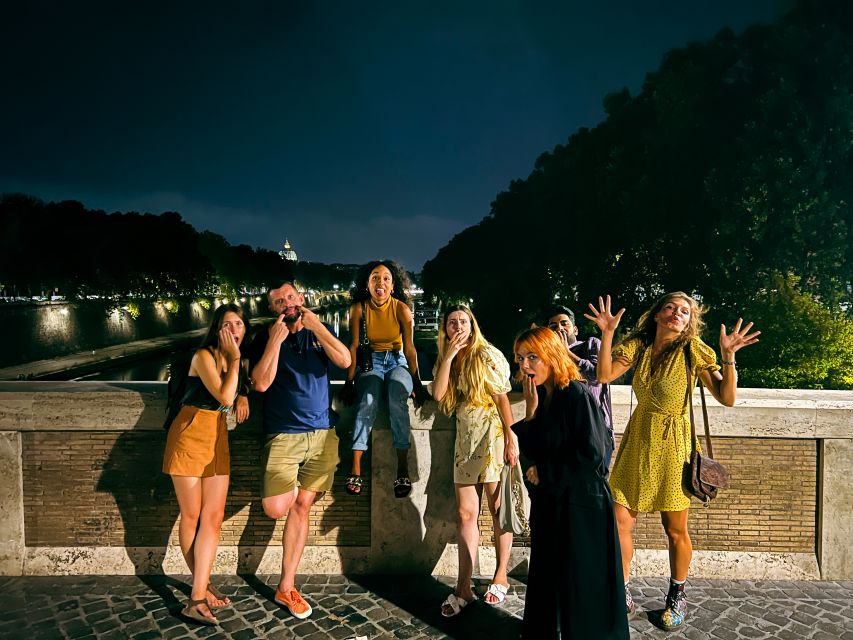
Ponte Sisto brings the group across the Tiber and adds an open-air stretch to the route. By this point, the walking itself becomes part of the atmosphere. The city looks different at night, and the absence of daytime heat and crowds is one of the strongest practical reasons to choose this tour.
The bridge also fits the theme of Rome’s old passageways and grim legends. The tour description refers to a corpse-lined bridge, and the evening route uses bridges and river crossings to build that sense of unease. The emphasis is on spoken history and atmosphere rather than a supernatural guarantee.
A bridge is also a useful point for group management. You will be moving through public streets, so stay close enough to hear your guide and watch your footing. You might find the busiest parts of the city less eerie than the quiet lanes, but the contrast is part of the fun.
More Night Walking Tours in Rome
- Rome: Haunted City Night Walking Tour
★ 4.9 · 616 reviews - Rome by Night Walking Tour
★ 4.5 · 506 reviews - Haunted Rome Ghost Night Walking Tour
★ 5.0 · 495 reviews - Rome by Night Private Walking Tour
★ 5.0 · 194 reviews
The Fountain of the Mask and the darker side of public art
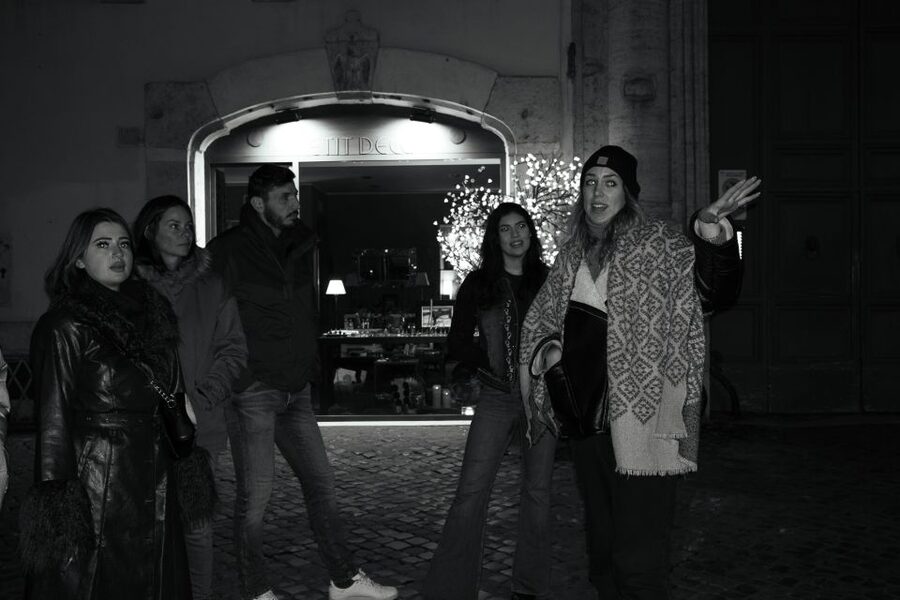
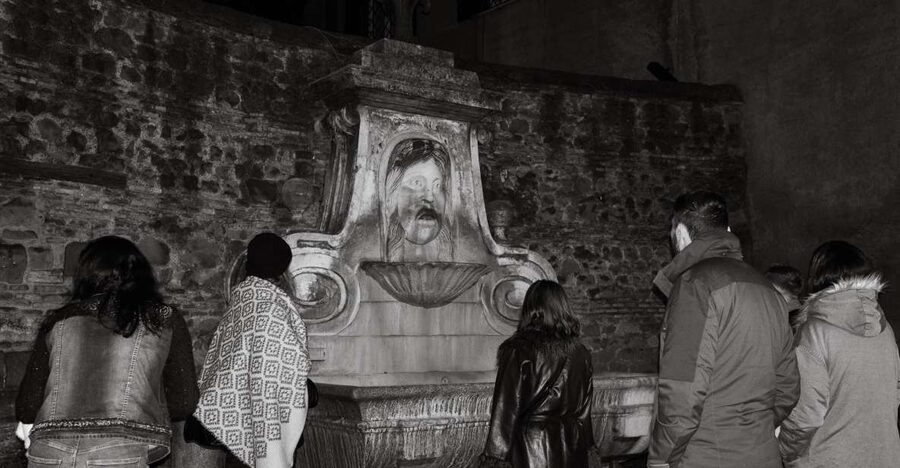
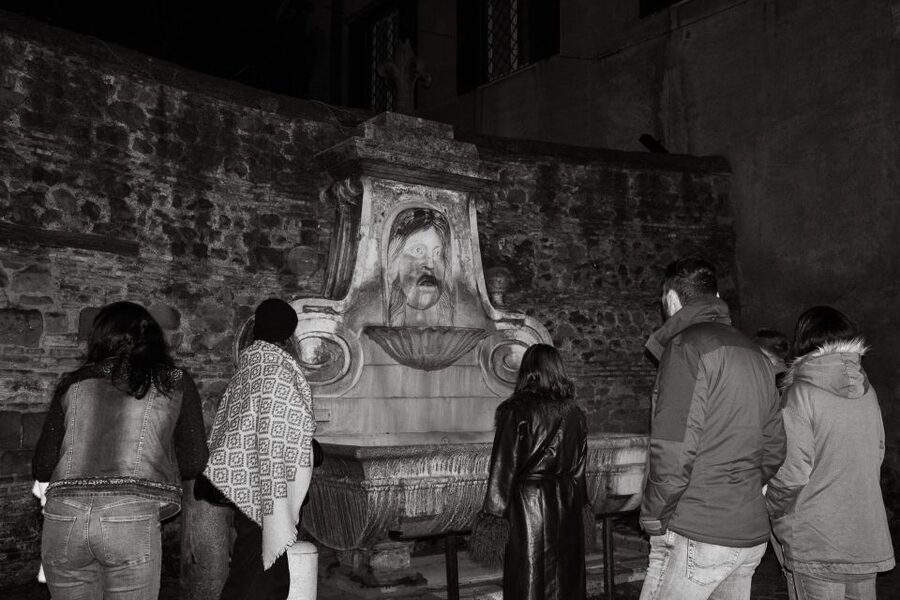
The Fountain of the Mask is another short stop that shows how Rome’s details can carry a story. Rather than treating the city as a collection of major monuments, the guide draws your attention to a smaller feature and connects it to the tour’s themes.
This is where a strong storyteller earns the $34 price. Anyone can point out a fountain. The useful part is hearing why it matters, what kind of tale surrounds it, and how the city’s public spaces have been used over time.
Several guides have been praised for making this sort of material easy to follow. Dina has been described as highly informed and engaging, while Anna has been praised for being funny and clear. You may receive a different style depending on the evening, but the repeated strength of the experience is the guide’s ability to turn brief stops into memorable scenes.
Santa Maria dell’Orazione e Morte
The Church of Santa Maria dell’Orazione e Morte is one of the route’s most distinctive locations. Its name alone sets the tone, and the tour connects it with Rome’s traditions surrounding death and remembrance.
The experience may include the kind of bone-related imagery and stories promised in the tour description, including a chapel decorated with human bones. The exact time spent and the precise interior access are not stated, so you should not book this expecting a guaranteed extended church visit.
Still, this is likely to be one of the strongest stops for anyone interested in Rome’s devotional customs and macabre art. It gives the tour a physical focus. Instead of only hearing about death in the abstract, you are brought to a place built around that subject.
The material can be unsettling. Families with younger children should consider how comfortable they are with stories of executions, murder, corpses, and human remains. The tour is presented as entertaining and spooky, but it does not avoid grim subjects.
Santa Maria in Monserrato degli Spagnoli
Santa Maria in Monserrato degli Spagnoli adds another church setting and broadens the route beyond executions and ghost tales. It is part of the walk’s interest in people, places, and stories connected with Rome’s long artistic and religious life.
This stop also helps break up the mood. A two-hour sequence of murders and apparitions could become repetitive, but church façades, small details, and stories about artists and prominent figures give the guide more material to work with.
I would treat the churches as atmospheric reference points rather than guaranteed sightseeing visits. The supplied details promise guided sightseeing, but they do not promise admission, interior access, or a particular chapel visit at every stop.
Clivo di Rocca Savella and the final approach
Clivo di Rocca Savella is one of the route’s more tucked-away stretches. The name suggests the kind of slope or lane that is easy to miss if you stick to Rome’s main paths. This is where the title’s promise of secret backstreets is most relevant.
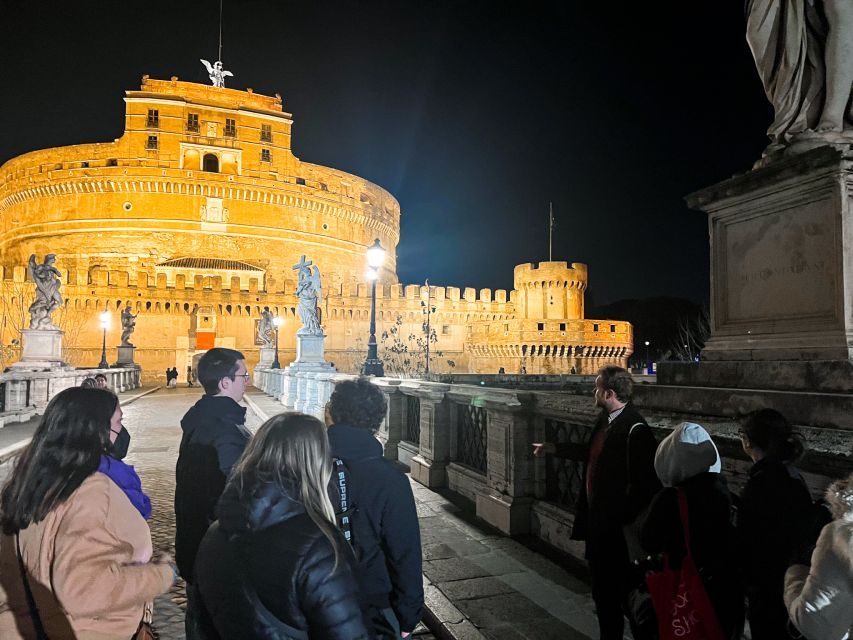
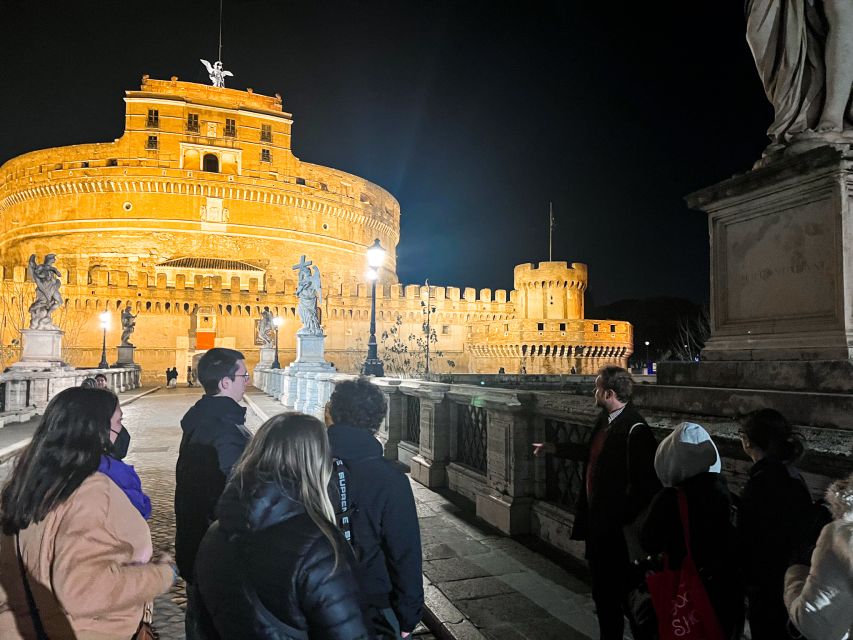
The route then finishes at Castel Sant’Angelo. The castle is a strong closing point for a ghost tour, even if the experience does not include entry. You end near one of Rome’s most recognizable historic structures, with the Tiber and the old center close by.
The finish is practical as well as atmospheric. You can continue your evening nearby, find a drink, or use the walk as a guide to places you may want to revisit in daylight. One useful idea is to note the names and locations that catch your attention, then return when you have more time to look around.
What the $34 price really buys you
At $34 per person, this is not the cheapest way to walk around Rome, but it is a reasonable price for a two-hour guided evening activity. You are paying for a live English-speaking guide, a planned route, local stories, and the chance to see several corners of the historic center without arranging the route yourself.
The value is strongest if you have already seen Rome’s major monuments and want a different layer of the city. It is also useful early in a visit because the route can give you ideas for later stops. One participant described it as a good source of places and people to look up afterward, which is exactly the right way to think about it.
The tour does not include food or drinks, and it is not a substitute for a museum visit or formal history tour. If you want detailed architectural analysis, long interior visits, or a strictly academic account, this may feel light. If you want a lively evening walk with history, legends, and odd details, the price is sound.
A private group option is available if you want more control over the pace and company. The standard group is limited to 20 people, which is small enough for a personal feel but still large enough that you may need to stay near the guide in crowded areas.
Who will enjoy this Rome night walk
I would recommend it most to adults, couples, families with older children, and friends who like history with a theatrical edge. You do not need to be a serious ghost-story fan. Much of the appeal comes from seeing Rome at night and hearing about people and events that do not usually appear in a standard first-time sightseeing plan.
It also suits repeat visitors. If you have already spent the day at the Colosseum, Vatican Museums, or Pantheon, this gives you a lighter and stranger way to spend the evening.
You should think twice if you dislike grim stories, churches connected with death, or walking outdoors at night. The route is described as an easy walk by one participant, but it still lasts two hours and includes bridges, lanes, and city streets. Comfortable shoes are a sensible choice.
Weather can affect the mood and comfort. The walk operates outdoors, and the experience has been enjoyed in cold rain, but you should dress for the forecast. Summer evenings may help you avoid the worst heat, while winter departures call for warm layers.
Booking details that matter
The tour lasts two hours, with starting times shown according to availability. It is conducted in English, and a live guide leads the group. The meeting point is directly beneath Giordano Bruno in Campo de’ Fiori, marked by a yellow Carpe Diem Tours sign or flag.
You can cancel up to 24 hours before the start for a full refund, and the reserve-now, pay-later option gives you some flexibility when planning your Rome schedule. These details are useful if your arrival time or dinner plans are still moving around.
The overall rating is 4.9 from 1,921 reviews, and the praise is unusually consistent about the guides. The most repeated strengths are clear storytelling, humor, warmth, and the ability to make everyone feel included. Names frequently praised include Maham, Ana, Antonio, Domenica, Yousef, Sarah, Sara, Dina, and Anna.
That does not mean every guide will have the same style. Some may lean gentle and reflective, while others are more comic and energetic. The common thread is a personal presentation rather than a dry script.
Should you book the Paranormal Night Walking Tour?
Book it if you want a social evening walk with dark history, lesser-seen streets, and a guide who can turn ordinary details into stories. At $34, it is a good fit for an evening when you want more than dinner but less commitment than a major museum or formal night event.
Skip it if you need guaranteed ghost sightings, extensive indoor access, or a highly detailed academic tour. The supernatural side is part legend and part atmosphere, while the real payoff is learning to see Rome’s squares, churches, bridges, and backstreets differently.
For most visitors, I would place it after a day of major sightseeing, not before. Arrive early at Campo de’ Fiori, keep close to the yellow flag, wear comfortable shoes, and let the city’s stranger stories carry you toward Castel Sant’Angelo.
FAQ
Where does the Rome paranormal walking tour begin?
It begins at Piazza Campo de’ Fiori, beneath the statue of Giordano Bruno. The guide will hold a yellow Carpe Diem Tours flag or sign.
Where does the tour finish?
The walk finishes at Castel Sant’Angelo.
How long does the tour last?
The tour lasts two hours.
What language is the tour conducted in?
The live tour guide speaks English.
How much does the tour cost?
The listed price is $34 per person.
What places are included on the route?
The route includes Giordano Bruno’s statue, Piazza Farnese, Madonna della Pietà, Ponte Sisto, the Fountain of the Mask, Santa Maria dell’Orazione e Morte, Santa Maria in Monserrato degli Spagnoli, Clivo di Rocca Savella, and Castel Sant’Angelo.
Are food and drinks included?
No. Food and drinks are not included.
Can I cancel the booking?
Yes. You can cancel up to 24 hours in advance for a full refund. You can also reserve now and pay later.
Just added for nights around Rome
- Rome After Dark: Private Luxury Night Tour by Car★ 4.5 · 17 reviews
- Rome: Night Tour of the City by Golf Cart (Private option)★ 4.9 · 323 reviews
- Rome by Night Private Golf Cart Tour★ 4.9 · 182 reviews
- Rome by Night Private Walking Tour★ 5.0 · 194 reviews
- Jewish Ghetto and Campo Dè Fiori By Night Food, Wine and Sightseeing Tour★ 5.0 · 302 reviews
- Vatican Evening Tour: the Museums at Their Best I Max 6 People★ 5.0 · 128 reviews
- Vatican and Sistine Chapel at Night Private Tour, Top-Rated Guide★ 5.0 · 113 reviews
- Rome: Vatican Night Tour★ 4.5 · 195 reviews
Rome Night Tours, compared.
Rome: City Highlights Open-Top Bus Night Tour
Read our review →
Rome by Night – Ebike Small Group Tour – Food and Wine (Option)
Read our review →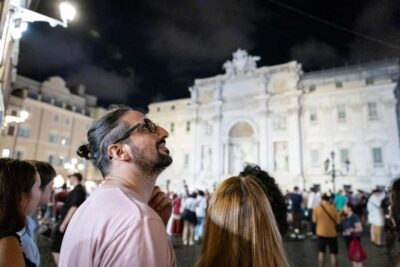
Rome: Small-Group Guided Day or Night Walking Tour
Read our review →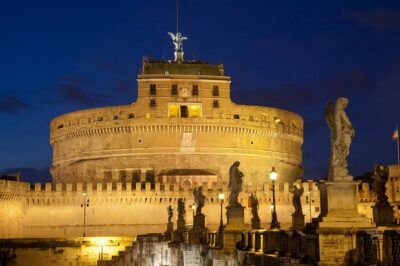
Rome by Night Walking Tour – Legends & Criminal Stories
Read our review →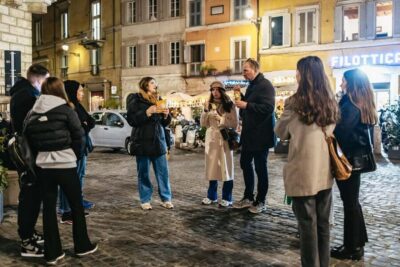
Rome: Small-Group City Highlights Moonlight Walking Tour
Read our review →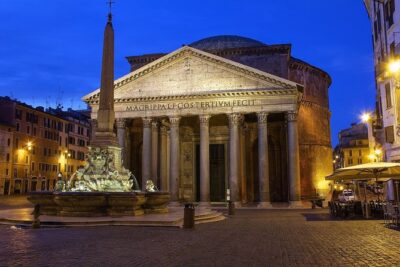
Night Tour of Rome with Local Pizza Dinner and Gelato Experience
Read our review →
Rome After Dark: Explore the Eternal City Under the Moonlight
Read our review →Browse the lists this tour appears in