
Review · MOROCCO
Marrakech: Street Food Tour by Night
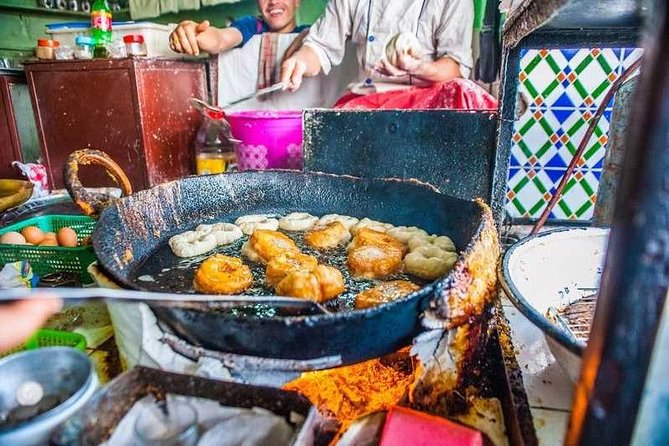
Marrakech becomes a different city after sunset, when the Medina fills with food stalls, spice aromas, glowing lamps, and locals stopping for supper. This tour turns that evening energy into a guided tasting route, with stops for snails, harira, dates, olives, pastries, tangia, and kofte, followed by a full Moroccan meal.
I like two things in particular: the guides, including Yaya, Ali, Mohammed, Omar, and Mo, bring food together with local stories, and the tour takes you down side streets where you might not feel ready to wander alone. The main consideration is simple: come hungry. Several hours and as many as 12 to 15 tastings, plus a three-course dinner, can be far more food than the description first suggests.
Key points at a glance
- A full evening of eating: Small tastings can lead to soup, breads, sweets, salads, main dishes, and a three-course meal.
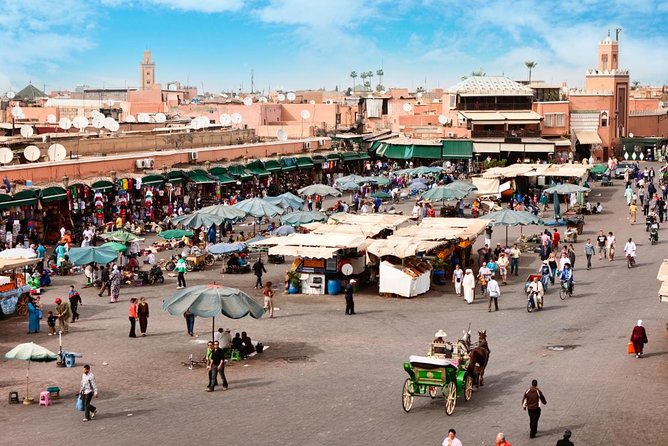
- The Medina after dark: You move through Jemaa el-Fnaa, Souk Semmarine, the Mellah, and quieter side streets.
- Guides make the difference: Yaya, Ali, Mohammed, Omar, and Mo are among the guides praised for their humor, food knowledge, and local connections.
- Good first-night choice: The route helps you get your bearings while introducing you to Moroccan flavors and customs.
- Shared or private format: You can join a group or book a private group, with tours offered in English, Arabic, French, German, and Spanish.
- Strong value at $43: Food and drinks are included, and the evening may finish with a full rooftop meal rather than a few token samples.
Why a Marrakech night food tour works so well
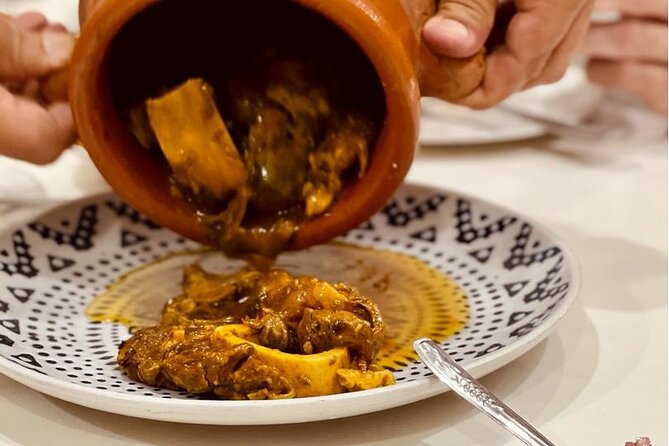
Food is one of the fastest ways to understand Marrakech. A dish of harira tells you something about home cooking. A mound of olives shows how much simple ingredients matter. A bubbling tagine points to a cooking method as much as a recipe.
This tour gives you that context while you eat. Your guide explains spices such as saffron and cumin, talks through the different kinds of tagine, and shows how Moroccan dishes fit into daily life. You are not simply handed a plate and moved along.
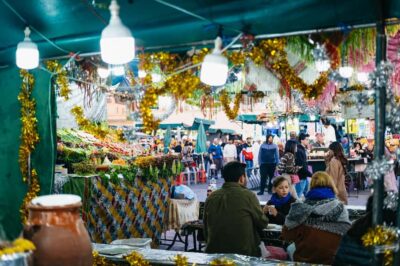
The route also solves a common first-night problem. The Medina can feel confusing, especially after dark, with narrow lanes, busy stalls, sudden turns, and many restaurants competing for your attention. Starting at Jemaa el-Fnaa Square gives you a clear meeting point, then your guide leads you through the food areas and back streets.
I especially like the mix of planned tastings and ordinary street scenes. You may watch a pastry being made, see a méchoui cook working with a whole roasted lamb or sheep, and learn how people shop for meat, poultry, fruit, and vegetables. Those moments add meaning to the meal at the end.
More Night Food Tours in the world:
- Saigon By Night and Street Food By Motorbike | Opt: Ao Dai Riders
★ 5.0 · 4,066 reviews - Bangkok by Night: Temples, Markets and Food Tuk-Tuk Tour
★ 5.0 · 3,752 reviews - Private Street Food Evening Walking Tour in Ho Chi Minh City
★ 5.0 · 3,175 reviews
Starting at Jemaa el-Fnaa and the Koutoubia Mosque
The tour begins in the heart of Marrakech, usually near Hôtel Restaurant Café de France, although the exact meeting point depends on the option booked. From there, you head toward Jemaa el-Fnaa, the city’s famous central square.
A short visit here helps you read the city before entering the souks. The square is a useful place to watch the evening unfold, with food stands, movement, aromas, and changing light. Your guide provides a photo stop and a short introduction before leading you onward.
The itinerary also includes a visit and photo stop near the Koutoubia Mosque. You do not need a long lecture to appreciate the landmark. Its position near the Medina makes it a useful reference point, and its presence helps you understand how the old city is arranged.
The walking is not described as strenuous, but the surfaces can be uneven and the route includes narrow streets. Comfortable shoes are essential. If you have limited mobility, the activity is listed as wheelchair accessible, though you should confirm the practical route details when booking because souk lanes can vary.
Souk Semmarine and the market stalls
From the square, you enter Souk Semmarine and the main market area. This is where the tour shifts from city sightseeing to food observation.
You might see stalls piled with fresh fruit, vegetables, meat, and poultry. Your guide can explain what you are looking at and how local shoppers choose ingredients. You also get a chance to watch people negotiate prices, which is part of the normal market experience rather than a staged show.
One useful part of this section is the chance to see food being made. The tour includes a stop to watch a local pastry prepared, along with explanations of Moroccan sweets and snacks. You may taste something sugary early in the route, before moving on to more savory dishes.
This is also where a good guide earns the $43 price. A visitor walking alone can look at a stall without knowing what to order, how to eat it, or why it matters. Guides such as Yaya and Ali are praised for explaining each stop with humor and clear local context, which makes unfamiliar food easier to approach.
Small tastings, local drinks, and unusual bites
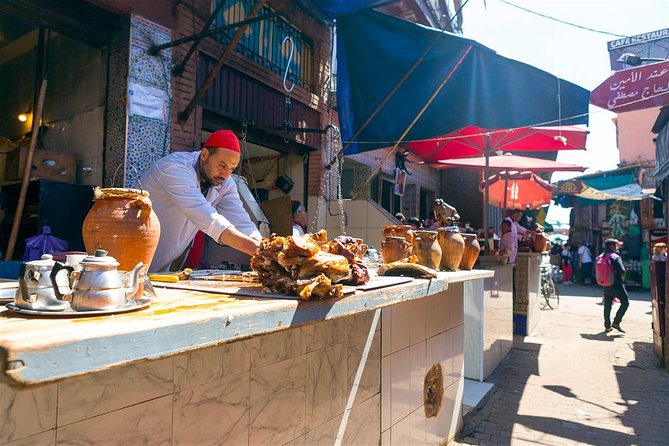
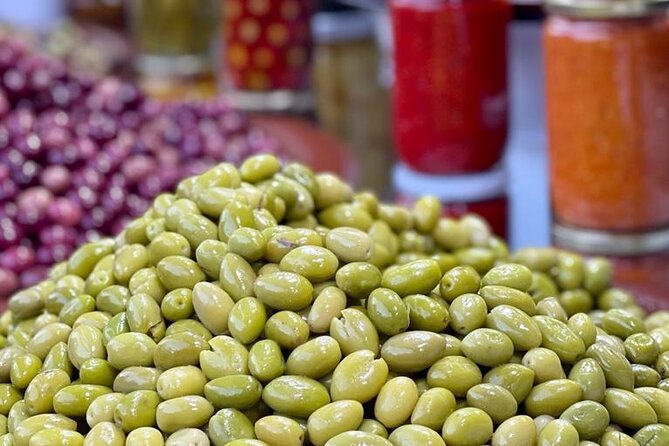
The food selection is broad. Exact stops can vary, but the route includes items such as olives, dates, nuts, pastries, pancakes, prickly pear fruit, soup, flatbreads, salads, and an almond drink.
The almond drink is a particularly useful pause between tastings. It refreshes your palate before the next group of flavors. Mint tea appears later, but this earlier drink gives you a chance to try something less familiar than the standard café order.
You may also be offered snails. This is one of the tour’s more memorable challenges, and your guide can show you how to eat them. You are not pressured to try anything that makes you uncomfortable. That matters, since a food tour should make you curious, not trapped into proving something.
The tastings are arranged in a loose progression. Light snacks and sweets may come first, followed by soup, breads, savory bites, and more substantial dishes. One guide, Yaya, was specifically praised for building the flavors in a sensible order, with water available to clear your palate.
Vegetarian options are available for those who request them. If you have a serious allergy or dietary restriction, explain it before the tour and repeat it to your guide. One reported experience involved a guide checking food with vendors for a traveler with celiac disease, but you should still treat this as something that needs active confirmation, not an automatic guarantee.
More night tours around the world:
- Prague: 50-Minute Sightseeing Evening Cruise
★ 4.2 · 33,780 reviews - Amsterdam: Evening Cruise with Optional Wine and Snacks
★ 4.4 · 22,178 reviews - Budapest: By Night Sightseeing Cruise with Welcome Drink
★ 4.3 · 15,533 reviews - Paris: Illuminations River Cruise with Audio Commentary
★ 4.3 · 12,340 reviews
The Mellah, side streets, and food makers
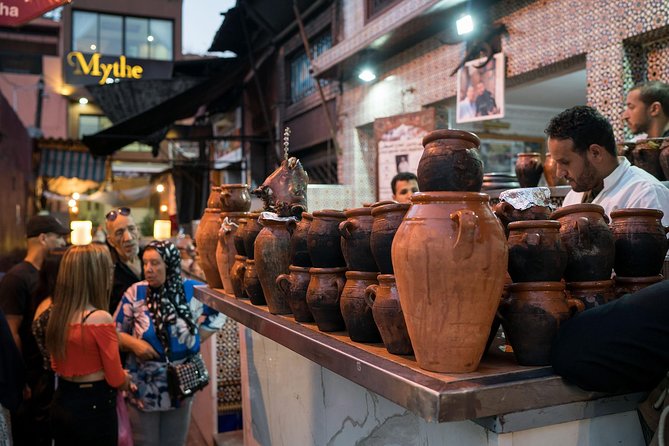
The route passes through the Mellah and then into parts of the Medina that many first-time visitors might skip. The value here is not only the food. It is the chance to see how the old city works after dark.
Your guide may point out stalls selling juicy olives and sweet dates, then lead you through narrow lanes toward specialists in Moroccan cooking. One memorable stop is a méchoui maker, where a whole lamb or sheep is roasted in a traditional pit oven.
You may also visit a herbalist. This can be interesting if you want to learn about Moroccan natural remedies, spices, and oils. Keep your expectations clear, though. One participant felt that the herbalist visit included a sales pitch, so this is the section I would approach with polite curiosity and a firm sense of what you do and do not wish to buy.
The narrow lanes are part of the appeal, but they also make the group important. Some groups have included around 18 people, while private bookings give you more control over pace and questions. In a shared group, stay close to the guide at turns and busy crossings.
Tagine, tangia, kofte, and the final meal
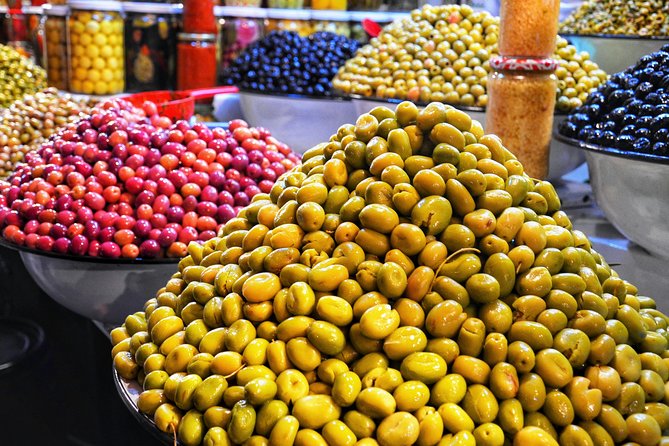
The tour’s most substantial food often comes later. You may taste charcoal-baked tagine and hear about the many varieties of this Moroccan staple. Your guide can explain how the dish is cooked and why the tagine vessel matters.
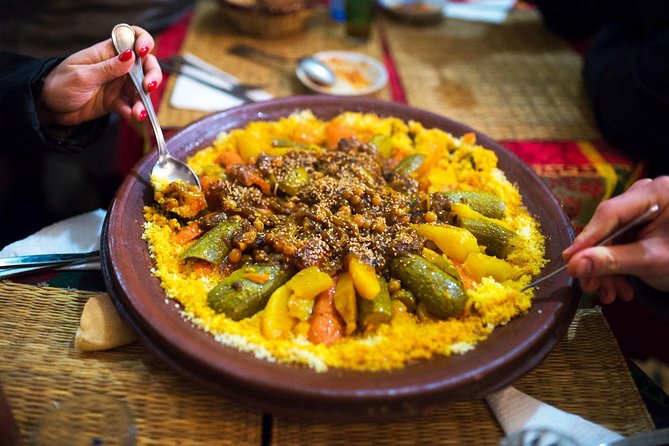
The route may also include tangia, kofte, freshly baked bread, and three different salads made with local ingredients. Tangia is particularly associated with Marrakech, so tasting it here gives the meal a stronger local identity than simply ordering a familiar tagine in a restaurant.
Many departures finish at a hidden or local-style restaurant, often on a rooftop. The final meal has been described as a full three-course dinner, not just one last sample. That might include several Moroccan specialties served with bread, followed by dessert or another course, depending on the evening.
This changes the value calculation. At $43 per person, you are paying for a two to three hour guided walk, numerous tastings, drinks, and in many cases a satisfying dinner. You would not get the same range by visiting one restaurant, and ordering each item independently in the Medina could quickly cost more while giving you less explanation.
The tradeoff is that the final meal can leave you very full. Plan this as your evening meal, not as an appetizer before a later restaurant reservation. Several participants specifically wished they had eaten less during the day.
Rooftop mint tea and a softer finish
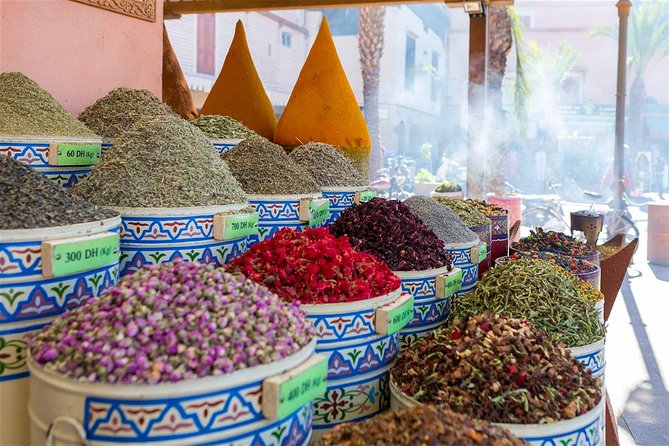
The evening ends with Moroccan mint tea at a cozy café or rooftop restaurant. This is a welcome change of pace after the noise and movement of the markets.
You can sit back, look over a courtyard, and notice the interior details: rugs, mosaic lamps, fountains, and painted or tiled decoration. The setting gives you time to talk with the group and ask follow-up questions about the foods you have tried.
Mint tea is more than a drink here. It is a social ritual and a calm ending to a route that may have included many quick stops. I like that the tour does not finish immediately after the last bite. The final pause lets the evening settle.
Group size, guides, and the feel of the evening
The guide is central to this experience. Names vary by departure, but Yaya, Ali, Mohammed, Omar, Mo, Ousamma, and Yahya have all led tours associated with this experience.
The most useful qualities are clear explanations, humor, and confidence in the Medina. You want someone who can explain a dish without turning the evening into a lecture, keep a group together, and make introductions at food stalls feel natural.
A shared group can be a lot of fun. You meet people from different countries and see different reactions to foods such as snails, prickly pear, soup, and unfamiliar sweets. It also means the pace and food choices are not entirely yours.
A private group makes more sense for families, guests with dietary needs, or anyone who wants more time for questions. The experience has also worked for mixed-age families, including a group with an 80-year-old parent, but comfortable footwear and a realistic view of the walking remain important.
Tours are offered in English, Arabic, French, German, and Spanish. Confirm your preferred language when booking, especially if you want detailed explanations of ingredients and customs.
Practical details and the $43 value
The advertised duration is two to three hours, but the evening can run longer when the group spends extra time eating and talking. Treat the schedule as flexible rather than as a precise end time.
Hotel pickup and drop-off are not included. You make your way to the meeting point, which may be at Hôtel Restaurant Café de France or another location tied to your booking. Check the exact details before setting out.
The tour includes the guide, food, and drinks. At $43, that is strong value if you enjoy trying many things and want dinner included. It is less appealing if you prefer one carefully chosen restaurant meal, dislike eating on the move, or have a very limited appetite.
You can cancel up to 24 hours ahead for a full refund, and the activity allows you to reserve now and pay later. Wheelchair access is listed, but ask about the specific route if narrow Medina lanes or uneven ground are a concern.
Who should book this food tour?
I would choose this tour for a first evening in Marrakech. It gives you an introduction to the Medina, shows you where people shop and eat, and takes the pressure off choosing your first meal alone.
It suits curious eaters who want a broad sample rather than a single signature dish. It also works for people who want stories with their food, since the guides explain ingredients, cooking methods, and local customs along the way.
Families and mixed-age groups can enjoy it, provided everyone is comfortable with the amount of food and the walking. Vegetarians should state their needs clearly. People with serious allergies should ask detailed questions before booking and at every relevant food stop.
I would hesitate if you want a quiet, slow dinner or if you are uncomfortable with shared group pacing. I would also avoid scheduling another major meal afterward. This is a generous evening of eating, not a light tasting stroll.
Should you book the Marrakech Street Food Tour by Night?
Yes, if you want a practical first look at Marrakech through its food. The combination of market wandering, unusual bites, local explanations, and a final rooftop meal gives you much more than a basic list of tastings.
Book a private option if you want more control, or choose the shared tour if you like meeting people and do not mind a larger group. Arrive hungry, wear good shoes, keep an open mind about snails and other unfamiliar dishes, and leave your dinner plans free. At $43, this is one of the easier ways to get oriented, well fed, and ready for the rest of your time in the city.
FAQ
Where does the Marrakech night food tour start?
The meeting point may vary by booking option. Hôtel Restaurant Café de France is listed as a possible starting point, near Jemaa el-Fnaa.
How long does the tour last?
The stated duration is two to three hours. Some evenings may take longer because the guide allows time for tastings and explanations.
What food is included?
Food and drinks are included. Possible tastings include tagine, dates, olives, pastries, soup, nuts, salads, flatbreads, snails, tangia, kofte, and local drinks. The tour may finish with a full three-course Moroccan meal.
Is dinner included?
Many departures finish with a substantial three-course meal at a rooftop or local-style restaurant. Plan to use the tour as your evening meal.
Can I choose a private tour?
Yes. You can choose between a shared group and a private group.
What languages are available?
Guided tours are offered in English, Arabic, French, German, and Spanish.
Is the tour suitable for wheelchair users?
The activity is listed as wheelchair accessible. Because the route passes through Medina markets and souk lanes, confirm the specific meeting point and route details before booking if you need step-free access.
What should I bring?
Wear comfortable shoes for walking through the Medina. You should also arrive with a good appetite, since the tastings and final meal can be extensive.
Just added for nights around the world
- Ubud Day Tour : Waterfall, Temple and Local Night Market Tour★ 5.0 · 17 reviews
- Bali Food Tour: Savor Street Food and Night Market Adventures★ 5.0 · 46 reviews
- Eat like a Local: Venice Cicchetti and Wine Tasting Evening Tour★ 5.0 · 122 reviews
- Venice by Night: Highlights & Hidden Gems Tour★ 5.0 · 128 reviews
- Venice Evening Food Tour: Bites, Drinks & Sit-Down Dinner★ 4.5 · 83 reviews
- Ubud: Village Firefly Night Tour with Dinner★ 4.9 · 23 reviews
- Evening Walking Tour with optional motorboat Ride★ 4.2 · 225 reviews
- Taipei Food Tour: Night Market & Convenience Store(Food Included)★ 4.5 · 100 reviews
Morocco Night Tours, compared.
Marrakech: Medina by Night Walking Tour with Moroccan Tea
Read our review →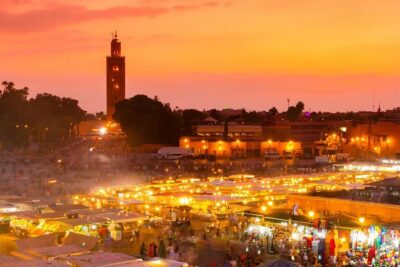
Casablanca City Night Tour and Traditional Moroccan Dinner
Read our review →Browse the lists this tour appears in